Why Data Culture Matters More Than Platforms: Sam Russo on Automotive Aftermarket
The B2B eCommerce Podcast

Sam Russo, Director of Demand Gen & Strategic Alliances at Pivotree, joins Aaron Sheehan to talk about the messy, human side of automotive data. Sam shares her unconventional path into data, explains why ACES and PIES aren't magic bullets, and breaks down what happens when companies throw expensive tech at dirty data. She also reflects on the Rebelle Rally and what navigating the desert taught her about data dependency.
Episode Highlights:
01:08 – Introduction: Meet Sam Russo & Her Automotive Origin Story
07:44 – What ACES and PIES Actually Are (And What They're Not)
11:35 – The #1 Data Problem That Looks Like Tech But Is Actually Humans
13:48 – How Well Are Manufacturers Living Up to ACES & PIES Standards?
15:50 – Why Missing Data Makes You Invisible (Especially to AI)
18:13 – Pivotree as Pit Crew: F1, Foundations, and Why Data Isn't "Fixed" in 12 Months
23:29 – The Rebelle Rally: 2,500km, No GPS, Never Camped Before
29:57 – Finding Your Limits (Or Not Finding Them)
30:58 – Data Dependency vs. Human Instinct
33:45 – AI in Automotive: Data Normalization, Agentic Shopping & Fleet Management
42:33 – What the Aftermarket Needs to Attract the Next Generation
47:31 – Sam's media recommendation
Resources Mentioned:
- SEMA Data Co-op — Industry data standards organization
- The Diary of a CEO — Podcast hosted by Steven Bartlett
- Rebelle Rally — The longest off-road navigation rally in the United States
- Podcast with Chantal Schweizer from Pivotree https://youtu.be/btq8K279e_k
Full Transcript
Aaron Sheehan: Welcome back to the B2B Uncut Podcast. I am your host, Aaron Sheehan. We are sponsored by Oro Commerce, and have a special guest today, someone I have known for over a year. You may know her from having wilder glasses than me, and occasionally an enormous purple hat.
She knows a lot about the automotive industry and has strong opinions about many things, some of which we might get into on this podcast. So, we're joined today by Sam Russo, who is currently with one of our partners called Pivotree. Sam, I'll let you introduce yourself and tell our audience, why should people care what you think?
Sam Russo: Sure. Alright, well, I'm Sam Russo. Whether people should care, I don't know. That's kind of up to them. I've lived a pretty interesting life, as Aaron has hinted at, in a short amount of time, or at least that's what this awesome 90-year-old woman told me over the weekend, so I'm gonna run with it.
Professionally, in the last 10 years, I've been on the corporate side of automotive, and I've really focused on product data and digital, and how all of that works behind the scenes. That day-to-day only slightly changed in the past year for me. But that's only half of it.
I've been an automotive enthusiast for 20 years, and my husband owns a performance shop here in Atlanta, so this isn't something that I do for work. I literally live and breathe it. I hear about it at dinner, and I see it in real time when something doesn't work. When a part can't be found, it's usually because data is wrong or incorrect, and it slows everything down, or a car is stuck on a lift because the data is incorrect for a part and it doesn't fit.
Long story short, I've been here long enough to know where the dead bodies are stored in the closets. I kind of know—my husband can come to me and say, "I can't find this part," or anyone really can, and I kind of know where in the system it's broken or whose door to knock on, and people really like that.
Outside of that, I've done the Rebelle Rally, which is the longest rally in the country, and I'm a mom, and I sit on multiple committees, and I spend a lot of time advocating for the automotive industry and trying to push it forward.
Aaron Sheehan: I don't know when you have time to sleep with all that, but it does sound like maybe you're sort of the parts whisperer? Is that the right way to think of it? If no one… you have a very specific set of skills, like Liam Neeson in Taken.
Sam Russo: It's a specific, unique set of tools, because I've just had an interesting experience of where I've gone. I'm one of those people that usually says yes, jumps off the cliffs, and builds the parachute as I fall down. So if I don't know something, I'll say that, but I usually know how to go figure out what to do, which has been my strongest skill to date.
Aaron Sheehan: Oh, I love that, and you know, we've talked obviously many times in the past. You've described your path into this data world as unconventional, I think? Accidental. Yeah, accidental. You taught yourself ACES and PIES—and we'll talk a little bit about what that is—on maternity leave.
You've got a master's in IT, but you didn't come out of a traditional tech background. I know we have a lot of people who listen to this podcast who also feel like they are learning stuff on the fly, whether it's automotive data specifically, but really anything related to digital and B2B.
What does your origin story about having to sort of bootstrap and build the parachute yourself on your way to the ground—what does that tell you about how this industry actually develops talent?
Sam Russo: I mean, you could say all that, and if you use me as an example, you got it pretty correct. My journey to my career today is about as straight as my navigation on the Rebelle Rally, and it's interesting, really, because I've really been reflecting on it.
You guys can expect to see some kind of post or something social come out next month because I turn 40 in a month, and so I've been really reflecting on everything that I've done in the past 10 years, my 30s. Everything I've accomplished—I became a mom, I grew this career, and I started out and spent the majority of my 30s pouring into the industry.
I started out by interviewing for a job I had no business interviewing for. I was hired on potential only. And then on my second day, I found out I was pregnant. So, I pushed the data so far at this company, and I self-taught myself ACES and PIES when there was no access to any kind of information.
And then on maternity leave, I got headhunted by Genuine Parts Company. And if you don't know Genuine Parts Company, it's essentially NAPA Auto Parts. I didn't come from a formal IT background—I literally have a bachelor's in fine arts.
And I got my master's in IT because I liked what I was doing with data, and then quickly learned I didn't enjoy IT, and made the bold decision to pivot a really nice career, and that's how I ended up where I am today.
So I've held many hats, and I think that's strengthened my toolbox. I've been a data analyst, I've been an MDM super user, I've been a product manager, I've been an engineering manager, and I've been head of industry, and now I've jumped into demand gen and strategic alliance world, which I have no background in, but again, hired on potential and thought I would be good at it.
I say all of that to say this industry doesn't develop talent in a straight line. Or, if you're wanting to grow in an industry where you don't need a straight line and there's no clear path, I would say that this is a great industry for you, because I don't think the industry as a whole evolves in a straight line.
We are—most of us are learning while we're doing, and we're innovating while we're failing fast, and we step into a role and get exposed to a problem, and we have to figure it out as we go.
So I guess you could say there's a lot of accidental experts, people who didn't start in data or tech. You hear it all the time. Even you yourself, Aaron, and then you interviewed Chantel. If you ask Chantel where she came from, she has a bachelor's in art history. And we just become incredibly good at it, because the industry needed us to.
We're an industry that is constantly demanded to evolve. We're in a constant state—the automotive industry, heavy duty, whatever it is—we're in a constant state of evolution. We've gone from mechanical vehicles to electric propulsion to software-driven vehicles, and we've survived through massive shifts in how products are built, sold, and supported.
So I would say the talent also has to survive that, to constantly shift.
Aaron Sheehan: I agree with that. There's a famous quote, I'm not sure who said it, that luck is what happens when preparation meets opportunity, and I think what you're describing is very much that, right? And it's kind of—to me, I think about it as there's a little bit of right place, right time, but there's also… luck can open a door, but somebody has to go through it, and you have to have the confidence to sort of go in and take advantage of the open door.
I have a—we won't talk about it, because this is a podcast about interviewing you, but I will say I have a very similar sort of background in that sense. And the podcast that you're referring to in your answer, I'd interviewed another wonderful person from your company, about a year ago now, Chantel Switzer. Listeners can go find that episode, we'll link to it in the show notes, also talking a lot about product data.
So, you spent several years at Genuine Parts Company. You were at O'Reilly Automotive, shout out. Springfield, Missouri, man, was the home of O'Reilly Automotive. I've gotta give the hometown shout-out. You know, you spend a lot of time living inside of all of that automotive catalog data and product taxonomy. This is a little bit of a two-part question.
We have dropped—we've already dropped acronyms without defining them, which is sort of like a cardinal sin of nerdy podcasting. But let's start with what is ACES and PIES? You've mentioned it a few times. Are they playing cards and delicious desserts? Is it something else? Tell our listeners that don't know, what are ACES and PIES?
Sam Russo: So, ACES and PIES at a high level is an industry standard. It's really easy to understand once you understand it. ACES is focused on everything fitment data, and when I say fitment data, that means when you go to a website, or your vehicle and thing, and you type in, "I drive a 2017 Toyota 4Runner SE," and it brings back all the parts that fit your vehicle, because not everything is universal. So ACES is focused on fitment. It stands for Aftermarket Catalog Exchange Standard. I think it's Catalog Exchange Standard. I messed that up, I'm sorry.
The other one is a little bit easier to remember. It's basically anything else not to do with fitment data, and everything to do with product data. So, PIES is a little bit easier to understand. It's Product Information Exchange Standard, P for product. Sometimes you can do ACES—instead of aftermarket, you can say it's application. So, it's how the product applies to fitment, and that's how you remember it.
What they are, though—they are not… one of the biggest misconceptions, I can say, Aaron, is that most companies think that ACES and PIES means that their data is going to be complete. So if a company has ACES and PIES, they think, "Oh, that's all the data I need to do eCommerce." It's not.
Aaron Sheehan: They're selling automotive parts, yeah.
Sam Russo: Yeah, it's not governance. What it is, is a common language for us to exchange data between a distributor and a manufacturer, or a manufacturer and a retailer. It's getting a universal language of here's where my part number is, here's how we transmit, and here's how we exchange data. It's, instead of having 10 different formats, and 10 different Excel files, and everybody doing everything else—that is where the theme of ACES and PIES is. It's the exchange of data.
Aaron Sheehan: Got it, okay. No, that makes sense, and now everybody knows, we can now name drop with impunity, we can litter our conversation with acronyms.
Sam Russo: There's a whole conference and industry dedicated to ACES and PIES.
Aaron Sheehan: Well, one of the things that's really interesting to me about ACES, and I've done a lot of automotive eCommerce over the years, and one of the things that has always stood out to me is how far ahead of other industries automotive is in this respect, because there are a lot of manufacturers and distributors who don't have a standard, and it's, frankly, it's even crazier, the lack of data that you get from the manufacturer or the supplier to the distributor.
You know, there are industries that have other standards. My opinion is that ACES and PIES has a level of adoption that many other standards do not, I will say, across the industry, which is fantastic.
Sam Russo: Yeah, and I will take that compliment on behalf of the entire industry.
Aaron Sheehan: Please, please tell all your friends.
Sam Russo: We don't necessarily—because we're in it every day, you know how, sometimes when you're in it every day, you're just like, "This is the worst," but then you don't take a step back and be like, "Oh, we're not as bad as we think we are"? Yeah. We do have a standard. It is decades old. It has been developed for, I think, three decades. They'll correct me if I'm incorrect.
And there's a whole—I sit on the Technology Standards Committee, which is the whole committee that drives the standards. So the standards is something that was built by the community, it is governed by the community for the community.
And is it perfect? No. Do we strive to be perfect? Yes, everybody strives to be perfect, but what we try to do is make exchanging of data in this digital world easier and less cost and labor-intensive, so that we can get the products you guys need to keep your vehicles on the road.
Aaron Sheehan: Yep, yep. No, I think that's exactly right. So, when you look at a mid-size, let's say, you know, manufacturer or distributor today, what's the number one data problem that you see that they think is a technology problem, but is actually something else?
Sam Russo: Humans.
Aaron Sheehan: Darn it!
Sam Russo: I'll sit on that one, so the biggest problem I see over and over again is—you know, and you do too—is where people throw technology at it, and technology's expensive. So you'll get an expensive MDM, and you're gonna pay the bill—the million dollars, right? And then a year later or two, you're coming to me being like, "Well, why does my data… it's the platform's problem, why is the data not clean?" And I'm like, well, the platform was never going to clean your data. Now, today with AI, it does do some of that, but if you don't…
Everybody looks at data as a tech debt. Honestly, I feel like data is the hardest thing to sell, because, essentially, it's a tech debt. I need you to spend X amount of dollars to clean up your data that has—that you caused to get to this point. And then, so, once I clean up the data, and I organize your house, and I hand you this perfect baby, I have to ensure that the next year, you're not gonna come back to me with this dirty baby.
And so, if you don't have the tools, the process, the governance, and the data culture within your organization to treat data as this sacred thing, it's just gonna get messed up again, because the worst thing for data is humans. It's not…
Aaron Sheehan: Fair enough.
Sam Russo: Like, we help enrich the data, but I will tell you, the worst thing for data—for it to be accidentally deleted, or changed, or somebody doesn't want to follow the rules and just shoves it in—is humans.
Aaron Sheehan: Yep, as Homer Simpson said about alcohol, the, you know, cause of and solution to all of life's problems—humans. So, we're talking about beer, but we can talk about people. No, I think that's exactly right.
And I want to come back to the AI conversation, maybe later, you kind of mentioned it. But ACES and PIES have been the automotive industry's data standards for decades, at this point. So, I know, I think I first encountered them about 20 years ago myself. How well are manufacturers actually living up to them, and what's the real-world cost, you know, for an end buyer or a retailer or something when they don't? Like, what's the cost there?
Sam Russo: I think it varies. Our industry is very diverse when it comes to digital maturity, which also makes it—for me, I just say it's very exciting. So, when you go to heavy duty, or like you just mentioned, mid-market manufacturers who are a little bit smaller—and they're not even as small as you think, they're probably big—but they still don't have the digital maturity, and they're still running from Excel sheets and stuff like that.
But then you go to these retailers, the big guys—you're in the home ground of O'Reilly's. I happen to be in the home ground of NAPA Auto Parts, which is fun—those guys are really digitally mature. Like, they're hiring people, technologists, from Macy's and traditional retailers to really just revamp and be super competitive in a retail state for B2C and B2B.
That's hard to have that expectation for digital maturity for the smaller guys, so I think what it is, is you have to ask, "What is the cost of not doing it?" Then ask, "What's the cost of good enough?" And then, "What is the advantage of having best in class?"
And I will say there are some manufacturers—there are some manufacturers that are bigger, like Dorman, Standard Motor Products, who are just excelling and winning awards for their data, and they're also very good partners with their retailers to make sure to have the conversation of what data do you think your customers need to better sell our products, right? It's a relationship as well. And then there are smaller ones, so it's not necessarily size.
I think you've got to find—when I started out, I was a data manager, and I learned ACES and PIES, right? And I pushed that manufacturer in three months to platinum status at SEMA Data Co-op. And that means a lot. Like, that means that you had everything you needed, it's all filled out, and you're a trusted manufacturer.
I think you just gotta find the person that's savvy, but what you're gonna see when it comes to loss, Aaron, is you're gonna lose out on the competition, because when it's—not just in search, like, if I go search your product, and then I filter, and you don't have that attribute, but this person does, that's the only thing that comes up, so you essentially become invisible.
And not to drop AI again, but in this, where AI is going—if the agents or whatever can't… you don't have those data points, or it's not structured, and they can't find it, they will literally just go around you or ignore you, so you become invisible.
Aaron Sheehan: Right, right. And this is, I mean, this is a conversation we've seen with SEO for, you know, 20 years also, which is the same kind of thing. A lot of search queries into Google start with the context of specific fitment, looking for a—well, I'm gonna age myself—a distributor cap, I know I just… I'm over 40, that fits a, you know, '86 Jeep or something like that.
And with a, you know, maybe I'm gonna give you the engine size, maybe I'm gonna give you the specific trim or whatever. It's always been interesting watching the sort of arms race on the retail distributor side to rank for those highly specific search queries, right? Which means—because what it means is that it means they need to have a URL that then has content on it that Google matches to that person's query, and if you don't have that data, you're not going to show up for that. AI is exactly the same thing, right? It's, do I know?
Sam Russo: It's almost worse, because you can't just shove a keyword in there and think that SEO will pick it up if you shove a keyword in there. Right. But AI is not going to do that.
Aaron Sheehan: Yeah, exactly. Exactly. No, I think that's exactly right. Let's talk a little bit about your current employer. You've worked at many places, so you've sort of described Pivotree in the past as kind of a pit crew, because you love—you love an automotive metaphor, I think it's fair to say.
At Pivotree, you do specifically. So, and that's the pit crew, right? The people, the team that makes all of the actual components actually win, win an award at the end, even though the pit crew aren't the ones in the car, right? They're absolutely integral to, you know, the car making it around the track.
So, when a—let's take a heavy-duty parts distributor or an aftermarket manufacturer—when they're engaging with Pivotree, with your team, what does fixed actually look like, say, 12 months later, that wasn't working before? In other words, when the car pulls away, basically, and you guys are—it's just a bunch of rags and oil and stuff left behind—what's working?
Sam Russo: Yeah, so Aaron clearly did research, because he's saying something that I used to stand on early on at Pivotree when I tried to understand what Pivotree does. And that's when I was—I mean, I still am head of industry for automotive, but that specifically was the only title I wore.
So that goes back to the Pivotree as a pit crew. So when I explain that, I'm tying that back to F1, and there's an F1 story—you can Google this—if you think about F1, everyone always focuses on the driver. Like, that's the best driver, but if you watch Drive to Survive or whatever, it's not only about the driver. And yes, the driver matters, and the car matters, right? So if you tie it back, the company matters, and the things you sell matter, right?
But what really determines whether you win or lose is that pit crew. It comes down to milliseconds, and you have to have hyper ownership. And you have to have the best—you can have the best driver in the world, the best car, but if your pit crew is off even by a few seconds, if they don't know exactly what their role is, and they're not operating at precision, you lose that race. Because F1 comes down to seconds.
But that's how I think about Pivotree. We're not the driver, and we're not the flashy parts that you sell. We're the team behind the scenes, making sure that everything actually works the way it's supposed to, so that your business can scale and perform for your customers.
And now, when people ask what—so I'm gonna challenge you on this one. So, when people ask what fixed looks like in 12 months, I actually push back on that a little bit, because in my world, data is not something you just fix and walk away from. This is an infinite game, and it's constantly evolving.
Data is a living thing in my world because, again, humans can mess it up, and we're constantly evolving what is good enough when it comes to data. And we don't just—for Pivotree, we don't just come in and fix a symptom, so we're not order takers.
So if you come to us, Aaron, and you say, "I have this data problem, I have these 1,200 products, and I want you to fix them"—I mean, you've talked to Chantel, so you guys can go watch Chantel's episode, and she'll tell you how much that's not that easy. But a lot of companies will come to us and say that, and then what we do is—because nobody will ask, why does that problem exist in the first place?
Let me check how much is left...
We're about halfway through the transcript. There's still:
- The deck/pole analogy section
- The Rebelle Rally discussion (pretty long section)
- The AI conversation
- Talent development discussion
- Final questions and wrap-up
Probably about 10-12 more sections to go. Want to keep going, or would you like me to speed up and do larger chunks at once?
Sam Russo: And so I always think about, like, what—actually, let's tie it back. So what just happened at my house, right? And I went outside, and I leaned on a pole on my deck, and it moved.
Aaron Sheehan: Oh, I know!
Sam Russo: So I was like—then I looked further, okay, so that's the problem. You came to me with a data problem. In this instance, the pole moved. So what I could do is just shove something under the pole, and then it doesn't move, right? But does that solve the problem? No.
So what I did is I took a step back, and I realized that the ground had shifted, right? The ground had shifted. And then it moved, and then I looked further, and I saw that the retaining wall was deteriorating. And then I traced it back to the drainage issue, where the water was pooling where it shouldn't, behind the retaining wall, because I have roller ties, and that should last 100 years. If you buy a software platform or whatever, that should last you, let's say, 10 years, right?
So then the loose pole wasn't the problem—it was the symptom of a bigger issue that had been building over time. So you come to us saying that your data is a problem, and it might be a problem. I'm not gonna say I'm not gonna listen to you, but you have to—going back to the humans and the technology—why is this data a problem?
So that Pivotree can ensure that you can move with scale, and beat your competitors, and essentially win that race, and you have the best vehicle that can perform in any atmosphere to scale and pivot, because this industry's constantly changing. So that's how—that's why I go back to Pivotree's the pit crew, because we're not meant to be your company, we're not meant to be your product. We're meant to take your company and your product and make it foundationally sound, so that you win the race.
Aaron Sheehan: Yep. No, I understand. I think there is—I could play devil's advocate on that, and have a conversation, but we can do that offline. I think there's—I think I share a lot of the same instincts that you're talking about. It doesn't always work in conversations when somebody has a moving pole, but… Yeah, I mean…
Sam Russo: It's not—if you have a 12-month moving pole, you have to get certain things done, so you're not done. I think I say all that to say you're in a much better place. And you've got control and visibility, and the data foundation is there to actually build and scale up. And that's where Pivotree comes in—we can help you build that really solid data foundation that's not cracked or gonna move, and then you can start building your company house on top of it, scaling, whether that's eCommerce, whether that's OMS, or whatever it is that you're trying to achieve.
Aaron Sheehan: Perfect. We're really using all of the metaphors today. We've had some construction, we've had some automotive, it's really—it's everything you could want out of a B2B podcast. So, I want to switch gears a little bit. You'd mentioned, actually, at the beginning of the episode about a rally that you did.
And I know this is when I really—I think when I first started knowing who you were, when Chantel had introduced you to me digitally, your social media presence on LinkedIn and a lot of your content—and clearly, a lot of your time and emotions were going into this rally. It's now complete. And so—it was the Rebelle Rally. It's 2,500 kilometers, no GPS, map and compass. You'd not done this before, correct?
Sam Russo: Never done it.
Aaron Sheehan: Have you ever done anything sort of similar, like a smaller rally?
Sam Russo: So the going joke now, because it's post-rally, and my partner didn't know this going in, is—so I have a Toyota 4Runner, it's a 2017 Toyota 4Runner, and I love—it's my favorite car out of—I told you I was an automotive enthusiast, that's my favorite car. And I had never really gone off-road, and then my partner didn't know until the celebration at the end, at dinner, and I was talking to somebody, I looked over, and I was like, "Yeah, I've never camped before, blah blah blah."
And she was literally, like, she stopped and leaned over the table and was like, "You've never camped?" And I was like, nope, and you'd never know. Because I'm so good at researching. Like, I was like, this is what I need.
Aaron Sheehan: Researching or BSing? I don't know, is there a…
Sam Russo: The fine line between that? Isn't that the fine line between being brave and being stupid?
Aaron Sheehan: Yes, I would agree with that. So what on earth made you say… it's funny, because, right, you said, like, I build the parachute after I've already jumped off the cliff. What a great example. What made you say yes to doing this rally? And was there a moment where you were like, I am not gonna make it? Or your partner was like, I'm not gonna make it.
Sam Russo: I think my partner, probably, if she was being honest, because we've had a lot of time to talk about this, and had interviews, and we had somebody interview just her, and then interviewed just me, and our answers really overlapped.
So I heard this first talked about by Katherine Reinhart at Women in Auto Care Conference, right? Because it's a really inspirational thing. It's the longest rally in the country, it happens to all be women, you have no GPS, no—your cell phones get locked up, no laptops, you're basically just off the grid in California, Nevada desert for eight to nine days. You just live and breathe. This is your—there's a driver and there's a navigator. I was the driver. And you just go off the grid.
And I don't know—I instantly knew I wanted to do it before Katherine was even done with her speech. And that goes back to just how I'm wired. I am the type of person that can't sit still, obviously. I like to sleep, but honestly, I still wake up at 5:30 in the morning because I like to get—there's so many things I want to do. So I sleep more—probably more out of necessity at this point. I'm sure that'll slow down eventually as I get older.
I'm constantly looking for the next challenge. It's just my personality. I try to be thankful and in the space and in the moment, but I'm constantly challenging myself. The getting my master's in IT with no background in IT was my, you know, like, I want to do this. Getting on the Technology Standards Committee, I want to do this, it's a challenge, I want to do that. And then I did head of industry, it was a challenge, and then now I'm doing demand gen and strategic alliances, which is a challenge.
So, I am constantly the type of person that has to thrive in chaos and challenge. And so, I was like, I want to do the Rebelle Rally, and I wanted to do it because I wanted to know who I was after it. I wanted to see if this was another challenge that I could figure out and solve, and survive and thrive, and I wanted to meet who I would be after this really unique experience.
And that was my drive. I didn't spend a lot of time thinking about it. There are plenty of women out there that do a lot of research, and they spend a lot of years wanting to do it, and mine was—I just wanted to do it, and once, usually, once I decide I want to do something, I usually am constantly just trying to figure out how to make it happen. And it may not happen right away, but eventually you'll see if it's something I really want, it will eventually come to fruition.
Aaron Sheehan: So was there a dramatic moment where you were like, oh my god, I'm in over my skis, like, I can't…
Sam Russo: No, but again, that goes back to my personality, because I say yes to something. One of the things—and you, it—I learned it more during the rally and after, is I've become so confident in my ability to survive anything, to figure out anything, and to have the personality.
You have to have the personality to fail every day, and get up the next day, and be excited and to try to figure it out, and then fail again at the same thing, and then be excited to figure it out. And if you don't have that personality, that is not the atmosphere for you. Yeah.
But yeah, I can honestly say—now, I took what they call the regular route, and I didn't do the X route, which is more rock stuff. But I can honestly say, and that's why I'm trying to do the rally again this year, is I was…
Aaron Sheehan: Oh, I didn't know that!
Sam Russo: Yeah, I am actively trying—just small plug, I'm trying to get sponsors to do it again in 2026, and that is because I did… I'm trying to find my limit, and I did not find my limit last year, and so I want to—I'm self-torturing myself to…
Aaron Sheehan: Yeah, but you—because you just sort of said, like, I don't—basically, like, I don't recognize limits, but I keep looking for them, and so I wonder, like, that'll be interesting. So is there anything about doing it a second time, though, that is—would it not be challenging a second time? Would it…
Sam Russo: It's going to be challenging a second time, because my partner is not doing it again.
Aaron Sheehan: Okay.
Sam Russo: She has a lot of stuff going on, so I don't have a partner, so whatever partner I go in with, I don't know who that is right now. And then, also, I fully plan to do the X route, which is the more challenging routes for you to…
Aaron Sheehan: Oh. Okay, alright. Well, we'll have to have you back on, like, after you've completed the next Rebelle Rally.
Sam Russo: Yeah, I hope…
Aaron Sheehan: So, it's really interesting, because we've had all this sort of conversation around data, and you kind of had that pit crew metaphor there. You know, you've spent your professional life basically making data accessible, and I guess you would say navigation easier for businesses through understanding their data, through understanding their processes, then you chose to go out into the desert for the rally, and you deliberately stripped all of that away. Like, there was no, you know, no GPS, you know, it was really just map and compass. And so, did that experience change how you thought about data dependency, then? And I guess I'm really curious, then, if you sort of reconciled or put those two sort of parts of your life together in a way.
Sam Russo: I think if you specifically tag it to that—when you go from, because I'm a millennial baby, so we can remember a time when there was no technology, and now we have a time where you're completely dependent on it. I would say I sit—and I would challenge that you probably do, because once you know too much about something, you're like, okay.
You need to have a really great data foundation, you need to have really great technology that can scale where companies are going in this digital era. Like, we are evolving rapidly. We have—we're living in a human time that has never had so much evolution in such a short amount of time, and we really don't know. We have predictions of where stuff's going, but we really don't know.
Being in an atmosphere where all you have is yourself, and your partner, and your instincts, and your gut, and you don't—you can't rely on GPS and technology and something—you kind of have to also not be fully reliant on technology. That's why I think—when I say humans are the problem, but then also humans now, in this instance, are the thing.
We had an instance when I was at Genuine Parts Company where we had a catastrophic disaster in Louisiana and the Gulf called Katrina, and we had no technology there, and one of the things that NAPA is very proud of is that they were able to still have their stores function to get the parts that people need, because they were able to pivot—oh, I don't have this system anymore, but I have these back-of-the-house paper catalogs, and I can still take orders, and I have cash, and we can still…
So even from my IT hat, put this on, we are heavily reliant on IT and technology, but you should always have some other way to service your customers and pivot, and be able to go off of your instinct, and not fully rely on what somebody's telling you, because there are some instances in my industry—my industry really enjoys me, my customers enjoy me, because I come from the industry. I understand the customers, I understand who you're servicing, because my husband is one of them.
But if I go into, let's say Lululemon, I don't have that background in retail, right? So, for me to guide them is maybe incorrect, and you're relying on industry experience to guide and navigate where the company is going.
And so it's the same thing in the Rebelle. I'm using a giant 4Runner to get around. Am I telling—is the 4Runner telling me where to go? No, but I'm using it as a tool to get around and find the points that I want to find. So I think that's where I'm trying to say—we can't strip away technology in this instance, but you have to be able to navigate somewhat on instinct and expertise of what you know and what you see, and always stop and take a heading so that you understand where your company's going, and so that you can advocate for your company and the tools and the technology you're using.
Aaron Sheehan: Yeah, I mean, that's actually a really strong point and a message that is—I think a lot of people probably want to hear, need to hear right now in the sort of very AI-soaked media landscape that we live in, which is that there is no actual replacement for human ingenuity, human judgment, and the type of ability to sort of make it work in challenging circumstances, in a low data or incomplete data environment.
You don't necessarily want to do that all the time, but you also don't want to simply have your, you know, what fun would it be if everybody in the rally was just a Waymo, and it was just driving itself?
Sam Russo: Out there. I mean.
Aaron Sheehan: You just sat there, like, yeah, nothing, nothing is being learned in that instance. So, I guess we sort of have to talk about AI maybe more deliberately here, because it's, look, it's not a podcast, it's not a B2B podcast if you don't. It's really not a podcast if you don't anymore. I think podcasts about comic books are probably talking about AI.
So, I know that we've talked about the automotive aftermarket. Obviously, you've got a lot of complex fitment-specific product data. Because, you know, aftermarket parts especially have to fit a variety of very specific applications and sets of year, make, model. And there's a lot of context, I would say, that goes with a given part. A part is not a part. A part is the part, and the context of its supply chain and how it gets used.
What does AI actually unlock for the automotive industry in this way, and obviously, if the underlying data isn't clean to something you said earlier, that's not going to work. Like, you're going to be missing large chunks of it. So where are you seeing AI actually have a potential to be useful in the digital world of automotive parts?
Sam Russo: Yeah, and we mentioned it a little bit, like, and just real quick, I think everybody should take a moment to do something similar to the Rebelle, where you just disconnect from all technology. I don't—it could be for a weekend, but I think it really…
Aaron Sheehan: Many of us camp, actually, Sam.
Sam Russo: Yeah, I know, I'm just—that's why I'm not trying to be your mom, but after doing this for a week, you'd be surprised how quickly you can adapt, and then it's like a sixth sense, it's like your other humanly senses, and you start reading the land. It's just my small piece.
Aaron Sheehan: That was very mystical, I like it. Like, let's, yeah.
Sam Russo: I discovered I was really good at land navigation. I would have never known that, and…
Aaron Sheehan: No, you know?
Sam Russo: Because I just do GPS, right? Like, you don't have to look around at what's going on, and you don't have to take that step back and look at what's around you, but that's why I say our thing is you always stop and take a heading. So even if you're deep in an IT project, halfway through, stop and take a heading and make sure you're actually going the direction you want it to.
But going back to AI, because we have to talk about AI, even though now we're talking about disconnecting from technology—it's a little different. I've been using AI heavily for three years. I think I'm considered an early adopter. And my boss, Kyle, he calls it a superpower. And what I would advocate for anybody watching this, whether you're a super user in AI, or whether you're still apprehensive or just starting, is to start playing with it, and figure out how you can use it as a superpower, whether it's through productivity, planning as a mom, recipes, grocery stores, whatever it is, just start playing with it.
Because the more you play with it, the everyday task, you'll start being like, "Well, this would be great in this," or "This would help with this." And so, from my perspective, this isn't something that's coming from AI, it's already here.
Now, we did talk about there's different digital maturity levels of everybody, and some people are still trying to figure out data. The one thing that AI will show you very quickly is that you have a data problem, unless you just like reading hallucinations, so it will tell you anything it wants to tell you. That's where the human aspect comes into it, because you gotta check but verify.
I'm an expert in my field, I can read through an AI thing and be like, "That's not correct." And so, if anything in the aftermarket, it's going to feel like a really big way because of how complex our data is, and in B2B, it's complex.
So things where I see AI helps a lot, and it's just, I call it basic AI, is data normalization. So if you have six different formats of data coming in, prime thing for you to leverage AI to bring those data through a middleware and normalize the data to your format and intake it. So instead of your employee spending eight hours that day trying to get one file in and normalize, AI—that employee can probably spend an hour writing something with AI to process that file and normalize it and get it into your system.
AI integration, we do that—we do a lot of integrations at Pivotree, leveraging AI to build those integrations between systems so that they're talking.
Sam Russo: Another one that I see with AI is optimizing your order intake. So, based off of a business's orders for that year, and when they order it, and you're in Missouri, which has a lot of different climates, right? I'm in Georgia, we don't really have that many different climates. But, so, you guys can go from snow chains to summer tires, and it's just like—so you have that flux in the inventory, and AI can read your analytics and start suggesting products that you should be ordering ahead of time based on historical data. So that way, you have the parts and the products that your customers need when they need them.
Another one is I really like the idea of agentic. The more I—the more frustrated I get, the more I wish I had—that these companies had agentic. And so far, I haven't seen anybody in my world do it yet, but the example I can give you is, if I had an agent or a chatbot on a retailer site, and I went on there and said, "Hey, I'm getting ready to do an eight-day rally in the California desert, I drive a 2017 Toyota 4Runner, what are all the products I should upgrade, whether it's suspension, brakes, fluids, filters, anything for this rally?"
And what agentic should or could do for you is it then could come back. It could ask you a couple questions, it could be like, "Are you looking for performance? Do you want something that's reliable, or maintenance, or whatever?" And I'm like, "Okay, yeah, I want performance, give me the best of the best."
And it'll go onto that site, it'll come back with some products. So, for me, I had Power Stop brakes, upgraded towing, heavy duty that I really love. And then I have Dorman control arms, and I have Rancho shocks, and I have K&N air filters, and all these things. And instead of me spending hours researching what that should be on forums or asking people, AI could go out, based off of research, my platform, which happens to be my 4Runner, and come back with a list of products suggested.
And then the next step was, it comes with a list of products, and it then adds them to cart, and then I'm able to check out. Now, real agentic is—it then checks out for me, but we, again, we want that human aspect of being like, yes, please purchase that.
But if you take that to the store aspect, my husband, or even B2B, service shops, heavy duty, whatever it is, heavy duty has fleets—you could then… the buses, the fleets, if I tell it I manage and service 100 buses, here are the VINs, so then it gets the year, make, model data, here's the last service history it had, here's what products we prefer, or they have preferred distributors that they have relationships with.
And it can maintain the mileage and the service history of those fleets and start suggesting when you should order things to maintain—so that you stay on the road, because there's a saying, I didn't come up with it, that if you bought it, a truck brought it, and if a truck goes down in the middle of a delivery, it's a domino effect. You're not going to get your order. It's more of an inconvenience than my 4Runner not starting this morning for me to get to carpool.
And that's where I really see AI optimizing—just keeping us more on the road, keeping our vehicles well maintained, because that's a sustainability thing. You don't want to have a bunch of dead cars sitting in a graveyard somewhere. That's not good for the environment. Keeping them maintained up to par so that they're not polluting the environment, but also making it a lot easier for me to shop, and for the businesses to shop and have the products they need to better service their customers.
Then you go into Aaron, it's a full service—optimizing the order process and the supply chain of…
Aaron Sheehan: Routing, and…
Sam Russo: Where's the best place to get this product? Where should I get it? How is it going to get through the fastest? A vehicle sits on a bay, it's costing me money, the customer's losing patience and trust, and it's just not good for anybody.
Aaron Sheehan: Yeah, this entire sort of all of the scenarios you've outlined, of course, rely on having accurate data at all levels of the transaction, from the product discovery all the way through to the how many are sitting in a warehouse, you know, in what bin, etc, etc.
So, we'll bring it back, I guess, to the last kind of sort of serious question here, and then there'll be one non-serious question. You know, you've said you want to empower the next generation of aftermarket professionals. And I think the data piece is obviously a big part of that, given your background and your expertise.
What does the aftermarket need to do differently to attract and develop that talent, and what does it offer that other industries don't? And this is sort of an interesting mirror to the question I asked earlier around how does the industry actually develop talent? So, this is the future-looking version of that. So, what does aftermarket need to do differently? And what can it do that other industries can't?
Sam Russo: I think the aftermarket is vast, so when I say the aftermarket's different, I know that it's not everybody when I say this, okay? For the younger generation, they want the cool and the technology, and sometimes, depending on where you come in, our industry can be a little bit blue-collar and a little bit set in our ways.
But you have to look at everybody has positive intent. The gentlemen I have had the great opportunity to work for in the past 10 years, when I started out, had been in this industry probably as long as I've been born. So, having the respect that they've been here, and that change is hard, I would ask the industry—I would ask this of anybody, even myself, because I'm starting to become one of the ones that's been here forever—is always be open to change, always be open.
This younger generation—I think the ones that are gonna be putting in the hard work are gonna shake the industry. They're coming from—the millennials are the ones that are in leadership now, and we remember when there was no technology, and now there's technology. Well, the generation that's coming in to replace me only knows technology. They only know doing everything from this. They don't know anything about a typewriter, a computer, making phone calls.
And we are very much a human communication exchange. We do handshake deals, we like phone calls, we like drinks at conferences, and this generation functions from TikTok and Reels and functioning from a phone that's in their hand. Does that mean it's wrong? No. It means that they can help you see something that you may not see, and a different way to market and advance the industry.
So my ask for the industry is always be open to a different thought. I remember a young girl that was entering the industry that always asked why we were doing something and challenged it, and it was great, but there were a lot of instances where it wasn't that great for me, and I wish I had had the voice to test stuff, and let me fail fast, and not just be dismissed.
Aaron Sheehan: Got it. What do you like about aftermarket that it—what can it offer somebody that another industry maybe can't? What's exciting?
Sam Russo: It's a good time.
Aaron Sheehan: Good times!
Sam Russo: It's a really fun industry. Because you're going from the blue-collar guys—let's say the blue-collar is who we're servicing, and the blue-collar community is always fun. And then everybody that's in here, it's kind of like, once you're in here, you kind of let everybody in, because we love our industry. Everybody is very passionate about the industry.
You don't just kind of come in—we all—a lot of us, I think, accidentally ended up here. You don't grow up being like, "Man, I want to work in the automotive aftermarket industry."
Aaron Sheehan: Really?
Sam Russo: Unless your dad did it, or your mom does it, and you're generational, and you're like, "Yeah, this is what we're gonna do." We just—we love this industry, and we have so much passion for it, for it to move forward. And I have a whole group dedicated, because we do a lot of focused on recruiting talent into this industry, but sometimes we typically—sometimes we tend to lose that talent, and it's the young talent, because it's sometimes not as hip and as cool as these other industries.
What I will say is there's lots of opportunity. Sometimes you have to make that opportunity for yourself. The only person that cares about your career is you, unless you end up with a…
Aaron Sheehan: Very true.
Sam Russo: Unless you end up with a really great mentor, and even they are very busy. You make what you can make out of it. So I made what I could make out of it, and here I am today.
And there's—technology is rapidly developing. If you're a really good programmer or developer, we will happily have you anywhere here. There's marketing aspects, there's category management, there's sales, there's warehouse, there's so—we cover the span of retail distribution and manufacturing, and it's very rare that you find an industry that just covers everything. And then we have racing. So, I like my industry because a lot of our stuff gets tied back to racing, so it can be really fun.
Aaron Sheehan: Perfect. Alright, we're almost at time, so I'm gonna ask the final question, which is the non-serious question that I ask every single guest at this point in the show, which is, can you recommend one piece of media that you have watched, read, consumed, listened to in the last few months that you think other people should too? It can be total brain rot, it can be escapism, it can be professional development, it can be news, fiction, whatever. But what is a book, a show, a podcast, anything that you like that you'd like to talk about?
Sam Russo: So, I will start with—you don't want to know what I read, because I definitely read romantasy, so we're not gonna talk about that.
Aaron Sheehan: Oh, boy.
Sam Russo: Right!
Aaron Sheehan: I will—I have so many jokes I want to make that I won't.
Sam Russo: From a thing, I will say that there is a podcast that I love and I tune into. I don't tune into all of them, but it's The Diary of a CEO. I have learned a lot. I am—my biggest weakness is communication. I am not the greatest communicator. It's something that I have to consciously be aware of, because I can be—because I have so much going on, I can be very short.
And The Diary of a CEO has had some great experts in communication that were life-changing for me and how I communicate, and I think it's a really great podcast. He does such a good way of—and I strive to be that kind of podcaster, where he doesn't talk a lot. And he just asks questions and lets them talk.
And he's good at bringing—he'll bring panels together if there is something going on in the world, and when he brings the panels together, he makes sure to bring three people of opposing views to give them an open forum to talk it out. And so, it's a great podcast for me. I've learned a lot. There's one with a really avid entrepreneur that I took a lot of insight from, and then there's a couple of communication experts that I just can't think of the names right now, but it's a great podcast.
Aaron Sheehan: Alright, we'll put a link in the show notes to that podcast. Sam, this has been fun. We have used every minute of the time recording, as I expected that we would. We'll definitely have to have you back on once you've done the X route on the next rally. Can't wait to hear about that. Thank you so much for sharing all of your expertise with our audience, and I know that I will talk to you again pretty soon.
Sam Russo: Yep, I'll talk to you later, Aaron.
Aaron Sheehan: Thanks.
Related Podcasts
- Inside B2B IT: Shadow AI, Cross-Functional eCommerce, and Winning Internal Adoption
- Step Zero: What Comes Before Every AI Rollout in B2B
- The Data Behind the Deal: B2B Distribution Through an FP&A Lens with Ryan Cosby
- AI Hype Detox for Manufacturers and Distributors with Heather Hershey
- The Transformation Mindset and the Power of WIFM with Kyle Gustafson
Subscribe to the podcast to get the unvarnished truth on what really matters in B2B commerce
Related Podcasts
23.09.2026
Inside B2B IT: Shadow AI, Cross-Functional eCommerce, and Winning Internal Adoption
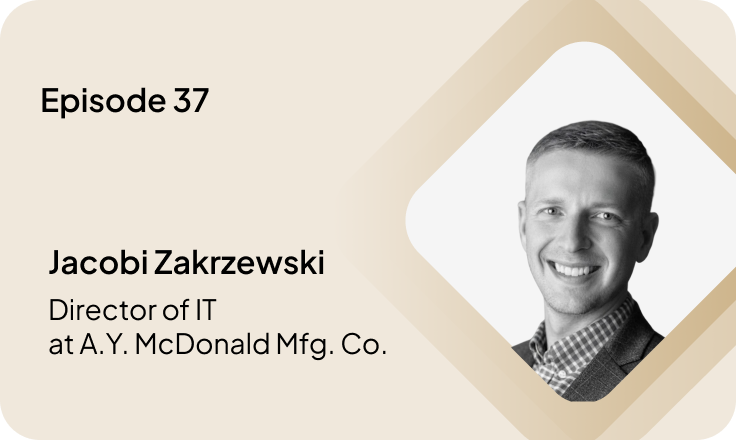
Jacobi Zakrzewski has seen B2B from the manufacturing, distribution, agency, and IT sides. Now Director of IT at A.Y. McDonald Mfg. Jacobi shares his approach to shadow AI, how he separates useful AI from experimentation that creates more noise, and why internal adoption matters as much as customer adoption.
10.08.2026
Step Zero: What Comes Before Every AI Rollout in B2B
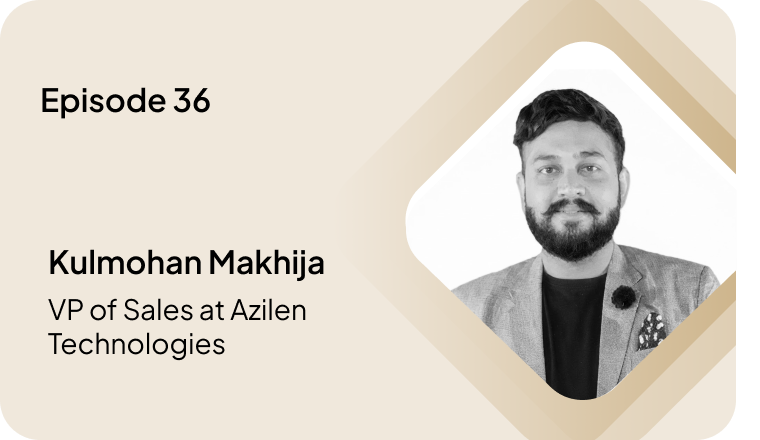
Kulmohan Makhija of Azilen joins Aaron Sheehan to talk about the unglamorous reality of implementing AI in B2B manufacturing and commerce. Kulmohan shares why buyers are shifting their focus from flashy interfaces to operational systems, explains how agentic AI and Model Context Protocol (MCP) are changing system integrations, and breaks down why clean data is the mandatory "step zero" before any AI rollout.

02.04.2026
The Data Behind the Deal: B2B Distribution Through an FP&A Lens with Ryan Cosby
Ryan Cosby, FP&A Manager at Salon Service Group, joins Aaron Sheehan for a ground-level look at B2B beauty distribution. Ryan shares how SSG manages cost-to-serve across multiple channels, wrestles with pricing complexity and margin leakage, and navigates the messy realities of month-end close. He also breaks down what vendors need to bring to the table to earn a yes from finance.