Enterprise AI Governance
The policies, roles, and oversight processes an organization puts in place to control how AI systems are approved, deployed, monitored, and held accountable, especially where they affect financial, legal, or customer-facing outcomes.
What It Is
Enterprise AI governance is the organizational and policy layer sitting above technical controls like guardrails, observability, and benchmarking.
It defines who can approve an agent to take autonomous action, what audit trail is required, how incidents get escalated, and how much scope an agent is allowed as trust in it is established.
It requires business, technical, and risk stakeholders together, not solely an IT or legal function, since the decisions AI systems influence span all of those areas. Frameworks such as the EU AI Act and the voluntary NIST AI Risk Management Framework provide real external reference points for this layer, though specific compliance dates and scope have been subject to ongoing revision and should be checked against current guidance rather than assumed from this document.
In B2B Commerce Context
In B2B commerce, governance becomes concrete the moment an AI system is allowed to touch money or make commitments to customers.
A practical example
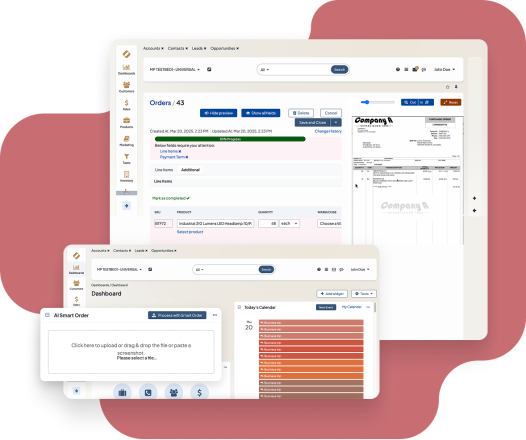
OroCommerce’s MCP Server is a concrete example of this layer in practice: it exposes pricing rules, account hierarchies, and approval workflows to external AI agents through a standardized protocol, so the permission structure travels with the data instead of being reimplemented by every agent that connects to it.
This is what lets an organization scale from a narrow pilot to broader autonomous authority without each expansion being an ad hoc decision.
When You Need It
- You're deploying agentic AI that touches financial transactions or customer commitments.
- You operate in a regulated industry with audit or compliance obligations.
- You have multiple AI features or agents across departments that need consistent oversight.
- You're moving from a pilot to a broader rollout and need a repeatable approval process.
Build the governance structure before expanding an agent’s autonomy, not after an incident forces it.
What It Is Not
- Enterprise AI governance is not the same as AI guardrails. Guardrails are the technical enforcement; governance is the policy and accountability structure that decides what those guardrails should be.
- It is not a one-time compliance checkbox, it needs to evolve as AI systems' scope and autonomy expand.
- It is not solely an IT or legal function. It requires business, technical, and risk stakeholders together.
Comparison
| Attribute | Enterprise AI Governance | Ad Hoc AI Adoption |
|---|---|---|
| Approval process | Defined chain based on risk and scope | Decided case by case, often informally |
| Accountability | Clear ownership and audit trail | Unclear who owns an incident |
| Scalability | Repeatable as new use cases are added | Each new use case reinvents the process |
| Incident response | Defined rollback and escalation plan | Improvised after the fact |
See also
Ready to see it in action?
Book a demo of OroCommerce
See how agentic workflows fit into complex B2B commerce, with a walkthrough tailored to your stack.