navigation

Putting a few products together and calling it a bundle is easy. Getting customers to buy it, especially when they have their own purchasing rules and negotiated prices, takes a little more thought.
So what makes eCommerce product bundles worth offering? Let’s get into it.
- Steal a few bundling ideas from B2B sellers.
- Find missed opportunities in your order history.
- See how a generous discount can eat your profits.
- Find out if your bundles are making money or just moving orders around.
What Are eCommerce Product Bundles?
eCommerce product bundling is a sales technique that combines two or more related products into a single offer. Bundles may be sold at a discounted price, but the main appeal can also be convenience or getting a complete set of compatible products.
There are two main approaches:
- Pure bundling: Customers can only purchase the products together as a bundle.
- Mixed bundling: Customers can purchase the bundle or buy the individual products separately.
Bundles can have fixed contents or allow customers to choose components based on their needs.
Why Should B2B Companies Create Product Bundles?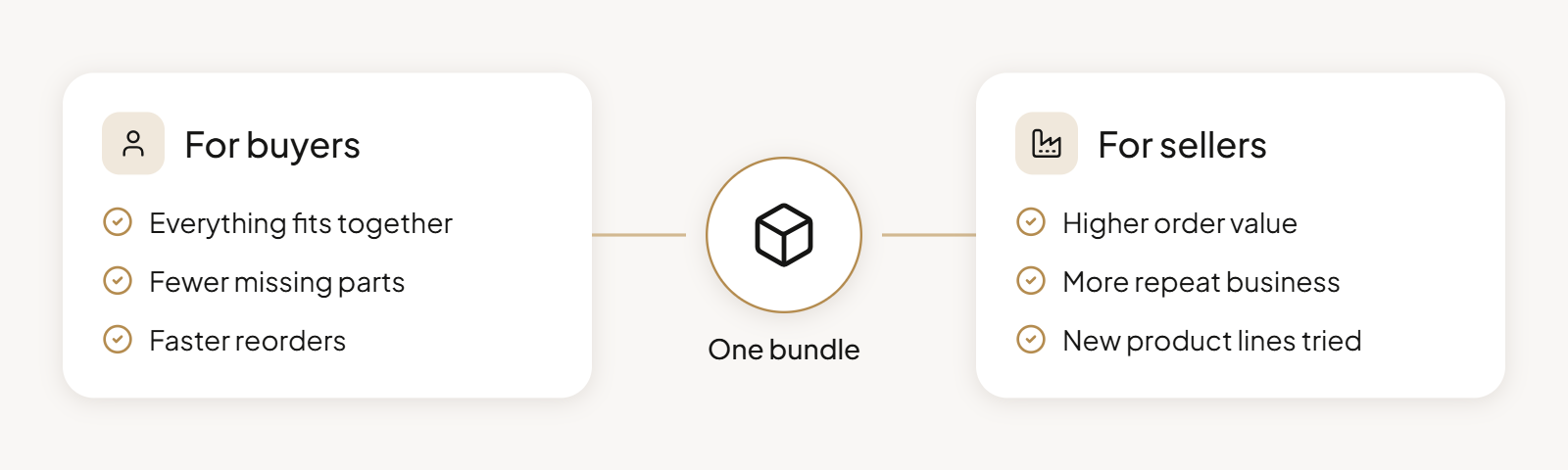
Selling more is an obvious reason to create product bundles. But for manufacturers and distributors, the benefits often start with making purchasing easier for customers.
Here are four ways a good bundling strategy can benefit both sides:
Increase average order value
- Bundling complementary products encourages customers to purchase multiple items together, creating opportunities to cross-sell products they might otherwise overlook.
- For sellers, this can mean higher online sales, particularly when customers discover useful accessories they wouldn’t have thought to order on their own.
Improve the customer experience
- Buyers can order a complete setup instead of searching for individual components and checking whether everything works together.
- Customers feel more confident about their purchases when compatibility is clear. That also reduces the risk of missing parts and the extra orders needed to get them.
Encourage repeat sales
- Maintenance and replenishment bundles make it easier for customers to reorder supplies they need regularly, rather than searching through the catalog every time.
- For distributors, that convenience can support repeat business and customer satisfaction, especially when customers manage purchasing across multiple locations.
Introduce customers to more products
- Starter bundles help buyers discover new equipment or product lines by including the components needed to get started.
- Customers may be more willing to try an unfamiliar product when the necessary accessories are included, even if the complete kit comes at a higher price than the main product alone.
A bundle discount can make an offer more attractive, but customers may find just as much perceived value in convenience and compatibility. Putting several products together doesn’t automatically make them more appealing. The best bundles reflect what customers need and how they prefer to buy.
What else should your B2B eCommerce platform handle? Explore 12 features
worth having.
Product Bundling Strategies for Manufacturers and Distributors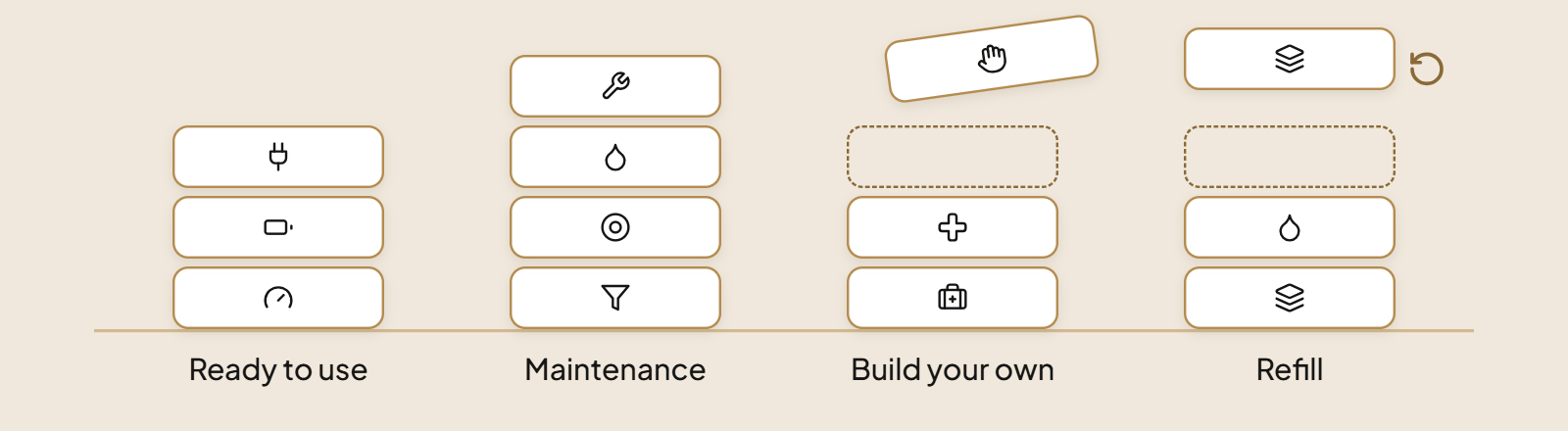
Some bundles come ready to use, while others give buyers more freedom to choose. Here are four ways manufacturers and distributors can create bundles for different purchasing needs.
1. Create Ready-to-Use Equipment Bundles
Equipment often requires additional components before customers can start using it. Manufacturers can make purchasing easier by offering ready-to-use bundles that combine the main product and compatible accessories in a single package.
For manufacturers, it’s an opportunity to increase sales by selling multiple products together. But customer preferences matter, too. A contractor who already owns compatible batteries may prefer buying the tool alone, so offering both options makes sense.
2. Bundle Maintenance and Replacement Parts
Servicing a machine often means replacing several components at once. Manufacturers and distributors can group these parts into maintenance kits based on equipment models or service schedules, making it easier for customers to order everything needed for the job.
Grainger offers a good example. It sells an Ingersoll Rand air compressor maintenance kit containing a pre-filter, air and oil filters, a separator element, and lubricant. The product listing also specifies which compressor models the kit fits, so buyers can check compatibility before placing an order.
For distributors, it’s an opportunity to sell frequently bought parts together. For maintenance teams, it means fewer individual products to track down and less chance of discovering a missing component when it’s time to service the equipment.
3. Let Customers Build Their Own Bundles
Not every customer needs the same combination of products. A construction company, hospital, and food processing plant might all need first aid supplies, but what’s inside their kits will look quite different.
A mix and match approach lets customers choose the bundle items they need rather than settle for a standard package. Sellers can also set rules to make sure the selected products work together or meet specific requirements.
MFASCO Health & Safety offers a good example. Its online store features a Make A Kit tool where customers can choose a first aid container and fill it with supplies. As they add products, the tool shows the total cost and how much space is left in the container. It can even flag changes that would make a workplace kit fall short of selected safety standards.
4. Create Bundles for Recurring Purchasing Needs
Some products need regular replenishment, especially in manufacturing facilities, warehouses, and other workplaces. Distributors can create bundles around these recurring needs, making it easier for customers to restock supplies instead of selecting every item individually.
Take Uline, for example. Its industrial spill kits contain absorbent pads, socks, pillows, and protective equipment. Once those supplies have been used, customers can purchase a refill kit with replacement materials instead of buying the entire setup again.
For distributors, offering these bundled products through an online store creates opportunities for repeat sales. Buyers get a convenient way to restock familiar supplies, and sellers have another reason to keep customers coming back.
How to Identify Products for Sales Product Bundling
Your bestseller list is a tempting place to start, but it won’t tell you much about which products belong together. A customer might buy a machine on Monday and call their sales rep for accessories on Thursday. Two separate orders, one purchasing need.
Here’s a three-step process for finding opportunities worth exploring.
Step 1: Find Potential Bundles in Your Sales Data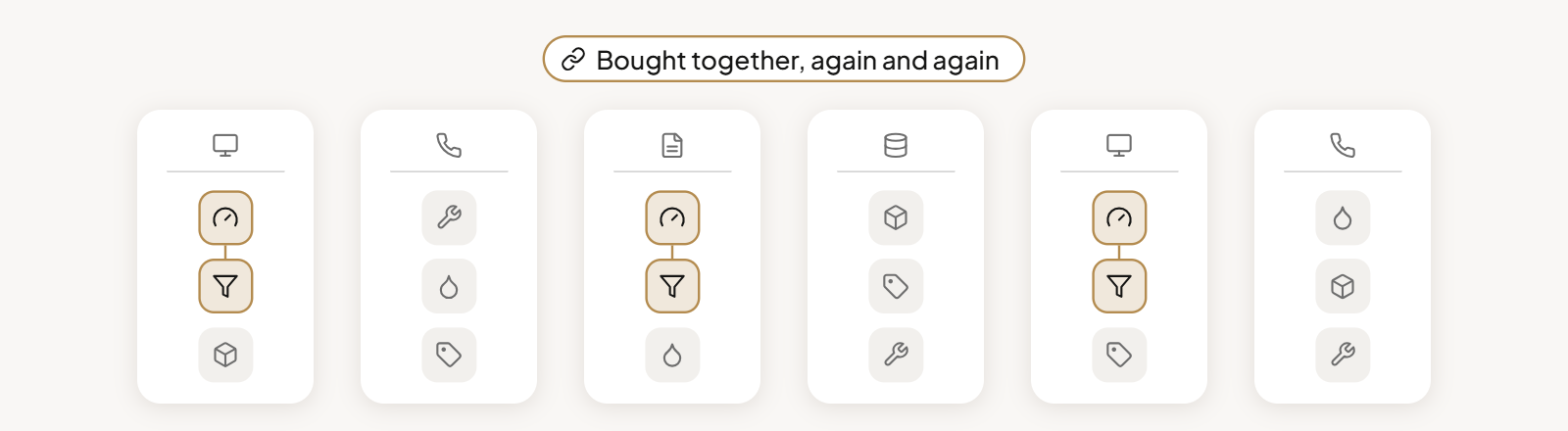
Look beyond individual orders. Review purchasing patterns across your online store, ERP, quotes, and other sales channels to identify products frequently bought together or bought separately within a short period.
Analyze purchases at the customer account level over a period that reflects your typical buying cycle. You may find that certain accessories consistently follow equipment purchases or that customers reorder the same combination of consumables every few months.
Step 2: Check Whether the Products Belong Together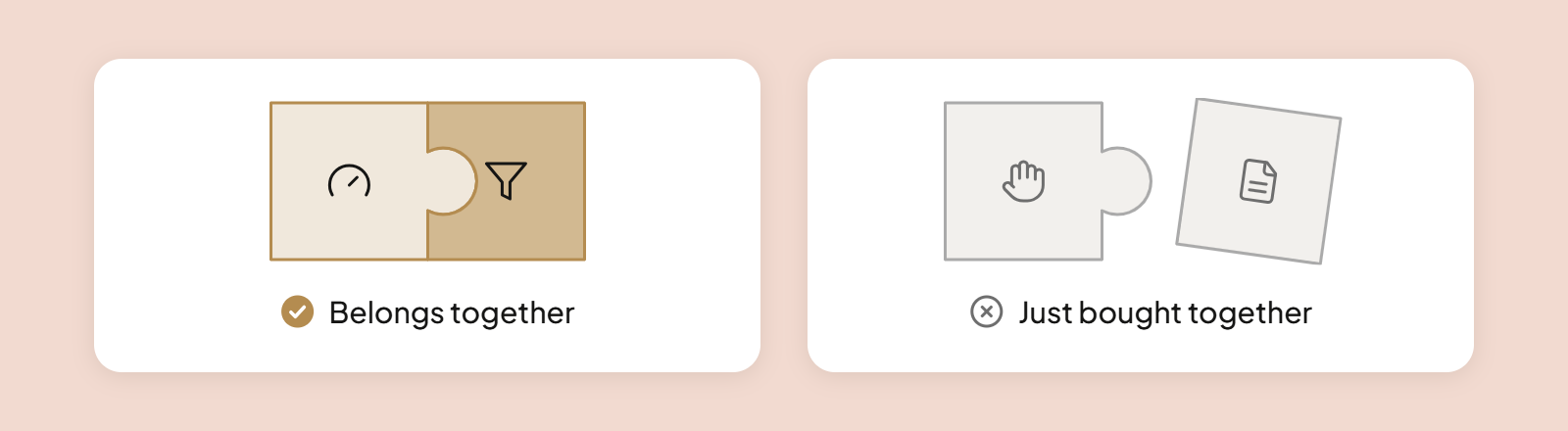
Just because customers frequently purchase two products doesn’t mean they’d want them in a bundle. A maintenance manager might order safety gloves and printer paper together, but there’s little reason to package them as a set.
Look for combinations that serve a common purpose, work together, or make a particular task easier. Bring in your sales reps and product specialists. They can help confirm compatibility and identify items customers often forget to order.
Step 3: Prioritize Bundles Worth Testing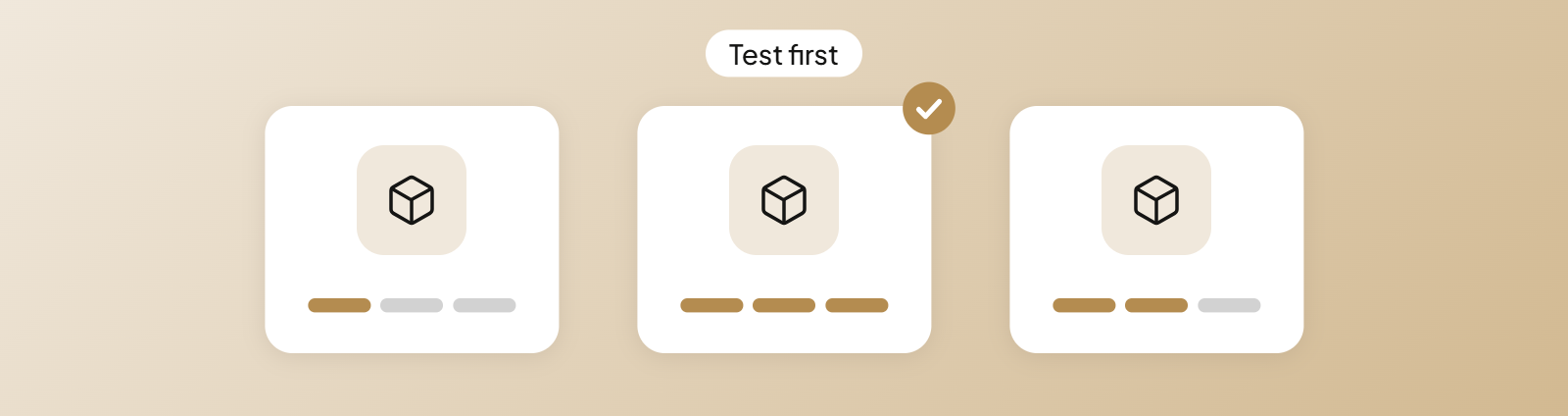
Before creating bundle deals, ask yourself: would this offer encourage customers to buy something extra, save them time, or give them more value?
If customers already purchase everything together at full price, a bundle discount might simply eat into your margins.
Start with a few promising combinations, check their profitability and inventory availability, and see how customers respond. Use those findings to decide which bundles deserve a permanent place in your catalog.
How to Price Product Bundles Without Sacrificing Margins
A bundle discount can help drive sales, but there’s a catch in B2B: two customers might pay very different prices for the same products. A bundle that looks like a good deal to one buyer might cost another more money than purchasing the items separately.
So before putting a reduced price on a bundle, consider how it fits with your existing pricing agreements.
There are three common approaches:
| Pricing approach | How it works | What to watch out for |
|---|---|---|
| Fixed bundle price | Sell the complete kit for a set price. | A standard price might conflict with negotiated customer rates. |
| Component-based pricing | Calculate the bundle price from the individual products, including customer-specific prices. | Configurable bundles need to recalculate when customers change their selections. |
| Discounted bundle pricing | Offer a percentage or fixed discount on the combined price. | Existing contract discounts and promotions can eat into margins if they stack. |
Check What Customers Already Pay
Consider a customer who pays $500 for a set of replacement parts under their existing contract. Those parts cost your business $390.
Offer a 10% bundle discount, and the numbers change:
- Sold separately: $500 revenue, $110 gross profit.
- Sold as a discounted bundle: $450 revenue, $60 gross profit.
You’ve given up $50 in gross profit on an order the customer might have placed anyway. And that’s before accounting for any additional distribution costs.
This is why it’s worth comparing bundle prices against what each customer would pay for the individual products, rather than using standard catalog prices as your benchmark.
Make Sure the Discount Earns Its Keep
A bundle doesn’t always need to help customers save money. Sometimes the convenience of ordering compatible parts together provides enough value to justify the price.
If you do offer a discount, consider what you’re getting in return. Does it encourage customers to add products they wouldn’t otherwise purchase? Does it introduce them to a new product category? Or are you simply collecting less money for the same order?
For successful product bundling, calculate how many additional orders you’d need to make up for the lower profit on each sale. Higher sales sound great, but only if the discount pays for itself.
How to Sell Product Bundles Through Your eCommerce Website
You’ve picked your products and worked out the pricing. Now comes the next challenge: making sure customers discover your bundles and understand why they’re worth buying. After all, even a well-priced offer won’t do much for your online sales if nobody sees it.
Here are a few marketing tactics worth getting right when selling product bundles.
Put Bundles Where Customers Are Already Shopping
Don’t assume buyers will browse a dedicated bundles category. Someone searching for a specific pump model might never think to look for an installation kit.
Instead, display relevant bundles on product pages, in search results, and alongside related products. When a customer adds equipment to their cart, suggest compatible accessories or a complete kit.
You can also use dynamic bundles to tailor recommendations based on purchase history or products being viewed. This can help with product awareness, particularly when customers aren’t familiar with your full catalog.
See how AI search improves product discovery and cross-selling in B2B eCommerce.
Show Exactly What’s Included
B2B buyers need more than a product image and a catchy bundle name. They want to know which components they’re getting and whether those parts will work with their equipment.
List individual SKUs, quantities, specifications, and compatibility information. For configurable bundles, make it clear which components are required and which can be swapped out.
And if the bundle offers a discount, show how it compares with purchasing the products individually. A bundle advertised as a good deal won’t impress buyers if their negotiated prices make the separate items cheaper.
Account for How Business Customers Buy
Online shoppers purchasing office supplies for themselves have different needs from procurement teams ordering for several facilities.
Make sure your bundles work with customer-specific catalogs, negotiated pricing, and purchasing approval workflows. If customers use shopping lists or quick-order forms, make bundles available there too.
Make Reordering Just as Easy
A customer who has already purchased a maintenance kit shouldn’t have to hunt it down again six months later.
Let buyers save bundles to shopping lists, reorder them from purchase history, or revisit previous configurations. For new customers, consider offering ready-made kits for common applications to help them get started.
One of the most practical product bundling benefits is that a useful kit can become part of a customer’s regular purchasing routine. That’s a much stronger reason to keep coming back than another one-time promotion.
Why OroCommerce Is the Best eCommerce Solution with Product Bundling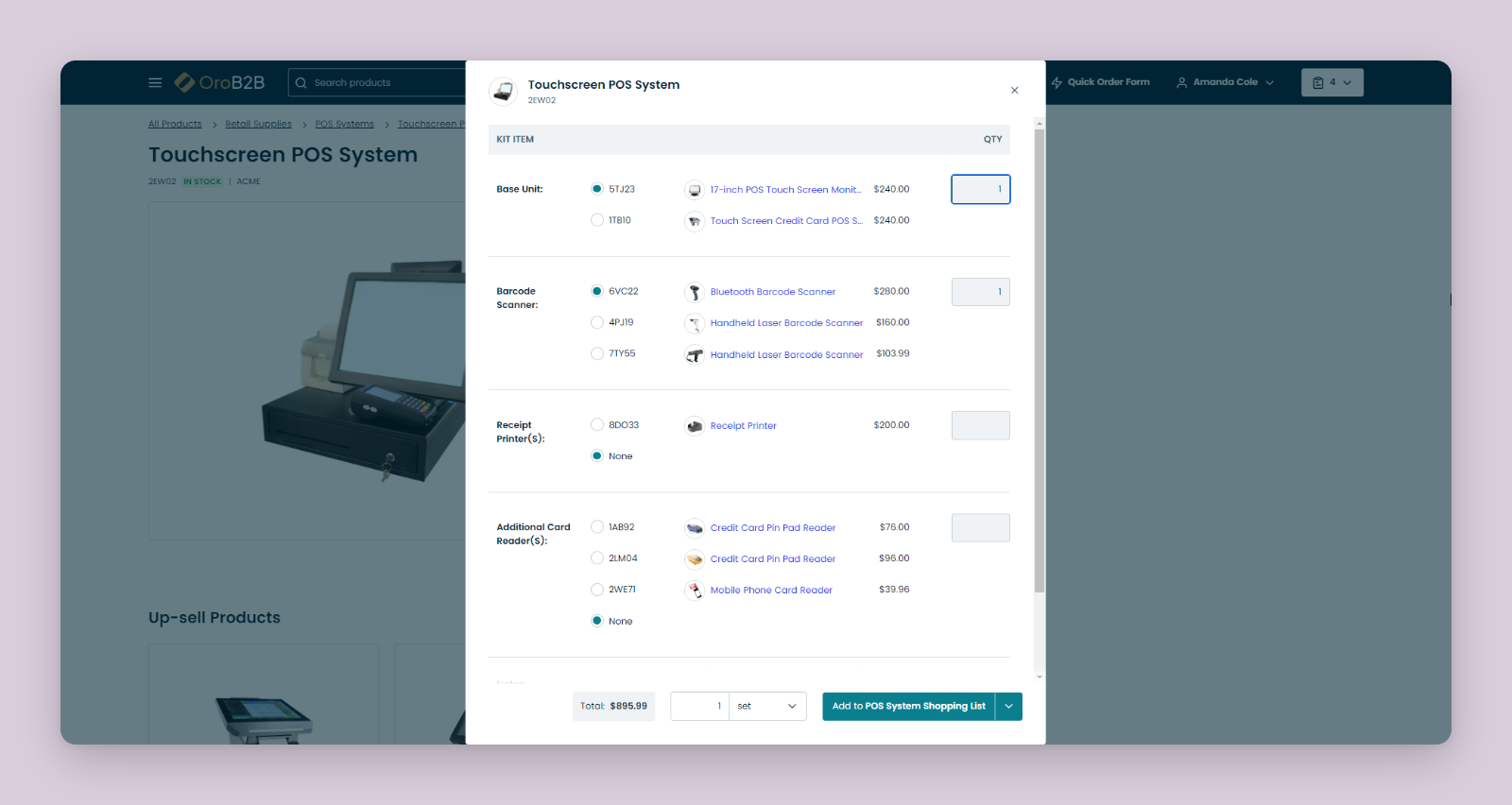
OroCommerce is a B2B eCommerce platform built for manufacturers and distributors with sophisticated sales processes. It supports everything from customer-specific catalogs and pricing to online quoting and repeat purchasing.
Product bundling is one of its built-in capabilities. Businesses can create predefined kits or let customers configure their own, with several options for managing the products and prices involved.
Here’s how it works:
- Configurable product kits. Combine related products into a single offer, define mandatory and optional components, and let customers select the items they need.
- Flexible pricing. Set a base price for a kit or calculate the total from its individual components. Quantity-based pricing and promotions are also supported.
- Product availability. Check inventory availability for kit components and display product information so buyers know what they’re ordering.
- Convenient reordering. Customers can use shopping lists and order history to find previously purchased products, making repeat purchases easier.
See how Oro supports configurable product kits, giving customers more control over what goes into their orders.
Need More Advanced Product Configuration?
OroCommerce also partners with Threekit, a visual product configuration platform. Together, they help manufacturers offer interactive 3D product experiences, allowing buyers to explore different configurations before requesting a quote.
This is particularly useful for manufacturers selling made-to-order equipment with numerous options that are difficult to communicate through product descriptions alone.
How to Measure Product Bundling Success
Your bundles are live, customers can find them, and orders are coming in. So, is the strategy working?
That depends on what you wanted to achieve. An equipment starter kit designed to boost revenue should be measured differently from a maintenance kit intended to encourage repeat purchases.
Here’s what to track:
| Metric | What it tells you |
|---|---|
| Average order value (AOV) | Are customers spending more per order when purchasing bundles? |
| Bundle conversion rate | What percentage of customers who view a bundle end up buying it? |
| Product attachment rate | Are more customers purchasing complementary items alongside the main product? |
| Gross profit per order | Is the additional revenue enough to offset bundle discounts and costs? |
| Repeat purchase rate | Are customers returning to reorder maintenance or replenishment kits? |
Look Beyond Individual Orders
An increase in online bundle sales looks promising, but what if those customers previously placed the same orders through sales reps or EDI? You’ve made purchasing more convenient, which is valuable, but you haven’t necessarily generated additional revenue.
To understand the impact, compare total customer spending across all sales channels over a full purchasing cycle. Look at whether customers are purchasing more products or simply changing how they order.
If you’re using bundles to move slow moving inventory, track whether the offers are helping clear stagnant inventory profitably rather than simply shifting stock at a discount.
Ultimately, judge each bundle against the business goal you set for it. A larger order, on its own, doesn’t tell you whether the strategy was successful.
Conclusion on eCommerce Product Bundles
Product bundling works best when it makes buying easier for customers and creates a worthwhile opportunity for your business. Whether you’re selling equipment kits or replenishment supplies, start with a clear purchasing need. From there, use customer behavior and sales data to decide which bundles deserve a place in your catalog.
See how Oro supports configurable product kits, giving customers more control over what goes into their orders.
Frequently Asked Questions
What is bundle pricing and how is it used in marketing?
Bundle pricing offers several products together at a combined price, often lower than buying them separately. Unlike bogo deals, bundles don’t require a free item. Businesses use them to increase order value or help clear dead stock.
What does "bundling" mean?
Bundling means combining multiple products into one offer. This can include complementary items sold together or same product bundles, such as multipacks of replacement filters.
What is an Amazon product bundle?
An Amazon product bundle combines related items into one listing. Amazon also supports virtual bundles, allowing eligible sellers to offer products together while using existing stock for inventory management.
What is the difference between cross-selling and bundling products?
Bundling sells products together as a package, while cross-selling recommends additional items. For example, a distributor might bundle skincare products into a salon starter kit but cross-sell an extra cleanser during checkout.