navigation

A large customer has been ordering less for several months. Sales has its CRM history, finance tracks revenue across business units, and eCommerce monitors portal activity. Each team has a piece of the picture, but nobody has noticed the account’s overall decline.
By the time someone connects the dots, the customer may have already shifted a significant share of its business to a competitor.
This is one reason a single source of truth matters. When departments rely on disconnected or inconsistent data, even important changes can go unnoticed.
In this article, we’ll explore how to establish a single source of truth across your existing systems, why it matters for your business today, and how it can support your digital transformation and AI plans tomorrow.
What Is a Single Source of Truth?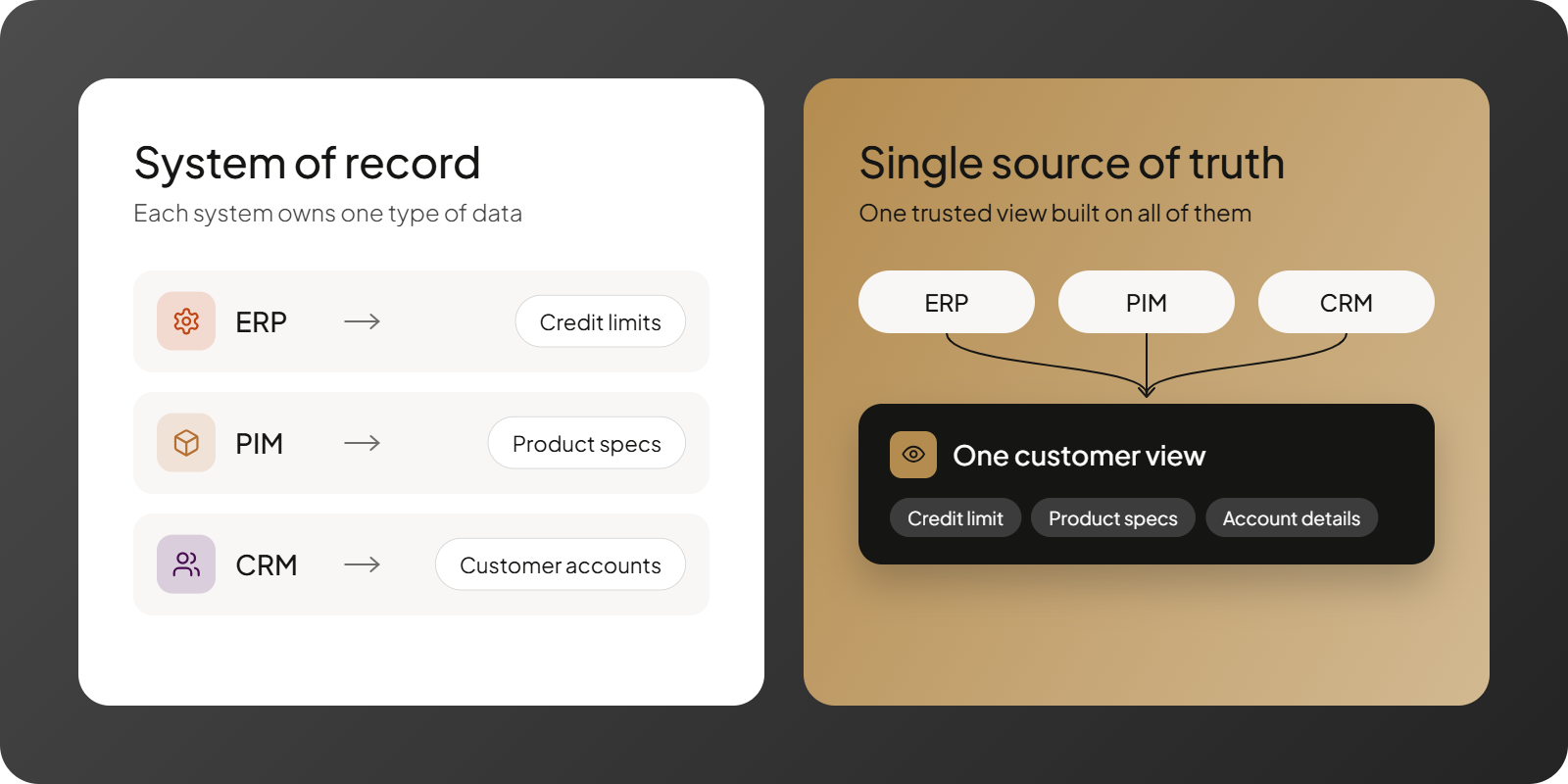
A single source of truth (SSOT) is a trusted reference for critical business information. When different departments or systems have conflicting data, everyone should know which information is authoritative, so they can work with the same reliable data.
The word single can be misleading, though. Most manufacturers and distributors rely on multiple systems for good reasons. Their ERP manages financial and customer data, their PIM holds product specifications, and their eCommerce platform enforces buyer access controls. There’s little sense in making one application do everyone else’s job.
This brings us to two related concepts that are easy to confuse:
- System of record: The application responsible for maintaining a particular type of data. For example, an ERP might be the authoritative source for customer credit limits.
- Single source of truth: A trusted view of information that draws on authoritative data sources and helps different teams access consistent data across the business.
Say a distributor stores contract prices in its ERP and technical specifications in its PIM. Its customer portal can use accurate data from both systems to show buyers the products they’re authorized to purchase at their negotiated prices. And when that information changes, the portal needs to stay up to date.
The information comes from different places. The customer gets one dependable answer.
Key Benefits of a Single Source of Truth for Business Operations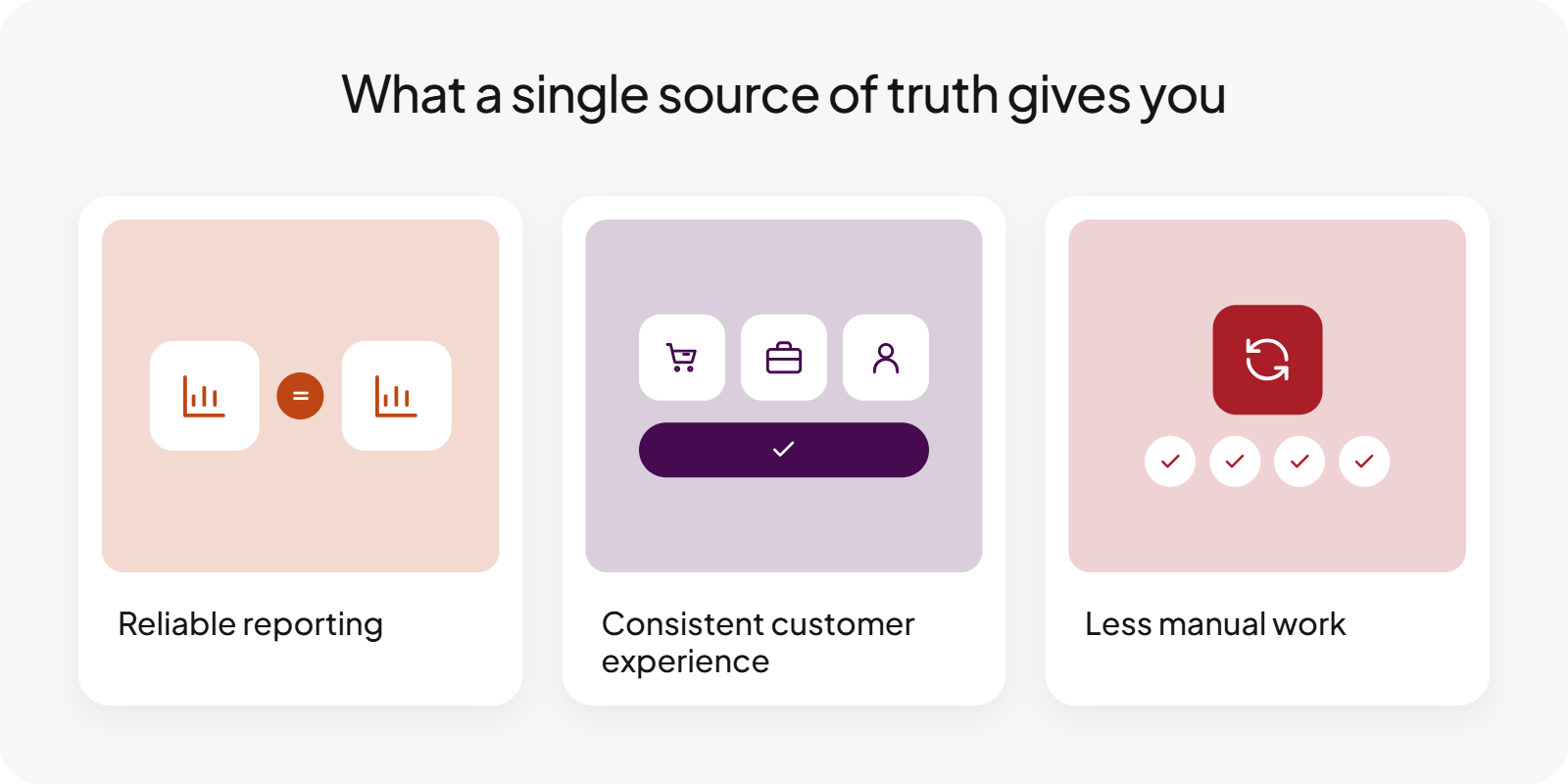
A manufacturer acquires another business and inherits its ERP. A regional office keeps its own CRM because migrating would disrupt sales. Someone builds a spreadsheet to fill a reporting gap, and ten years later, the entire department depends on it.
Each decision made sense at the time. Together, they’ve created data silos that make even ordinary business tasks unnecessarily difficult.
Here’s what a single source of truth can help fix.
Get consistent business reporting
Leadership asks how many orders were fulfilled last quarter. The ERP report gives one number, while the business intelligence dashboard shows a higher figure. Turns out, some orders placed through the eCommerce portal were counted again when they entered the ERP.
A single source of truth helps teams identify records that represent the same transaction and agree on which data to use for reporting. That gives business intelligence a reliable foundation, so decision makers can trust the numbers instead of spending time investigating discrepancies.
Honor customer agreements across every sales channel
A sales rep agrees to extended payment terms for a customer. Unfortunately, the eCommerce portal hasn’t received the memo. The customer gets blocked at checkout and calls sales.
Keeping customer data up to date across systems helps ensure the terms negotiated offline are reflected online. That’s particularly important when you’re asking buyers to use self-service instead of picking up the phone.
Reduce duplicate data entry and manual updates
One customer changes their shipping address. Simple enough, until someone discovers their details are stored in four different databases.
Duplicate records and outdated information turn small updates into recurring work. Better data management reduces manual corrections and frees employees from checking whether the same information has been updated everywhere.
Of course, getting everyone to agree that they need reliable data is the easy part. Deciding which system gets the final say is where things get interesting.
Take a short self-assessment and see where tech debt shows up in your daily operations.
How Does a Single Source of Truth Work Across Multiple Systems?
Who gets the final say? That depends on what you’re asking.
Your ERP can confirm whether an invoice has been paid. But should it also decide which employee at a customer’s company can approve a $25,000 order? That’s a purchasing workflow, and a B2B commerce platform is better equipped to manage it.
You could customize an ERP to handle both, but then every change to the buying experience risks becoming another back-office development project. We’ve explored why ERP and B2B commerce need different responsibilities in more detail.
For manufacturers and distributors, the division of responsibilities might look something like this:
| Business information | Potential authoritative system | How it’s used in B2B commerce |
|---|---|---|
| Customer accounts and credit terms | ERP or CRM | Displaying account terms and validating purchases |
| Product specifications | PIM | Showing technical details and product documentation |
| Contract pricing | ERP or commerce pricing engine | Calculating customer-specific prices |
| Inventory availability | ERP, WMS, or OMS | Showing available stock |
| Buyer roles and approvals | B2B commerce platform | Controlling who can purchase and approve orders |
| Orders and fulfillment status | Commerce, ERP, or OMS | Supporting order placement and tracking |
These assignments aren’t universal. One company might manage contract pricing in its ERP, while another maintains it in its commerce platform.
Even individual customer records can have different owners. Finance might control billing terms, while commerce manages which users can place orders on that account.
With ownership established, integration allows each system to use information maintained elsewhere while keeping responsibility for its own data.
For example, the commerce platform can check an ERP-managed credit limit before allowing a purchase, then apply its own rules to determine whether the buyer needs additional approval.
This approach also works for companies running several ERPs. Different business units can retain their operational systems while sharing common commercial processes.
And when an AI assistant eventually joins the conversation, knowing where authoritative information comes from becomes even more valuable.
Why AI Needs a Single Source of Truth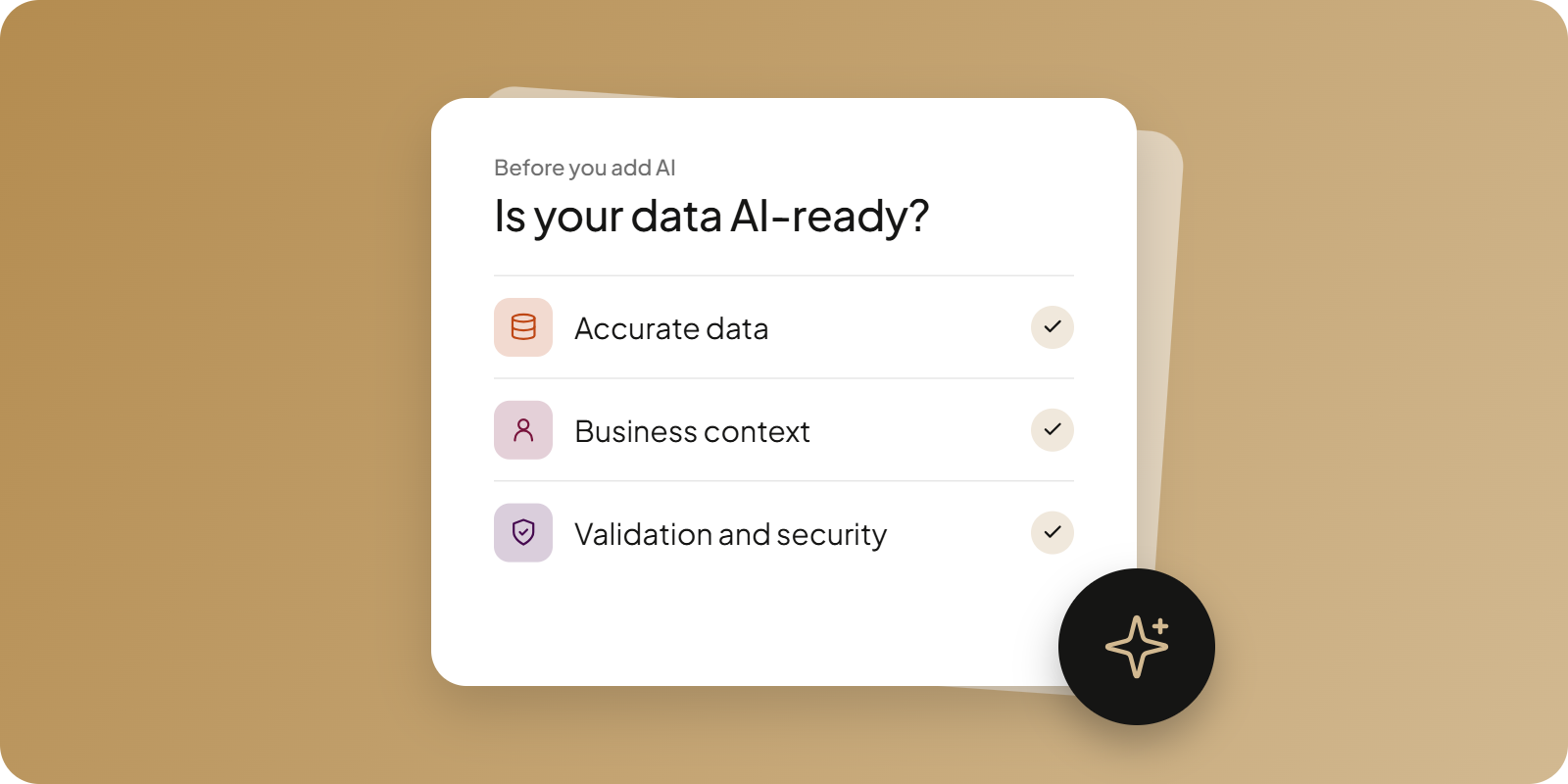
An employee who spots suspicious information can ask a colleague to double-check it. An AI assistant might confidently present it as fact and use it to take the next action.
As manufacturers and distributors begin trusting AI with more business processes, data quality becomes increasingly important. Before an AI assistant can answer customer questions or process orders, it needs:
- Accurate, reliable data. Product records must be up to date, and customer information must come from a trusted source. Giving AI access to the same outdated data across multiple tools won’t improve its answers. Our guide to using AI in eCommerce explains why the underlying data architecture deserves attention before choosing AI tools.
- Business context. AI needs a unified view of the information relevant to each task. Knowing a product is available isn’t enough. The assistant must also understand which customer is asking, what terms apply, and whether approval is required.
- Data validation and security. AI needs to respect existing access controls, protect critical data, and flag questionable information for human review. Our AI governance guide explores how organizations can maintain oversight as AI takes on more responsibility.
The promise of AI is greater operational efficiency. But those gains disappear pretty quickly if employees have to spend their time correcting AI-generated mistakes.
AI can help process information faster, but it can’t resolve conflicting records across other systems unless the business has established which source takes precedence. That’s why managing data quality and ownership is an important part of preparing for AI adoption.
Implementing Single Source of Truth in Your Organization
So, where do you start? Hopefully, not with a six-month project to consolidate data from every department into one enormous repository. Your IT team has enough on its plate.
One of the biggest challenges of implementing a single source of truth is deciding what to tackle first. Start with the business processes where unreliable information causes the most trouble, then work outward.
1. Pick a problem worth fixing
Look for situations where employees regularly double-check critical information or correct mistakes. How much time is spent resolving discrepancies? Which problems affect customers?
For example, a distributor with a million SKUs doesn’t necessarily need to clean up every product record before improving its online catalog. In our conversation with Jason Hein, he recommends prioritizing high-traffic product categories where poor data quality affects the buying experience.
Apply the same thinking to your wider data management efforts. Measure the cost of the problem first, so you can make data-driven decisions about where to invest.
2. Give your data a clear owner
For each critical data element, identify one trusted source. The goal is to help different teams work with the same data, even when it comes from various systems.
Let’s use a product’s unit of measure as an example, because ordering 50 boxes instead of 50 individual units is nobody’s idea of a good Tuesday.
| Question to answer | Example decision |
|---|---|
| Which system owns this information? | ERP maintains the approved selling unit and pack quantity. |
| Where is it used? | Commerce uses it when buyers order; WMS uses it for fulfillment. |
| Who can change it? | Authorized product data managers. |
| How quickly must updates appear? | Before the updated product can be ordered. |
| What happens if records disagree? | Flag the mismatch and send it to the designated data owner. |
Document these decisions before building new integrations. It’s much easier than figuring out who owns the information after something goes wrong.
3. Connect systems according to how information is used
You don’t have to move everything into a single location. Your integration approach should allow applications to access information from the reliable source while continuing to perform their own jobs.
A product description might be synchronized overnight. Inventory availability or a customer’s credit status may need to be checked when an order is placed.
Choose APIs, event-based updates, or batch synchronization based on those requirements. Our guide to B2B integration explores the technology options for connecting existing software.
Not sure what should sync in real time and what can wait until tonight? Our ERP integration guide walks you through it.
4. Catch bad data quality before it travels
Integration can spread errors just as efficiently as correct information. That’s why data quality checks need to be part of your processes.
At a minimum, establish rules for:
- Data validation: Reject records with missing required fields or invalid product identifiers.
- Duplicate detection: Identify customer records that refer to the same account before creating another entry.
- Data reconciliation: Compare information across connected systems, investigate discrepancies, and correct records at their authoritative source.
- Data security: Control who can access or modify sensitive information and ensure compliance with applicable requirements.
These checks help reduce errors before they reach customers or interfere with downstream operations.
5. Keep someone responsible for data management after launch
A single source of truth needs ongoing attention. New software gets introduced, companies acquire other businesses, and existing processes change.
Assign responsibility for monitoring integration failures and reviewing data quality. Bring employees who work with the information into the process, too. Good change management means helping them understand which source to trust and making it easy to report problems.
After all, if everyone goes back to maintaining their own spreadsheets, your carefully planned SSOT architecture won’t count for much.
How OroCommerce Puts Trusted Business Data to Work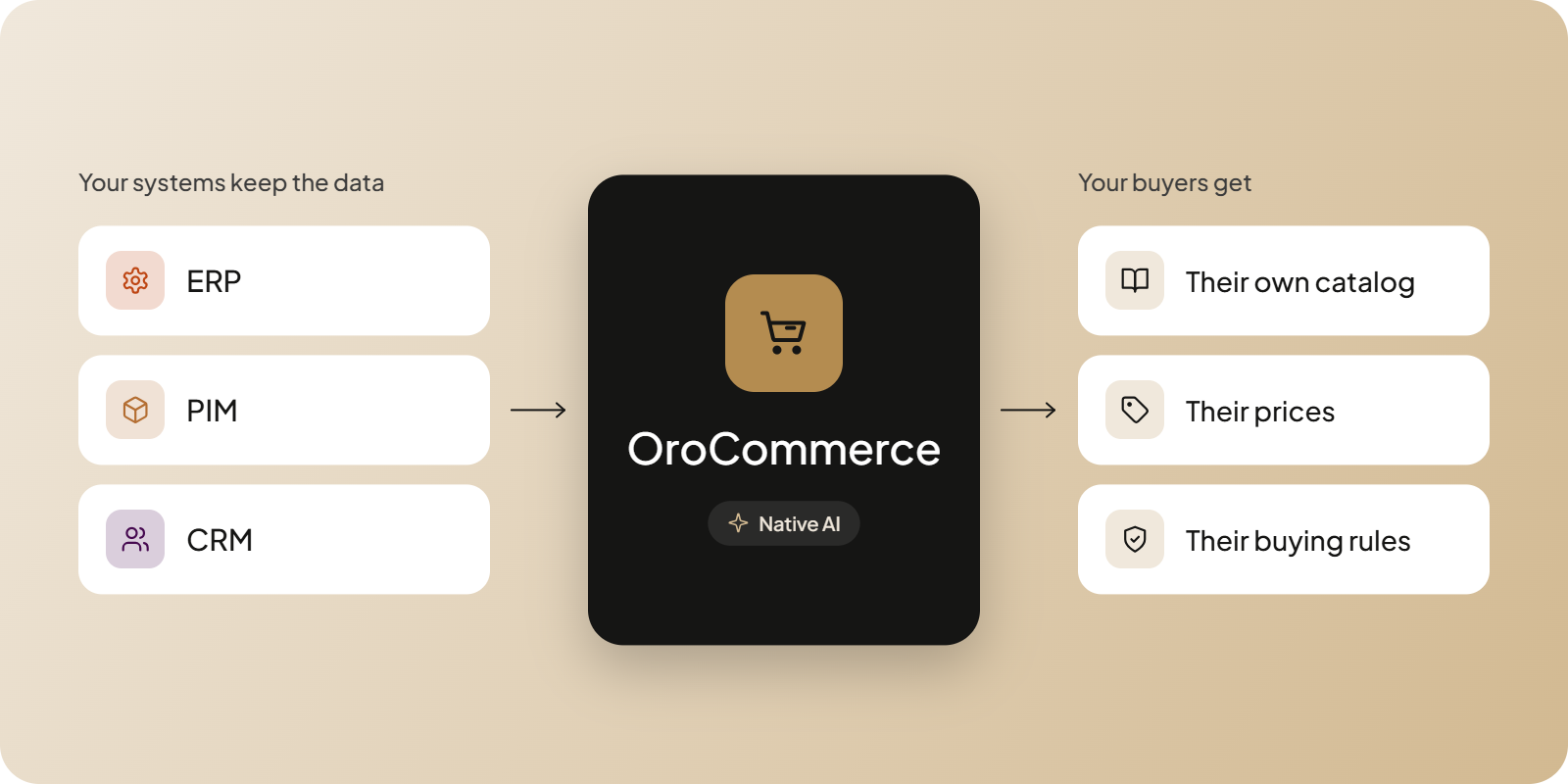
OroCommerce is a B2B eCommerce platform built for manufacturers and distributors. It connects with ERP, PIM, and other business systems, bringing trusted information into one place where customers and sales teams can use it.
Companies can keep their existing systems responsible for the data they own, while OroCommerce uses that information to manage customer-specific catalogs, pricing, and purchasing rules.
Single Source of Truth Example in Distribution Sales
You can spend months deciding which system owns your product data. But if customers can still order something they’re not authorized to buy, there’s a problem.
That’s what industrial distributor EECO wanted to avoid.
With 1.5 million SKUs and supplier agreements that restrict product sales by territory, EECO had to maintain separate catalogs for different customers. Every change meant more manual updates and another chance for information to fall out of sync.
EECO connected OroCommerce to its Epicor Prophet 21 ERP, allowing the storefront to apply product eligibility rules based on each customer’s account.
Here’s what changed:
| Before | With OroCommerce |
|---|---|
| Separate static catalogs maintained manually. | Customer-specific catalogs assembled using ERP data. |
| Changes to supplier restrictions required catalog updates. | Product visibility follows the applicable customer and territory rules. |
| Different purchasing channels required careful coordination. | Website and PunchOut customers use the same commerce engine and account-specific pricing. |
EECO can now expand its active product catalog without adding catalog management staff at the same rate.
And because OroCommerce also connects to enterprise procurement systems through TradeCentric, customers can purchase through their preferred channels while working with the same commercial information.
That’s what OroCommerce brings to a single source of truth strategy: a common commercial foundation where trusted information becomes usable across the business.
And with native AI capabilities working within that same environment, companies have a stronger starting point for introducing AI into their selling processes.
Ready to put your business data to work? See how OroCommerce supports complex B2B operations.
Conclusion: Make Better Decisions With Data You Can Trust
There’s probably a lot your business could learn from all the data sitting in its existing systems. If only someone had the time to piece it all together, especially when information lives in multiple places and different versions keep making the rounds.
A single source of truth gives teams a more dependable picture of what’s happening across the business. Less time spent reconciling information means more room for better collaboration and decisions based on reliable data. It also gives AI a better starting point when you’re ready to put it to work.
And perhaps your next management meeting can be about what the numbers mean, rather than whose numbers are right.
FAQ About Single Source of Truth
What is an example of a data source?
A data source is any system or location that provides information. In manufacturing and distribution, common examples include ERP systems for orders and financial records, CRM software for customer interactions, and PIM systems for product specifications. Spreadsheets and databases can also serve as data sources.
What is another way to say single source of truth?
Single version of the truth, authoritative data source, and trusted source of information are common alternatives. However, they aren’t always interchangeable. A single source of truth can combine information from several authoritative systems to provide a consistent view across the business.
How does a single source of truth support data compliance?
A single source of truth helps organizations standardize data and establish consistent governance rules. Centralized data governance makes it easier to enforce access controls, track data lineage, and demonstrate how sensitive information is managed during audits.
Can a single source of truth support real-time business reporting?
Yes, provided the underlying systems supply timely, accurate data. Unified dashboards can bring information from multiple sources together, helping leaders spot changes and make faster decisions. Start with critical business metrics, clean and standardize the relevant data, and expand reporting in phases.