
navigation

80% of B2B manufacturers and distributors have AI deployed across at least one commerce function. 17% report significant AI ROI. That gap has produced a lot of explanations: wrong use cases, poor data quality, unrealistic timelines. And they’re not wrong.
Building trust in AI is what they leave out. Not trust as a concept, but the day-to-day kind: whether the model shapes decision making on the warehouse floor, or whether a buyer’s chatbot returns their contracted price rather than a catalog default.
That erosion moves through three relationships: with your people, with the systems and vendors you deploy, and with your buyers. This piece covers each one, in the order they tend to break, and what you need in place before they do.
Employee Trust: The Rollout That Skips Your Staff Won’t Stick
The pressure to adopt AI technologies rarely comes from the floor. Gartner Generative and Agentic AI in Enterprise Applications Survey shows 65% of IT leaders feel artificial intelligence pressure straight from executive leadership.
Executives set the go-live date, IT turns on the tools, and the managers responsible for getting their teams to use them weren’t in the room for either decision.
The data confirms what most distribution leaders already feel:
- Gallup polling confirms this disconnect, reporting only 22% of employees feel their organization ever communicated a clear deployment strategy.
- 42% of workers say their employer expects them to build AI knowledge and learn these AI tools on their own.
A rep managing 30 complex accounts won’t casually self-direct their way into a new interface. They will immediately search for a workaround. Treating this disconnect as a simple training failure completely ignores the core business problem.
What Employee Sentiment Predicts
| Metric | Companies with strong AI ROI | All companies surveyed |
| Employees “very positive” about the deployment | 41% | 8% |
| Employees “neutral” about the deployment | 12% | 40% |
Source: The B2B Commerce AI Benchmark, 2026, OroCommerce, B2B Online Insights
Get the full 2026 survey report on how manufacturers and distributors use AI
Employee sentiment operates as a direct indicator for commercial success. Fostering trust with your staff is essential before AI reaches its full potential in any commerce operation.
Providing structured training pushes AI literacy and adoption to 76%, but leaving workers to figure it out drops engagement to 25%. How your staff feels about the software ultimately dictates whether the pilot converts to measurable business value. Employee sentiment is a leading performance metric – and most organizations aren’t tracking it.
When Workarounds Become the Workflow
Employees build their own alternatives when approved AI systems fail to make their day easier. Over 80% of workers currently rely on unapproved software to hit their quotas. This shadow IT behavior creates severe unintended consequences for distributors and wholesalers.
Here is what unauthorized AI adoption looks like on the sales floor:
- Sales reps pasting a customer’s negotiated contract terms into public AI applications to draft quote responses quickly.
- Inside sales coordinators dumping months of order history into open AI chatbots to generate reorder suggestions.
- Pricing analysts feeding internal margin parameters through rogue software to prepare for account reviews.
Those actions produce highly useful outputs while leaving zero audit trail. The rep successfully generated a fast quote for a buyer, but your corporate margin formulas completely left the building.
Security departments view shadow IT as a strict compliance violation. The issue inevitably stems from an unaddressed AI adoption gap. The sanctioned software didn’t fit how people work in their daily lives on the floor, so your staff found something that did.
Banning unauthorized URLs won’t fix the core habit, with 45% of workers continuing to bypass the blocks anyway. To reduce risk, you need internal processes that make approved tools genuinely easier to use than the workarounds.
Start With the Work Nobody Wants to Do
Reps evaluate new software based on very narrow criteria. They don’t care about technological elegance. They want to know if the platform helps them do their job or monitors how they do it. That’s the key question no kickoff presentation can answer. It’s crucial to answer it through the first real task the tool completes for them.
Consider the immediate relief that comes with sales order automation.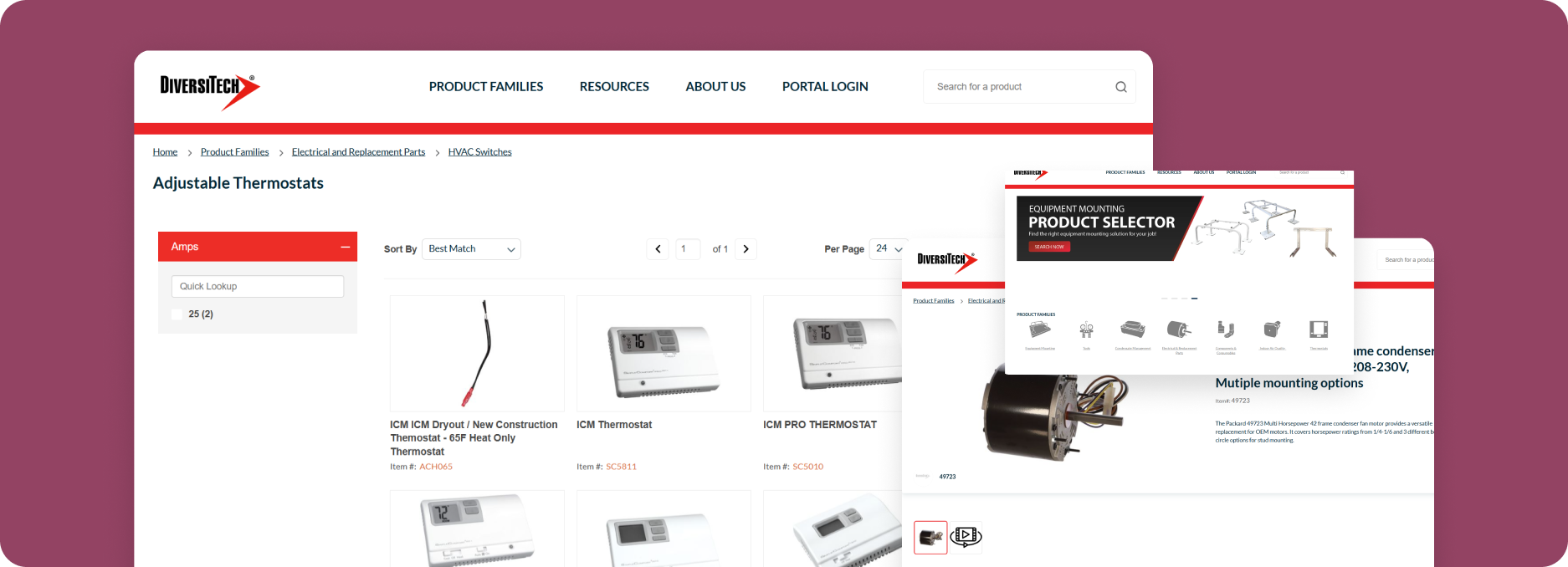
DiversiTech, North America’s largest manufacturer and distributor of HVAC components, deployed AI SmartOrder across 12 ERP environments. Here’s what the tool does:
- Parses 64-page faxed purchase orders with hundreds of line items automatically.
- Validates each line against live inventory, SKUs, and contracted pricing.
- Flags pricing or catalog discrepancies for the rep to review. Applying that human oversight guarantees the account manager always has the final say on the transaction.
Reps stopped rekeying orders entirely. Productivity improved 20%.
Further Reading: 5 AI-Powered Sales Order Automation Tools for Manufacturers and Distributors
What Makes AI Earn a Rep’s Ongoing Trust
- Visible reasoning, not just outputs. A pricing recommendation that shows the account’s volume tier, contract terms, and the trigger for the change is one a rep can verify and defend. A number with no context is a black box, and reps respond to black boxes the same way buyers do: they stop trusting them.
- Consistency under similar conditions. When similar inputs produce similar outputs for similar accounts, reps build calibrated trust. They learn when to follow a recommendation and when to push back. Unexplained variation destroys that calibration fast.
- Communicated model updates. Model drift is a trust problem as much as a technical one. When a model gets retrained across its AI lifecycle, because of a market shift, a supply disruption, or a seasonal correction, the people using it need to know. Otherwise, they notice the change before they understand why, and attribute it to the model being unreliable.
- Override logging as a feedback loop. Define roles for who reviews override patterns and owns the response. When a rep flags a recommendation as wrong, that flag should feed back into internal processes, not disappear. Systems that capture overrides and surface patterns build better models over time.
Getting internal teams on board is the prerequisite. But even organizations that manage it well face a second layer: building trustworthy AI systems requires governance structures that are active in production, not just documented on paper. The future of AI adoption in distribution depends on getting both right.
Technology and Vendor Trust: What Trustworthy AI Looks Like in Wholesale
AI innovation has consistently outpaced the operational structures meant to govern it. Almost every organization buys the software before they build the safety net, and AI risks accumulate in the gap between deployed and governed.
Fully 96% of B2B organizations are currently running artificial intelligence without mature governance frameworks. IBM data shows 63% of organizations that suffered a breach had no clear policies in place at the time.
The software gets deployed fast. The oversight structure lags months behind. For most distributors, this gap becomes obvious the moment a model makes a severe error.
Explore Key Features of an AI-Powered B2B eCommerce Platform – And Compare 7 Leading Vendors
Governance on Paper vs. Governance in Production
Having a static policy document sitting on a shared drive won’t save a fractured customer relationship.
The VP’s scenario raises questions of both fairness and accountability: a long-standing account penalized by stale data, with no mechanism to challenge the outcome. The algorithm followed its configuration. The failure was the empty operational structure around it.
Operational governance means having concrete answers ready before an executive demands them. B2B deployments require a rigid chain of command. If you can’t produce the following documentation on demand, your architecture is vulnerable:
- The system inventory: A live database tracking what each model does, who owns the output, and exactly what internal data it reads, accessible to business teams, not just IT.
- The manual threshold: Defined limits dictating when a machine must defer to a human. Credit changes or pricing deviations above a set percentage require a physical signature.
- The audit trail: The technical capability to reconstruct any individual algorithmic decision within 24 hours, providing the transparency to explain any output on demand.
- The feedback loop: A documented protocol for reps and customers to flag bad outputs.
The NIST AI Risk Management Framework provides an incredibly practical operating structure for risk management and risk mitigation without requiring a dedicated data science team. Earning buy-in from your stakeholders demands these controls.
Data Quality: The Floor Governance Stands On
Responsible AI development starts with the data you can trust. Accountability for a model’s output means nothing if those outputs are drawn from fragmented databases.
OroCommerce’s AI benchmark shows where most distributors currently stand:
- 67% deal with non-standard data formats across teams and systems
- 63% have incomplete or inaccurate order history
- 49% run on siloed ERP data
For most, this is the accumulated cost of growth through acquisition, where each new entity kept its own systems.
The Practical Fix When Data Isn’t AI-Ready
You don’t need perfect data before deploying AI. You need clean data in the specific domains the AI will touch.
Audit the AI use case first, not the entire data stack. For example, demand forecasting needs at least two years of consistent transaction history. Customer-facing AI needs pricing that reflects current contracts and inventory that reflects current stock levels, not a batch from the night before.
Map what the AI requires, then close those specific gaps. Whether you’re deploying AI for sales productivity, fraud detection, or customer-facing self-service, the data requirements are different – and so is the prep work.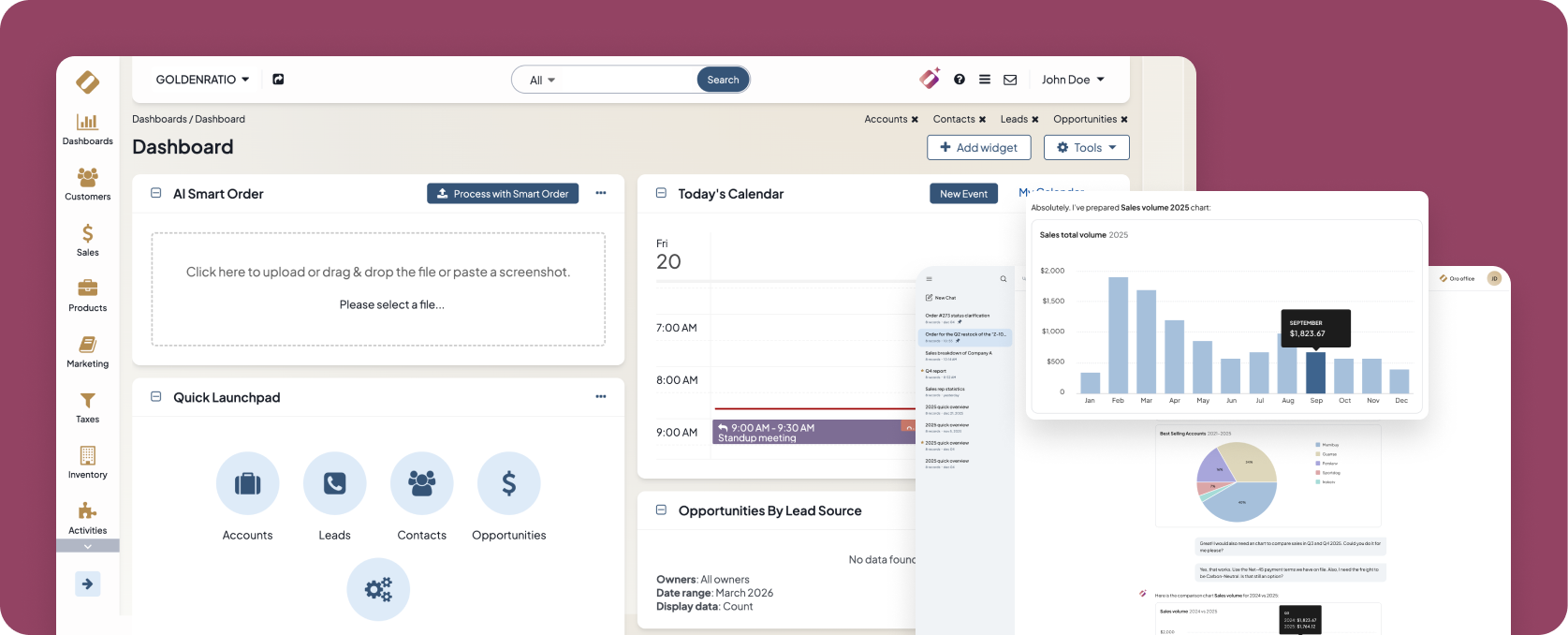
DiversiTech’s approach is worth noting: they started with the domain where data was messy in format but consistent in content – inbound purchase orders. AI SmartOrder normalized those documents across nine ERP environments, which delivered a data infrastructure benefit alongside the productivity gains.
Prove value where the data is workable, then use that credibility to justify the harder foundation work.
The Regulatory Clock Is Already Ticking
Basic AI governance served as a healthy best practice for years. For companies selling into Europe, it immediately becomes a legal mandate.
The upcoming AI regulations, the EU AI Act, officially take effect on August 2, 2026. For US distributors with European customers, three requirements become non-negotiable:
- Any AI interface a buyer could confuse for a human must disclose it isn’t. Most B2B commerce chatbots currently in the market don’t.
- Penalties reach 7% of global annual turnover for serious violations. The extraterritorial scope means US-based distributors aren’t exempt.
- Audit-readiness requires documented system inventory, clear ownership, and a retrievable audit trail for every algorithmic decision.
Most organizations aren’t prepared for any of these.
Standards like ISO/IEC 42001 deliver a certifiable management framework built on ethical AI principles. It handles the specific EU requirements surrounding system inventory, owner assignment, and audit trail generation.
Major enterprise buyers in regulated sectors already demand this certification, particularly those with ethical AI requirements and broader ethical considerations embedded in their procurement processes.
Customer Trust: Fostering Trust Through Every Digital Touchpoint
Governance and data quality determine what your AI systems can reliably deliver. There’s a third party experiencing those outputs directly, and they’re forming their own judgment about whether to trust your company based on what the AI does or doesn’t know about them.
Buyers haven’t rejected AI as a category. Gartner confirms most B2B buyers are willing to use AI across purchase tasks. What they’ve rejected is supplier-provided AI that feels opaque or obstructive. The user trust gap in customer-facing AI comes down to a data connection problem, not a model capability one.
A Chatbot That Doesn’t Know the Account Is Useless
A procurement manager with a flawless three-year purchasing history asks a chatbot for pricing on 200 units. The bot spits out a standard public list price. The system ignored their contracted rate. It missed their volume tier. It had no access to their open credit line. That frustrating experience signals exactly how little your digital channel knows them.
Reliable digital assistants require entitlement-aware architecture. The interface must read live contracted pricing, allocated branch inventory, and specific corporate buyer permissions before returning an answer.
Your automation should only surface items a specific login has authorization to view.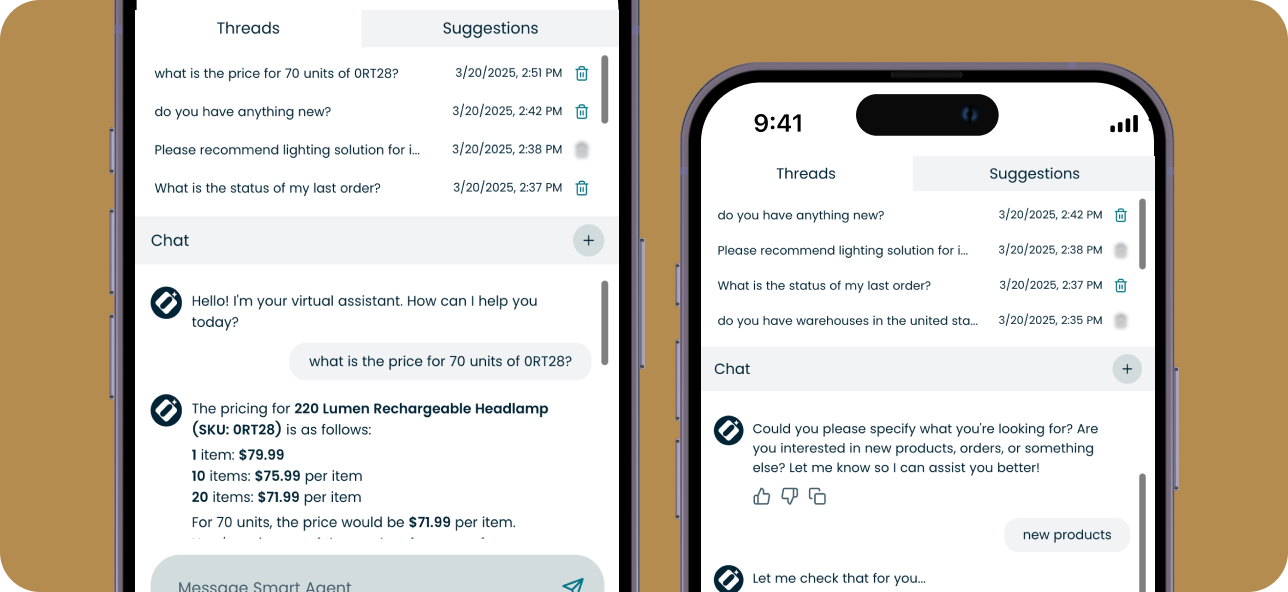
When software – like the natively connected AI SmartAgent in OroCommerce – pulls from the exact same database the buyer already navigates, it enforces those boundaries instantly. The buyer asks a pricing question and gets a personalized rate instead of a catalog default. Serving irrelevant items actively damages the long-term trust.
Design for Self-Service and the Handoff
67% of B2B buyers prefer a rep-free experience. 69% still validate AI-generated insights with a rep before acting. What this data means: buyers want efficiency on routine tasks and human judgment on anything that carries commercial weight.
The escalation handoff is where most buyer-facing AI loses the confidence it built. Buyer trust erodes at a specific point: AI that can’t escalate, or that escalates to a rep who has to restart the conversation from scratch because they have no context for what the buyer was just shown. 74% of organizations have had to shut down or roll back a live AI agent, with 34% citing loss of customer trust as the cause.
What Responsible AI Design Looks Like in This Context
- AI handles stock availability, order status, and standard pricing without friction, at any hour.
- A visible escalation path appears the moment a buyer asks about a pricing exception, a credit question, or a non-standard configuration.
- The rep receiving that escalation sees the account context and the AI’s prior responses, not a blank screen.
Build With Your Buyers, Not Just For Them
Among the top performers in OroCommerce’s B2B Commerce AI benchmark, 47% are actively co-developing AI with their customers. That’s more than double the overall rate of 23%. They’re running named buyers through working prototypes using actual account data before launch, and treating the feedback as product requirements.
This matters most for guided buying and AI-assisted search, where 57% of leaders expect AI to have the greatest impact on customer experience over the next 24 months.
In real-world scenarios, guided buying built without buyer input produces AI decisions that feel generic. A procurement manager sourcing MRO parts navigates a catalog differently from one buying safety equipment, and no model captures that unless someone asked.
Companies that stay ahead of this build the feedback loop in early. Buyer input becomes model training data. The AI models get more accurate over time. In distribution and wholesale, where customer trust is earned through consistent, accurate service, that’s how buyer-facing AI becomes a trusted partner.
Conclusion
The chain runs in one direction. Employee distrust produces shadow AI. Shadow AI creates governance gaps. Ungoverned systems produce unreliable outputs. Those outputs reach buyers at the worst possible moment.
Data quality is where all three relationships intersect. Clean, account-specific data makes AI outputs explainable to the rep using them, auditable under governance, and accurate for the buyer receiving them. Most organizations are still treating it as pre-work.
It is the work.
The companies ready for the next phase are the ones who spent the last 18 months fixing data pipelines, getting frontline staff bought in, and building governance frameworks before an incident forced them to.
A buyer who’s had 18 months of accurate AI interactions, correct pricing, and fast escalation when they needed a human doesn’t just prefer your portal. They’ve stopped evaluating alternatives. The technology enabled it. The trust infrastructure made it last.
Get the full 2026 survey report on how manufacturers and distributors use AI