
navigation

BigCommerce and Shopify Plus are two of the most recognized names in SaaS eCommerce, and that brand recognition is exactly why they keep landing on mid-market shortlists. Both are fully hosted SaaS platforms, both have strong B2C track records, and both have invested heavily in B2B features in recent years.
But most comparisons stop at feature checklists.
This detailed BigCommerce vs Shopify Plus comparison goes further, covering what each actually delivers when your eCommerce business runs complex pricing, multi-level account structures, procurement workflows, and ERP integrations that B2B operations depend on.
BigCommerce vs Shopify Plus: Quick Overview
Both BigCommerce and Shopify run as fully hosted SaaS platforms with strong B2C track records and growing investment in B2B features. The differences are in pricing structure, ecosystem size, and how far each enterprise platform goes before requiring custom development.
Shopify Plus: the enterprise tier of the world’s most widely used eCommerce platform
Shopify Plus is the enterprise tier of Shopify, built for high-volume merchants who need advanced B2B capabilities, extensive customization options, and a user-friendly interface at scale. Key facts at a glance:
- Gartner position: According to Gartner’s 2025 Magic Quadrant for Digital Commerce, Shopify has been named a Leader for the third consecutive year, holding the highest position for Ability to Execute among all vendors evaluated
- B2B core features: As of April 2, 2026, Shopify extended foundational B2B features to Shopify Basic and all paid plans; Shopify Plus retains the enterprise features at scale: unlimited catalogs, direct catalog-to-company-location assignment, partial payments, deposits, and payment terms (Net 30/60)
- Pricing: $2,300/month (3-year term) or $2,500/month (1-year term); above ~$800K monthly GMV, a variable fee of 0.35% (3-year) or 0.40% (1-year) applies, capped at $40,000/month
- Shopify Payments: Zero transaction fees when using Shopify Payments; third-party payment gateways carry additional fees
- Shopify Flow and Shopify Audiences: Native automation (Shopify Flow) and audience segmentation tools (Shopify Audiences) available to Shopify users at the Plus tier; Shopify POS Pro is also included for omnichannel retail
Check out our detailed comparison of Shopify Plus alternatives.
BigCommerce Enterprise: multi-brand, no transaction fees, headless-ready
BigCommerce Enterprise is a customizable platform built around multi-store management, zero transaction fees, and an open SaaS architecture. Key facts at a glance:
- Gartner position: BigCommerce is positioned as a Challenger in Gartner’s 2025 Magic Quadrant for the sixth consecutive year
- B2B Edition: BigCommerce offers customer groups, custom pricing, quote management, purchase orders, and credit limits through its B2B Edition add-on
- Multi-store management: Multiple brands and multiple storefronts can operate under one contract, with BigCommerce’s Stencil framework allowing teams to create custom themes per storefront
- Pricing: BigCommerce Enterprise pricing is custom, typically $1,000-$2,000+/month depending on GMV and requirements, negotiated directly with no public rate card
- Transaction fees: No platform transaction fees on any plan, regardless of which payment gateways you use. That’s a structural cost difference that adds up at volume.
Learn more about BigCommerce competitors.
Shopify Plus vs BigCommerce: Architecture and Deployment
Both Shopify Plus and BigCommerce Enterprise are fully hosted SaaS platforms: built-in security features, automatic upgrades, and no server management.
The meaningful architectural differences lie in multi-brand support, storefront limits, and how open each platform is to custom development.
For enterprise B2B eCommerce platforms, these differences compound over a 3- to 5-year lifecycle.
Shopify Plus: fully hosted, 10 expansion stores, one brand per contract
Shopify Plus supports up to 10 expansion stores per contract, each with a separate storefront. The platform assumes one brand owns one contract, so multi-brand operations require separate Plus contracts.
Headless builds are supported via Shopify’s Hydrogen framework, a custom Shopify theme, or any third-party storefront layer, giving developers extensive customization options within the Shopify ecosystem.
BigCommerce Enterprise: multi-brand, multi-store, open SaaS architecture
BigCommerce’s open SaaS model gives your team more flexibility to compose your tech stack without going fully headless.
Multiple brands and multiple storefronts can operate under one contract, with custom storefront configurations per business unit using BigCommerce’s Stencil framework for theme development.
Enterprise plans include unlimited API calls, which matters when running high-volume integrations across an eCommerce store network.
What the architectural difference means for your team
For a single-brand eCommerce team, this distinction is minimal. For a manufacturer managing regional divisions or a distributor running separate storefronts for different customer segments, BigCommerce’s multi-brand support under a single contract is a direct cost advantage.
Unlike BigCommerce, Shopify’s model forces separate Plus contracts per brand, with separate billing and admin overhead.
| Factor | Shopify Plus | BigCommerce Enterprise |
| Deployment model | Fully hosted SaaS | Fully hosted SaaS (open SaaS/headless available) |
| Multi-brand support | No (one brand per contract) | Yes (multiple brands, one contract) |
| Expansion stores | Up to 10 | Custom multi-storefront |
| Source code access | No | No |
| Transaction fees | 0% with Shopify Payments | No platform transaction fees on any plan |
| Headless / composable | Yes (Hydrogen or third-party) | Yes (open SaaS, Stencil framework) |
| Upgrade management | Automatic | Automatic |
BigCommerce vs Shopify Plus: B2B Capabilities
Both BigCommerce and Shopify have invested heavily in B2B sales features, but with different coverage and different ceilings. Understanding where each one stops is more useful than knowing what they both offer.
Shopify Plus B2B: what Plus adds over the standard plans
Since April 2026, basic B2B features have been available on all Shopify plans. Shopify Plus scales those core features for enterprise operations. Here’s what Shopify Plus adds:
- Unlimited catalogs with direct assignment to company locations (standard plans cap at three catalogs)
- Partial payments and deposits for large order management
- Payment terms (Net 30/60/90) built into the checkout natively
- Advanced B2B checkout customization via checkout extensibility, available only at the Plus tier
- Customer groups with role-based access and pricing visibility per account
For D2C-first brands who choose Shopify Plus, Shopify shines here: enterprise features for wholesale, deployed fast, within a familiar, user-friendly interface.
BigCommerce B2B Edition: built-in tools for wholesale and mid-market B2B
BigCommerce excels at covering mid-market wholesale operations through its B2B Edition. Here’s what BigCommerce offers out of the box:
- Customer-specific price lists and custom pricing per account or customer group
- Quote management with buyer-initiated RFQ and seller response workflows
- Purchase order support with PO number capture at checkout
- Credit limits and account-level spending controls
- Company account structures with user roles and multi-buyer access per account
- Inventory management visibility tied to customer-specific pricing rules
The sales features BigCommerce Enterprise offers through the B2B Edition cover more ground than Shopify Plus at comparable cost tiers, a point BigCommerce customers consistently highlight when comparing the two.
Where both platforms hit their ceiling for complex B2B operations
For manufacturers, distributors, and wholesalers with genuine operational complexity, both BigCommerce Enterprise and Shopify Plus require custom builds or third-party apps for the areas below.
Teams researching the best B2B eCommerce platform for wholesale often discover this ceiling late in the evaluation:
- Configure-price-quote (CPQ) workflows
- Multi-tier corporate account hierarchies with parent/child relationships
- Procurement workflow automation (RFQ, approval chains, purchase limits)
- Real-time ERP synchronization without custom middleware
- Native CRM with sales rep management and pipeline tracking
- Rule-based pricing engines that handle contract pricing, tiered volume discounts, and account-specific overrides simultaneously
- Complex product catalogs spanning thousands of SKUs with account-specific visibility rules
The ceiling isn’t theoretical. It appears when procurement teams, sales reps, and multiple buying entities need to work within a single platform without workarounds.
BigCommerce vs Shopify Plus: Pricing and Total Cost of Ownership
Headline pricing is only part of the story. Your real cost shows up across implementation, integrations, ongoing development, and the variable GMV fee that Shopify Plus charges at scale.
Shopify Plus pricing: flat fee, then variable GMV above threshold
Shopify Plus starts at $2,300/month (3-year term) or $2,500/month (1-year). Above approximately $800K monthly GMV, pricing shifts to 0.35% (3-year) or 0.40% (1-year), capped at $40,000/month.
For operations approaching that GMV threshold, model the total annual fee carefully: 0.35% of $10M monthly GMV is $35,000/month before integration, app, or development costs.
BigCommerce Enterprise pricing: custom, no transaction fees
BigCommerce’s pricing is negotiated directly, typically in the $1,000–$2,000+/month range, based on GMV and feature requirements. The platform charges zero transaction fees on any plan, including when using third-party payment gateways.
For high-volume operations or specific payment processing requirements, this can yield real annual savings compared to Shopify’s gateway fee structure.
Total cost of ownership: what to model before you commit
Both platforms carry costs well beyond the base license. Implementation services for a mid-market B2B build typically run $50,000-$200,000+, depending on integration complexity.
App costs for ERP connectors, advanced search, and B2B-specific tools range from $2,000 to $ 10,000+ per month across both platforms.
Over a 3-year window, those costs frequently exceed the platform license itself.
| Cost category | Shopify Plus | BigCommerce Enterprise |
| Base fee | $2,300/month (3-yr) or $2,500/month (1-yr) | Custom (typically $1,000-$2,000+/month) |
| Variable fee | 0.35% GMV above ~$800K/month (3-yr term) | GMV-based thresholds; no variable % fee |
| Platform transaction fees | 0% with Shopify Payments; fees apply for third-party gateways | No platform transaction fees |
| Hosting | Included | Included |
| App/integration costs | Shopify App Store (12,000+ apps) | BigCommerce marketplace + custom integrations |
| Upgrade management | Automatic | Automatic |
| Multi-brand | One brand per contract | Multiple brands, one contract |
Shopify Plus vs BigCommerce: Integrations and Ecosystem
In any Shopify vs BigCommerce Enterprise evaluation, ecosystem fit is a decisive factor: the depth of available third-party apps, the flexibility of payment processing, and how cleanly the platform connects to your tech stack.
Shopify Plus: the largest app ecosystem and Shopify Payments advantage
Shopify wins on sheer scale. The Shopify App Store contains 12,000+ apps as of 2026, the largest app ecosystem of any eCommerce platform. For marketing tools, loyalty programs, subscription billing, and CRM connectivity, what Shopify offers in built-in features and third-party apps is unmatched.
Shopify Payments simplifies payment processing for merchants who can use it, eliminating third-party gateway fees entirely. Shopify users also benefit from Shopify Magic, the platform’s native AI toolset for content generation and product description automation.
BigCommerce: no transaction fees, unlimited API calls, open architecture
BigCommerce Enterprise includes unlimited API calls on Enterprise plans, a real advantage for online sales operations running high-frequency integrations with external systems.
The open SaaS architecture makes third-party solution integrations technically cleaner, with fewer restrictions on how you can extend the platform.
BigCommerce’s Stencil framework gives developers robust features for custom themes and storefront development, though it comes with a slightly steeper learning curve than Shopify’s more templated approach.
BigCommerce’s API-first posture and built-in SEO features are consistent differentiators for engineering teams with technical expertise.
ERP integration: the question both platforms answer with third-party help
For B2B buyers, ERP integration is often the deciding factor. Neither Shopify Plus nor BigCommerce ships pre-built ERP connectors natively: real-time sync with SAP, Oracle, Microsoft Dynamics, or NetSuite requires custom builds or third-party middleware on both platforms.
Both BigCommerce and Shopify Plus treat ERP as a third-party solution problem, not a platform responsibility.
When Shopify Plus Makes Sense and When It Doesn’t
In any BigCommerce vs Shopify Plus comparison, Shopify Plus’s capabilities are strongest for operations that need speed to market, a user-friendly interface, and access to a massive app ecosystem.
Choose Shopify Plus, and you’re choosing the platform with the broadest merchant community and the deepest pool of pre-built integrations for online store management.
Shopify Plus is a strong fit for:
- D2C-first brands adding a wholesale or B2B channel alongside their direct business
- Ecommerce businesses running B2B and B2C from a single storefront with moderate account complexity
- Teams that need the largest app ecosystem and the fastest time to launch
- Operations that benefit from Shopify Payments and want to eliminate payment gateway fees entirely
- Merchants where Shopify Audiences and Shopify Flow cover automation and segmentation needs natively
Shopify Plus isn’t the right fit for:
- Businesses that need to run multiple brands under one contract and one billing relationship
- Operations exceeding $800K/month GMV, where the variable fee model scales cost significantly
- Manufacturers and distributors requiring CPQ, multi-tier corporate account hierarchies, or procurement workflow automation natively
- Teams needing pre-built ERP integration or robust integrations with complex back-office systems without custom development investment
For a broader view of Shopify Plus vs. enterprise alternatives, the Salesforce Commerce Cloud vs. Shopify comparison is useful.
When BigCommerce Enterprise Makes Sense and When It Doesn’t
BigCommerce excels at multi-brand flexibility, open architecture, and no-fee payment processing.
For an eCommerce business managing complex catalogs, multiple storefronts, or third-party payment gateways, BigCommerce Enterprise and Shopify Plus are not equivalent eCommerce solutions: BigCommerce’s structural advantages are real.
BigCommerce Enterprise is a strong fit for:
- Businesses managing multiple brands or multiple storefronts that need one contract and one operational overhead
- Teams using third-party payment gateways who want to avoid platform transaction fees entirely
- Operations that need a more open and composable architecture without committing to a full headless build
- Mid-market B2B sellers with moderate wholesale complexity: price lists, quotes, purchase orders, credit limits
- Developers who want unlimited API calls, Stencil framework access, and a less restrictive extension model for custom themes
BigCommerce Enterprise isn’t the right fit for:
- Operations with complex procurement workflows, approval chains, or CPQ requirements that need to ship natively
- Businesses that rely on the widest possible app ecosystem for marketing tools and CRM integrations
- Teams where Shopify Payments’ cost savings outweigh BigCommerce’s no-transaction-fee advantage
- High-growth D2C brands where Shopify’s brand recognition and Shopify’s merchant community are strategic assets
Why B2B Manufacturers and Distributors Should Consider OroCommerce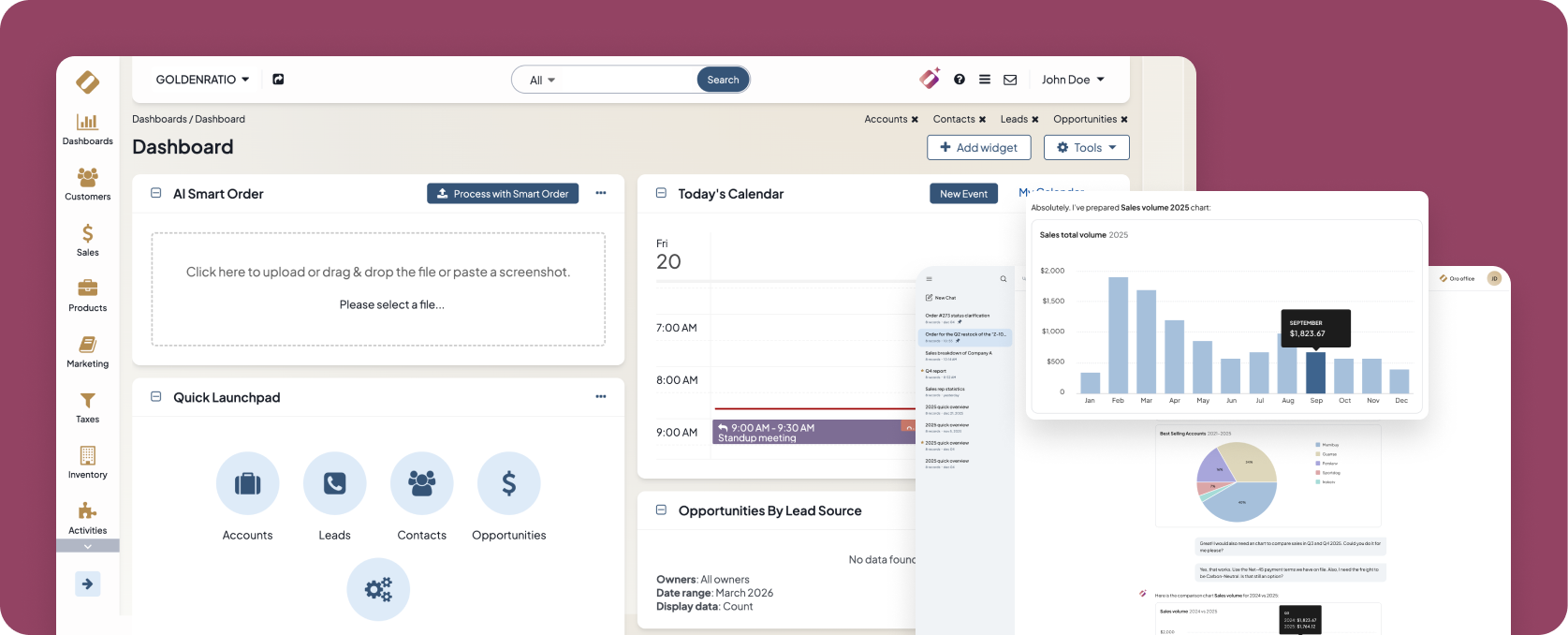
Neither Shopify Plus nor BigCommerce was built with manufacturers, distributors, and wholesalers as the primary buyers. Both Shopify Plus and BigCommerce Enterprise adapted from strong B2C roots to serve B2B businesses.
That adaptation has limits, and for operations with genuine B2B complexity, those limits show up as real operational constraints.
OroCommerce, a unified B2B eCommerce platform for manufacturers, distributors, and wholesalers, was designed from day one for exactly that profile.
It’s the only platform in this comparison that ships CRM, CPQ, procurement workflow automation, and a rule-based pricing engine natively, without requiring third-party apps or custom builds for core B2B functionality.
Analysts tracking purpose-built B2B platforms have recognized it as one of the best enterprise B2B eCommerce software.
Built for B2B from day one, not adapted from B2C
OroCommerce’s architecture starts from corporate account hierarchies, not customer profiles. Here’s what that means in practice:
- Full company hierarchies: Parent accounts, subsidiary accounts, multiple buyers per account, and differentiated pricing per buyer role: all native, not extensions
- Complex product catalogs: Complex catalogs with thousands of SKUs, account-specific visibility, and rule-based pricing handled without custom logic
- Native CPQ: Configure-price-quote workflows built into the platform, not added via a third-party solution
- Content management system: An integrated CMS for B2B-specific content, including product datasheets, spec guides, and account-level landing pages, without a separate platform
- Advanced features for sales reps: Territory management, sales rep dashboards, and order-on-behalf capabilities that enterprise B2B sales teams need to manage online sales at scale
For a B2B eCommerce platform for manufacturers, this translates to shorter implementation cycles and fewer third-party dependencies at go-live.
What ships natively vs. what you build or buy on Shopify Plus and BigCommerce
The table below shows what’s included natively versus what BigCommerce Enterprise and Shopify Plus require as custom development or third-party tooling.
| B2B capability | Shopify Plus | BigCommerce Enterprise | OroCommerce |
| Corporate account hierarchies | Company profiles (flat) | Yes (B2B Edition) | Native (full hierarchy) |
| Configure-price-quote (CPQ) | Not native | Quote management (limited) | Native |
| Rule-based pricing engine | Max 25 catalogs per company location, limited pricing strategies | Price lists per group | Native pricing engine with advanced pricing rules and strategies |
| ERP integration depth | Third-party apps | Custom or third-party | Pre-built basic integrations with major ERPs; deep integration possible per use case |
| CRM | Not included | Not included | Native (OroCRM) |
| B2B and B2C on one license | Yes | Yes | Yes |
| Procurement workflow automation | Not native | Not native | Native |
| Inventory management | Via third-party apps | Built-in (limited B2B rules) | Native with B2B rules |
OroCommerce in practice: what enterprise B2B customers are seeing
OroCommerce’s strong features have been validated by enterprise customers across manufacturing and distribution:
- DiversiTech, a manufacturer and distributor of HVAC components, consolidated CRM and commerce onto OroCommerce – replacing Salesforce in the process – and now runs three brand sites and nine European ERP environments through a single instance, with AI-assisted order intake delivering a 20% productivity gain across North America.
- Lactalis, a global dairy group, manages country-specific pricing and ordering workflows across 12 markets from one platform, with market deployments taking weeks instead of years and digital orders growing 230% in two years.
- Braskem, the largest petrochemical company in the Americas, integrated OroCommerce with SAP and its shipping partners to give 800+ companies real-time order and shipment tracking; the platform now processes 12,000 orders monthly and saves 22,000 internal work hours annually.
OroCommerce has appeared in Gartner’s Magic Quadrant for Digital Commerce for five consecutive years, recognized as a Visionary in 2022, 2023, and 2024.
OroCommerce is a unified commerce platform built for this from the ground up. It doesn’t ask manufacturers and distributors to build the B2B layer on top. OroCommerce is the B2B layer.
See how OroCommerce handles complex B2B requirements
BigCommerce vs Shopify Plus: Final Verdict
The positions are clear. Shopify wins on ecosystem size, ease of use, speed to launch, and payment infrastructure. BigCommerce Enterprise leads on multi-brand flexibility, zero transaction fees, and architectural openness.
For D2C brands adding a B2B channel, or mid-market wholesale operations with standard complexity, both Shopify Plus and BigCommerce are credible choices that cover most requirements without major custom development.
For manufacturers, distributors, and wholesalers with genuine operational complexity (multi-tier account structures, CPQ, procurement approval workflows, contract pricing that shifts by account, region, and SKU simultaneously), both platforms ask you to build or buy what should come standard.
Even covering basic B2B commerce requirements stretches these systems thin. The best B2B eCommerce platform for that profile is one built for it from the start.
OroCommerce ships that complexity natively.
Ready to see what a purpose-built B2B platform looks like for your operation?
BigCommerce vs Shopify Plus: FAQs
Is BigCommerce better than Shopify Plus for B2B?
BigCommerce Enterprise has stronger native B2B sales features out of the box: customer groups, custom pricing, quote management, and zero transaction fees. Shopify Plus suits operations scaling from D2C into wholesale. For complex manufacturers that need CPQ and procurement workflows, neither of the ecommerce platforms provides them natively. OroCommerce is the stronger alternative for that use case.
What is the difference between BigCommerce and Shopify Plus?
In a Shopify Plus vs BigCommerce evaluation, both are fully hosted SaaS platforms, but they differ in three areas. BigCommerce allows multiple brands under one contract; Shopify Plus doesn’t. BigCommerce charges zero transaction fees on all plans; Shopify charges fees for third-party payment gateways. The Shopify App Store has 12,000+ apps; BigCommerce’s app ecosystem is smaller.
Who are the main competitors of BigCommerce?
BigCommerce’s main competitors include Shopify Plus, Adobe Commerce, Salesforce Commerce Cloud, commercetools, and OroCommerce. For B2B-specific operations, OroCommerce is the strongest purpose-built alternative. For general ecommerce and D2C, Shopify Plus is the most commonly selected enterprise platform.
Does BigCommerce have good B2B features?
BigCommerce Enterprise includes meaningful built-in features through its B2B Edition: customer-specific price lists, quote management, purchase order support, credit limits, and company account structures. These cover mid-market wholesale operations well. The ceiling appears for complex company hierarchies, CPQ, and procurement automation, which require custom builds or third-party apps on BigCommerce.