
navigation

You’ve been put in charge of defining your company’s B2B eCommerce requirements. Maybe you’re starting from scratch. Maybe your current platform has accumulated years of customizations and complaints. Either way, everyone seems to have an opinion about what needs to change.
So where do you begin? This guide will help you figure out whom to involve, what to investigate, and how to turn competing requests into a prioritized set of requirements before you start evaluating platforms.
Define What Your eCommerce Project Needs to Achieve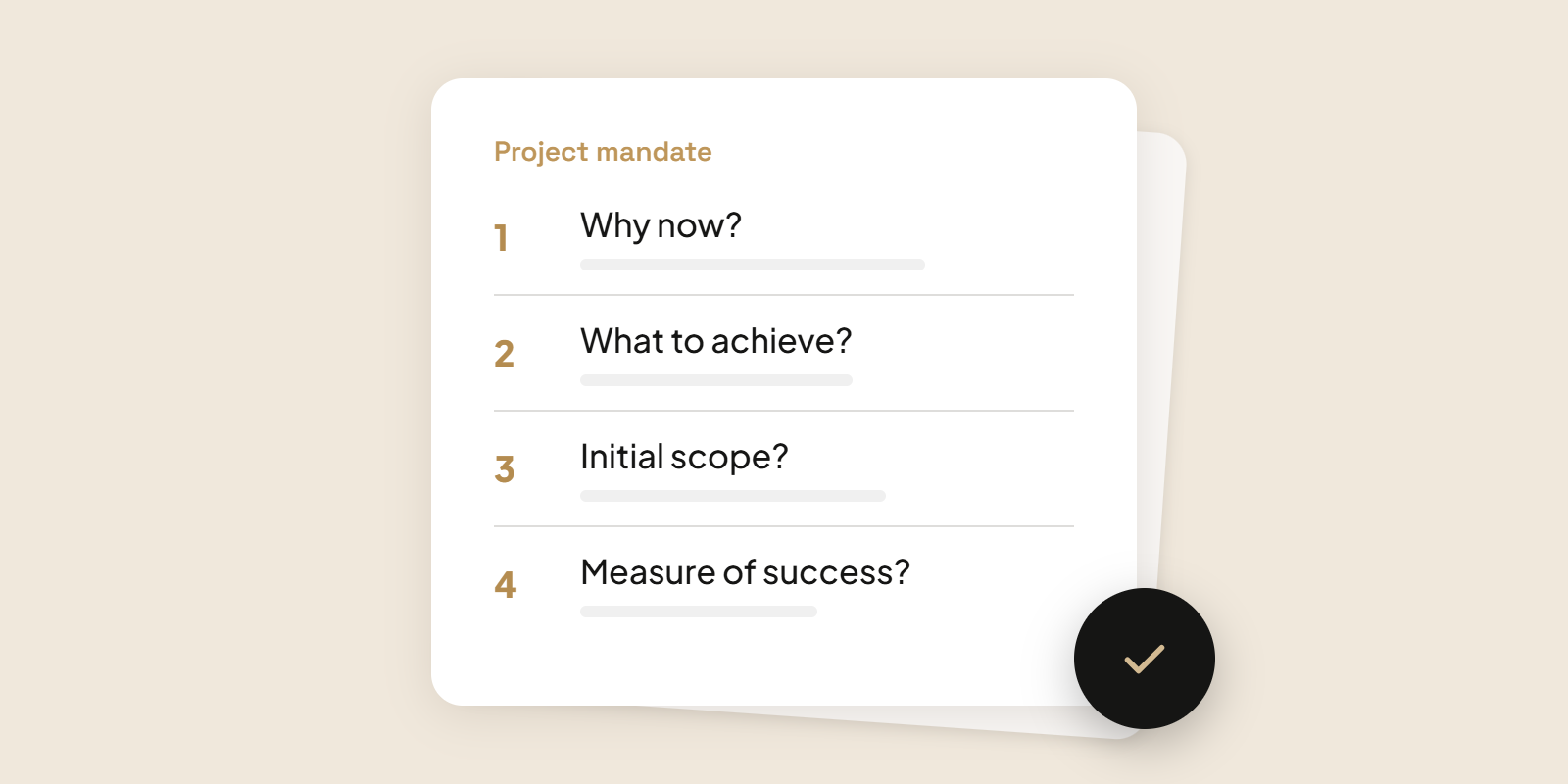
“We need to grow eCommerce” or “we need a better digital experience” sound like reasonable goals. But what does that mean for your business?
Consider three companies:
- One wants to provide existing customers with bulk ordering online so the sales team spends less time entering them.
- Another wants to expand into five countries but can’t afford a separate implementation for each.
- A third wants to grow revenue by expanding its customer base beyond its existing sales network.
All three want growth, but they’re looking to accomplish very different things. Their eCommerce requirements will reflect that.
Your first task is to agree on what the project needs to achieve. Talk to whoever is sponsoring the initiative and put together a short project mandate. Keep it to four questions:
| Question | Example: Industrial distributor |
|---|---|
| Why are we acting now? | Manual order entry is consuming more staff time as order volumes grow. |
| What do we want to achieve? | Shift routine purchases to online self-service. |
| What’s the initial scope? | Existing customer accounts in the US market. |
| How will we measure success? | Percentage of eligible orders placed online and hours spent processing orders manually. |
If the goal is to make purchasing easier, customer satisfaction scores and fewer support requests may be more useful measures than online revenue alone.
Don’t worry about deciding which eCommerce platform capabilities will get you there yet. You’ll uncover those as you investigate how the business operates.
For now, you need agreement on the destination before everyone starts proposing different routes.
When Does Replatforming Make Sense?
Discover what recent B2B commerce evaluations reveal about staying or replacing.
Understand How Your Business and Customers Work Today
With your project goals established, it’s time to see how work gets done today, including through traditional sales channels like phone and email.
Start by tracing a few representative orders from the customer’s initial request through fulfillment. Include different scenarios: a routine reorder, a quote-based purchase, and an order that required someone to intervene.
Follow each order and record what happens at every step:
| Step | Example: Repeat order at a distributor |
|---|---|
| Order placement | Customer emails a spreadsheet containing 50 SKUs. |
| Price verification | Sales rep checks contracted prices and other negotiated terms against ERP records. |
| Order processing | Inside sales manually enters the order into the ERP. |
| Confirmation | Customer receives an email once the order is accepted. |
| Fulfillment | Warehouse verifies stock levels, picks, and ships the order. |
This gives you a starting point, but don’t rely on how employees say the process works. Check order records, support tickets, website analytics, and other available data. Look for repeated manual entries, delays, and exceptions that send orders back and forth between people or systems.
Pay particular attention to workarounds. If someone maintains a spreadsheet to compensate for missing system functionality, find out how often it’s used and what happens when it fails.
Your takeaway: A current-state process map showing how your main purchasing scenarios work today. Mark the manual steps, delays, and areas where information is missing.
You don’t need to diagnose every problem yet. In the next step, you’ll bring in the people who handle these processes every day to fill in the gaps and challenge your assumptions.
Get the Right People Involved in Defining Requirements
Your process map is a starting point, but it won’t tell you everything. The people handling orders every day know the exceptions, workarounds, and unwritten rules that rarely make it into process documentation.
You’ll need their input, but that doesn’t mean assembling 15 people for every meeting.
Decide Who Needs to Be Involved and When
Build your stakeholder group around the processes you’re investigating. Give people different roles based on what they know and what they’re responsible for.
| Role | Who belongs here |
|---|---|
| Decision owner | One executive sponsor who approves the project direction and settles competing priorities. |
| Core team (3–5 people) | Usually the eCommerce lead, IT or ERP systems owner, sales lead, and a finance or operations representative. They coordinate discovery and meet regularly. |
| Contributors | People closest to the work: customer service, warehouse, pricing, product data, marketing. Involve them in targeted interviews and reviews. |
| Specialist reviewers | Security, legal, and procurement. Bring them in early enough to identify data privacy, compliance, or procurement requirements that could block the project later. |
Adapt the group to your priorities. International expansion calls for regional input; a project focused on product discovery needs someone who manages your product catalogs.
Start With Interviews, Then Bring People Together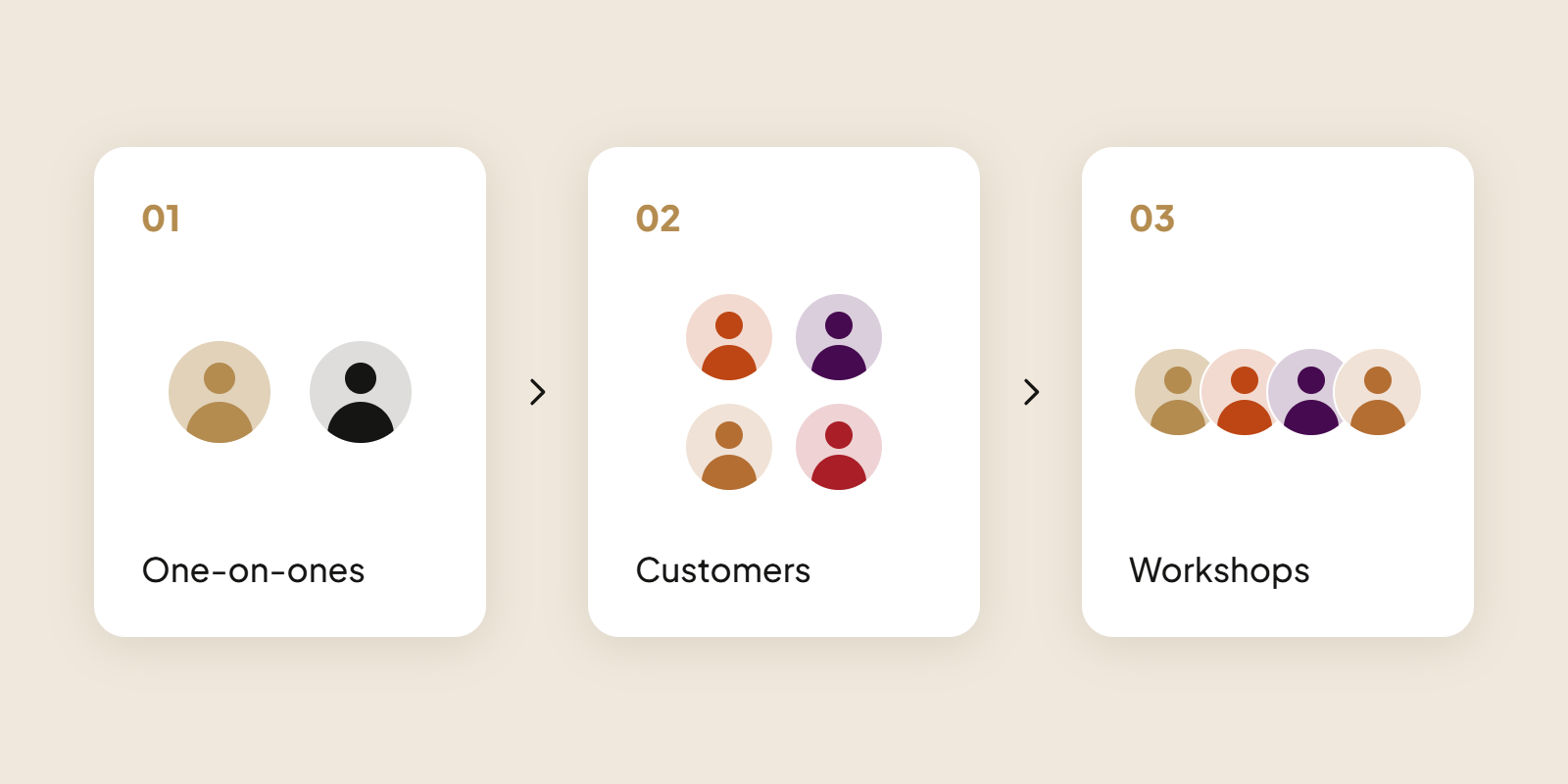
1. Interview internal stakeholders individually
Start with one-on-ones. Ask people to walk you through recent transactions, especially the unusual ones. For a first-time eCommerce project, explore which activities could move online. For an existing platform, investigate what still happens offline and why.
2. Talk to a mix of customers
Don’t rely exclusively on your biggest accounts. Include large contract buyers, smaller customers, new customers, and those who tried ordering online but stopped.
Remember that a single customer organization may have multiple buyers, separate purchasing approvers, and accounts payable staff. Find out who touches an order and what each person needs to complete their part.
3. Bring people together to review what you’ve learned
Once you’ve gathered input, hold focused workshops to discuss findings, agree on business rules, and resolve disagreements. Invite only those involved in the decisions at hand.
Keep a short decision log capturing what’s been agreed, what’s still open, and who’s responsible for settling it.
Your takeaway: A stakeholder map, findings that fill gaps in your current-state process map, and a record of decisions to carry into requirements drafting.
Turn Your Findings Into Clear B2B eCommerce Requirements
By now, you’ve collected plenty of input. Some of it might look like “we need bulk ordering” or “customers need access to real time inventory.” Useful starting points, but there’s still work to do before these become requirements your team can act on.
Write Requirements Around Specific Buying Scenarios
Take a distributor whose customers regularly email spreadsheets of products they want to order. Here’s how the findings from your discovery work could translate into requirements:
| What you’ve discovered | What the e commerce platform needs to support |
|---|---|
| Customers email spreadsheets containing 50+ SKUs. | Buyers can upload SKUs and quantities to create an order. |
| Customers have negotiated price lists. | The platform applies account specific pricing to each customer’s orders. |
| Certain products must be ordered in cases or minimum quantities. | Ordering rules account for different units of measure and quantity restrictions. |
| Inside sales manually reenters orders into the ERP. | Submitted orders transfer to the ERP with the correct account, products, and pricing information. |
Notice how much more useful this is than writing “bulk ordering” on a feature wishlist.
For each requirement, capture who needs the capability, what they need to accomplish, and which business rules apply. Include exceptions you’ve uncovered during discovery.
Check Key Features Your Team Might Have Overlooked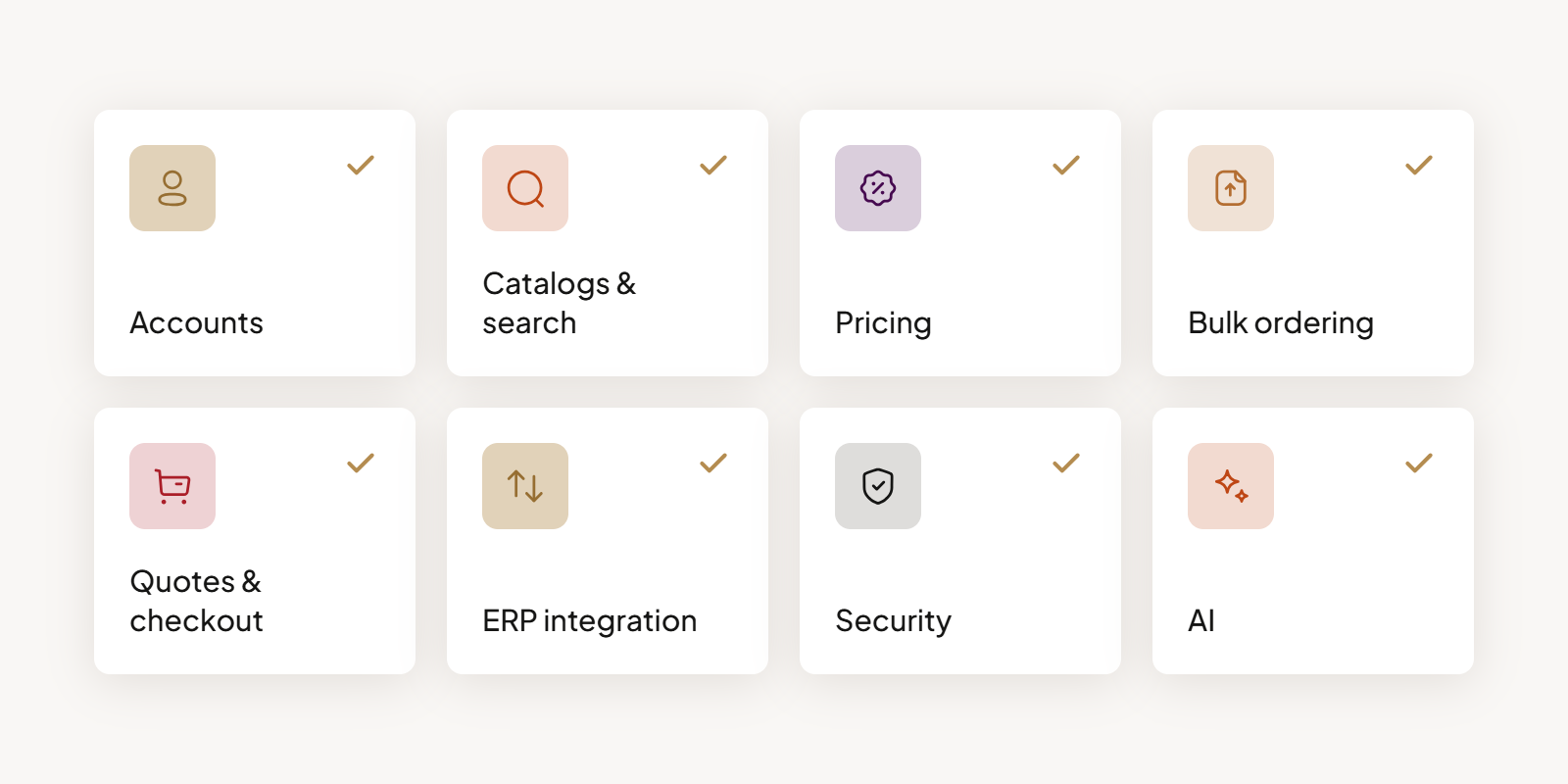
Before calling your first draft complete, review these key features of B2B commerce. Use the questions to spot gaps rather than assuming every capability belongs on your list.
Company Accounts and Sales Support
- Can multiple buyers work under a single account while having different permissions, spending limits, or approval rights?
- Do sales reps need the ability to place orders on customers’ behalf, view order history, and resolve purchasing issues?
Product Catalogs, Detailed Product Descriptions, and Search
- Can buyers find products by SKU, manufacturer part number, or technical specifications?
- Which product details and supporting documents do buyers need? Should different customers have access to different catalogs?
Complex Pricing and Bulk Ordering
- How should contracted prices, tiered pricing, and bulk pricing apply to different customers?
- Can buyers upload SKU lists, reorder previous purchases, and order in different units of measure?
Quotes, Checkout, and Fulfillment
- How should quotes, purchase order workflows, credit terms, and invoice payments work at checkout?
- How should the platform handle partial shipments, backorders, returns, and orders fulfilled from multiple fulfillment centers?
ERP Integration and Customer Data
- Which systems own customer data, pricing, inventory, and orders? What information must move between them, and how frequently?
- Which business processes are tightly connected to existing systems and may need to change together?
Security, Performance, and Business Growth
- What access controls, security standards, and performance requirements must the platform meet?
- Will future acquisitions require the platform to accommodate other businesses with separate catalogs or purchasing rules?
- Do you serve customers across many industries with different documentation, compliance, or ordering requirements?
Not every requirement is something your commerce platform can deliver on its own.
Take inventory availability. Your storefront may need to display current stock levels, but those figures could come from several warehouses through an ERP integration. If the underlying data is unreliable, changing platforms won’t fix it.
The same applies to pricing rules, customer records, and order processing. Identify which systems own the information, what the commerce platform needs from them, and where internal processes may need to change.
Your takeaway: Start a requirements register documenting each requirement, the business need behind it, affected users, relevant business rules, and system dependencies.
Should AI Be Part of Your B2B eCommerce Requirements?
Before prioritizing your requirements, revisit the problems you’ve uncovered. Could AI help address any of them?
Don’t limit your thinking to familiar B2C applications like product recommendations. B2B AI can help process emailed purchase orders, retrieve customer-specific information for sales reps, or reduce manual work. Our guide to AI in B2B sales offers more ideas.
For promising use cases, establish what the AI would do, what data it needs, and where human oversight is required. Our enterprise AI governance guide can help you address permissions and safeguards.
Then prioritize those AI requirements alongside everything else.
Exploring AI capabilities? Bring 45 practical questions to your vendor evaluation.
Prioritize Your B2B eCommerce Requirements
By this point, your requirements list may be getting long. And chances are, every department considers its requests important. But trying to accommodate everything at launch can stretch budgets and delay the benefits you’re aiming for.
Go back to the business objective you agreed on at the start. Which requirements are essential to achieving it, and which can wait?
Take our industrial distributor whose goal is to move routine orders online. Here’s how its priorities might look:
| Priority | How to decide | Example |
|---|---|---|
| Essential | The intended buying process won’t work properly without it. | Bulk ordering, account-specific pricing, and ERP order synchronization. |
| Valuable, but can wait | Improves the experience but isn’t essential to the initial objective. | Self-service invoice payments. |
| Not yet justified | The business value or need isn’t established yet. | AI product recommendations for customers who typically order by SKU. |
These priorities will differ from business to business. Online invoice payments, for example, could be essential for a company looking to reduce accounts receivable workloads.
Consider the entire buying process, not isolated features. Bulk ordering won’t help much if customers can’t see their agreed prices or submit orders for fulfillment. Some requirements need to be delivered together to provide operational benefits.
Also, don’t confuse importance with implementation difficulty. If accurate inventory availability is essential but your ERP only updates stock twice daily, document that dependency. The requirement doesn’t become less important because it’s harder to deliver.
Review the proposed priorities with your project sponsor. Pay particular attention to what you’re choosing to postpone and whether that affects the business goals you agreed on.
Your takeaway: An agreed set of priorities that identifies which requirements are essential to the project’s objectives and which can be reconsidered later.
Conclusion: Put Your B2B eCommerce Requirements to Work
A vendor might confirm that its platform supports quote management, approval workflows, and ERP integration. Great. But can those capabilities work together to support your buying process?
Consider EECO, a US industrial distributor managing 1.5 million SKUs. Manufacturer agreements restrict which products it can sell in certain states and prevent competing product lines from appearing in the same customer’s catalog.
Its previous platform required employees to maintain separate catalogs manually. With OroCommerce, EECO connected its storefront to Epicor Prophet 21, allowing product visibility and pricing to follow each customer’s eligibility and location.
A requirement like “improve operational efficiency” or “support personalized catalogs” would barely scratch the surface of what EECO needed.
Now imagine evaluating platforms against those requirements. Instead of asking whether a vendor supports personalized catalogs, you’d want to see what happens when buyers from two different company accounts log in from different states. Can the platform apply the appropriate product restrictions automatically? Where does it retrieve the customer information needed to enforce those rules?
That’s the level of detail to bring into vendor conversations. Choose a few of your most important buying scenarios and ask vendors to demonstrate how they’d handle them, including:
- which steps are covered by native capabilities
- which require configuration or custom workflows
- and which depend on additional integration or development
Need a place to organize your requirements?
Our free B2B eCommerce RFP template can help you check for gaps and classify requirements as Must Have, Should Have, or Nice to Have. When you’re ready to approach vendors, you can use it to collect and score their responses.
Ready to put your requirements on paper? Start with our B2B eCommerce RFP template.
Frequently Asked Questions About B2B eCommerce Requirements
How detailed should ERP integration requirements be?
For systems such as Microsoft Dynamics, specify what data needs to move, in which direction, and how often. “Order sync” is too vague unless you define which order updates and statuses must be exchanged.
What security requirements should we document?
Work with your security team to establish required access controls, authentication, audit logs, and protections against data breaches and malicious attacks. Include any applicable compliance obligations.
What should we consider when expanding eCommerce internationally?
Check whether you need multi language support, local payment methods, or different catalogs and purchasing rules by market. Don’t assume translating the storefront is enough.