
navigation

Distributors are hearing it from every side: buyers want faster answers, better digital tools, and a smoother way to get work done. Yet only 36% of B2B buyers say their eCommerce site experience meets the mark, and 63% report that most customer journeys fall short. That’s the state of play in distribution, where the difference between a solid website and a clunky one decides who gets the next order.
So what separates a distributor website that supports your users, sales team, and marketing goals from one that just takes up space online? In this article, you’ll find distributor website examples used to highlight exactly which features solve buyer problems, where most sites come up short, and what matters most for distributors who want their website to work for both customers and the business.
Why Most B2B Distributor Websites Miss the Mark
Most distributor websites just aren’t built for how buyers work. Here’s what buyers run into all the time:
- Product data is incomplete or buried. Specs, pricing, and availability are hard to find, if they’re there at all.
- Inventory isn’t live. The website might show a product, but there’s no way to know if it’s in stock or when it ships.
- Ordering is still manual. Many sites force buyers to call, email, or fill out contact forms just to place a basic order.
- Old workflows linger. You’ll still see websites that expect buyers to download catalogs or fax in a purchase order.
- Basic website functions are missing. There’s often no real search, no easy way to compare products, no account management.
In the meantime, marketplaces and manufacturers have invested in modern digital tools: live inventory, pricing by account, and fast ordering. Buyers see the difference right away. If your website still feels like an archive or makes people work harder than they have to, you’re making their decision for them – they’ll buy somewhere else.
Further Reading: Want B2B eCommerce to Work? Fix Your Product Data First
Essential Elements of an Effective Distributor Website
No two distribution companies are created equal, but every successful website shares one thing: it’s built for how customers buy and how teams work. Below are the must-haves for any modern site, with clear value behind each one.
Front-End Features: What Customers Expect
Responsive, modern web design
Your potential customers expect a smooth online experience on any device: desktop, tablet, or phone. Mobile devices are now standard in B2B; your website design needs to keep up or you risk losing buyers before they even see your product lines.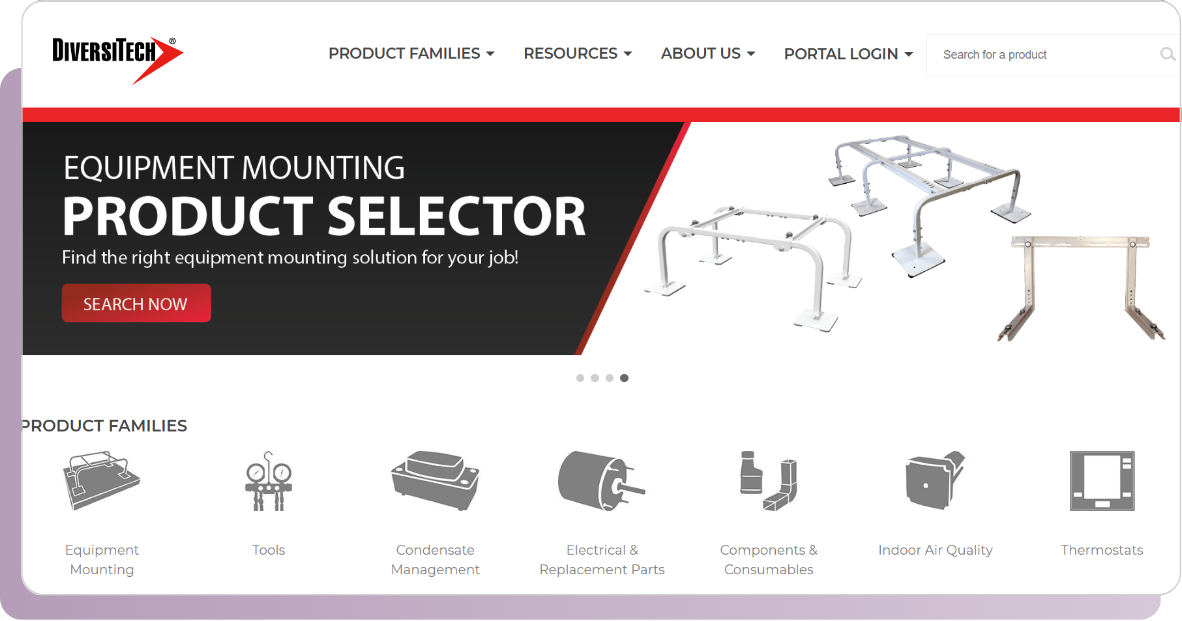 Intuitive navigation
Fast access to categories and product comparisons is critical. A custom website with clear navigation helps buyers get what they need without phone calls, follow-ups, or second guessing. Well-built menus and website structure are where visual appeal meets function.
Advanced search capabilities
No industrial buyer has time to scroll through endless listings. AI-powered search and robust filtering let users locate SKUs, brands, or specs instantly, enhancing the online experience and reducing frustration for retailers, resellers, and direct buyers alike.
Detailed product information
Distribution companies thrive on accuracy. Up-to-date specs, downloadable docs, and real-time inventory management give buyers confidence. The best distributor website examples show how enabling customers with this info cuts mistakes and manual back-and-forth.
Configurable matrix products
Industrial distributors serve various industries with products that have multiple attributes. Matrix ordering makes it possible for customers to order the right configurations quickly, reducing errors and increasing order size.
Accounts with permission levels
B2B buying often involves multiple users and steps. Give companies the control to set approval rules, delegate buying, and audit transactions, all from one roof. This reduces headaches and keeps procurement tight.
Custom pricing and catalog views
Not all buyers are created equal. Show each customer relevant products, contract pricing, and terms unique to their account. This enhances the value you deliver and protects margins.
Checkout workflows
B2B orders aren’t one-size-fits-all. Support different payment terms, shipping preferences, and order approvals, so you can serve both large enterprises and small retailers through the same new website.
Customer dashboard and self-service
A good website lets customers handle reorders, check order status, and download invoices without calling a rep. This frees up your sales team and gives buyers a reason to return. Content and resources
Informative guides, product comparisons, and engaging visuals help digital marketers drive traffic and build trust. The right content increases discoverability and supports buyers doing early research.
Back-End Features: What Keeps Operations Running
Integration with ERP, CRM, PIM, and accounting
Manual updates and duplicate entry waste time and cause errors. Seamless integration with your existing systems (orders, customer records, inventory) keeps your operation running smoothly and supports website performance for both staff and customers.
AI-powered order processing
When sales teams get flooded with purchase orders by email or PDF, manual entry is a drain. AI tools exist that can read unstructured POs and turn them into draft orders automatically, speeding up fulfillment and reducing mistakes. Automated workflows
Streamline contract management, request for quotes (RFQ), configure-price-quote (CPQ), and quote-to-cash (QTC) processes. Automation means fewer errors and faster turnaround, which shows up in customer satisfaction and margins.
Marketing and analytics
It’s not just about having a nice site. Distributors need to increase visibility, attract the right customers, and know what’s working. Built-in digital marketing services, SEO tools, and reporting let you target, measure, and improve without a team of specialists.
Multi-site and multi-org support
If you’re running multiple business units, selling across borders, or targeting different segments, managing everything from a single platform is a must. Solutions like OroCommerce support multi-org, multi-currency, and multi-language setups without Frankenstein integrations.
Security and PCI DSS compliance
Protect sensitive data and support secure payments with built-in compliance features and user access controls.
Scalable catalog and product management
Whether you’ve got hundreds or hundreds of thousands of SKUs, the system needs to keep up. Easy updates, bulk editing, and fast search make it possible to grow (or pivot) without blowing up your ops.
See B2B eCommerce features in action – explore OroCommerce demo
Examples of Great Websites for Distributors
What does a website for distributors look like when it’s built to support growth, streamline operations, and deliver real value to customers? Here are three distributor website examples that show how the right approach to website development, web design, and integration pays off in the real world.
Diversitech
DiversiTech, a leading HVAC distribution company, rebuilt its website to tackle complexity head-on. Their new website gives customers a single portal to place orders, check real-time inventory, download packing slips, and manage account information – all supported by direct integration with JD Edwards ERP and Salsify PIM.
The homepage features intuitive navigation, making it easy to access thousands of product lines and resources. Automated workflows let users submit warranty claims or retrieve documents instantly, without waiting for support. All product catalogs are updated in real time, and customers see only their relevant pricing, brands, and order history.
Petra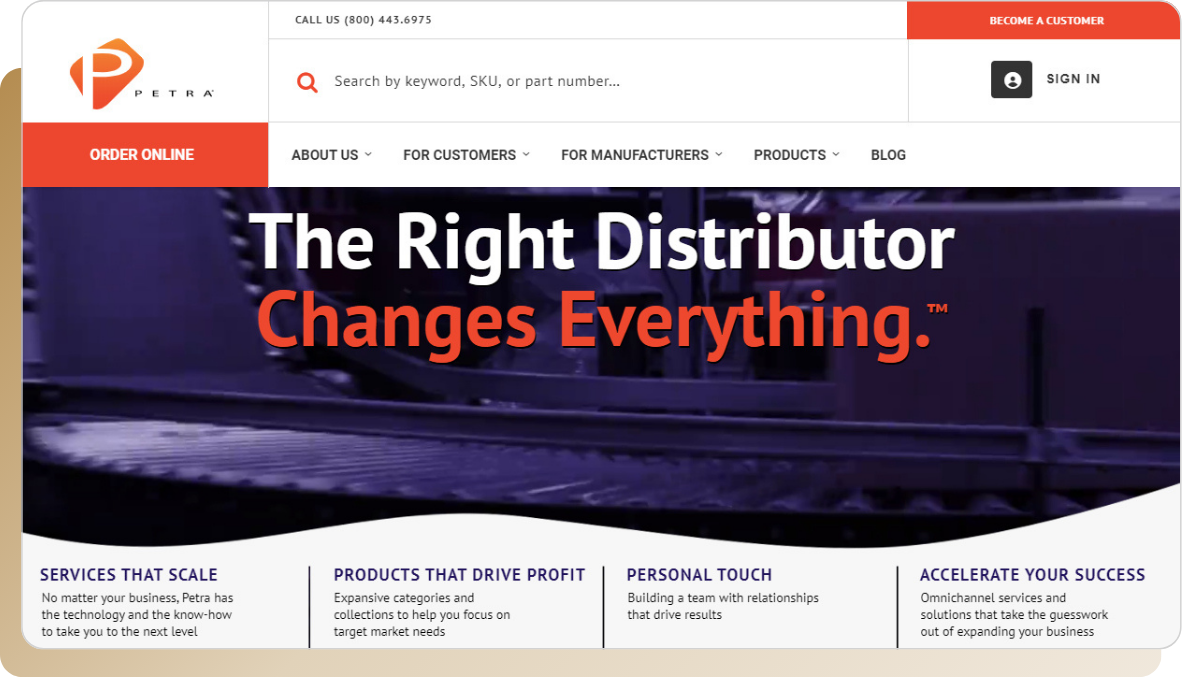
Petra’s website is a case study in modern distribution website design. As a company representing 800 brands and over 60 product categories, their platform had to do more than look good. It needed to help users quickly find what they’re after and manage complex inventory requirements at scale.
Working with experienced web developers, Petra launched a website that puts intuitive navigation and user-friendly product catalogs at the center of the online experience. Their search features let prospective customers locate products by SKU, brand, or spec, and advanced filters keep everything accessible, even as the catalog grows.
Backend integration with MDS ERP and Akeneo PIM means inventory management stays accurate and up-to-date. Fast load times and a fully responsive layout enable buyers – retailers, suppliers, or end-users – to move from product discovery to checkout without delays. These features don’t just enhance the site’s usability; they support the company’s broader marketing and sales goals, keeping Petra visible to new markets and supporting overall satisfaction.
Gala Imports
Gala Imports is a distributor that demonstrates how technology and smart website design can open up new markets and support rapid change. When demand shifted during the pandemic, their OroCommerce-powered site already had the eCommerce capabilities and flexible systems needed to adapt.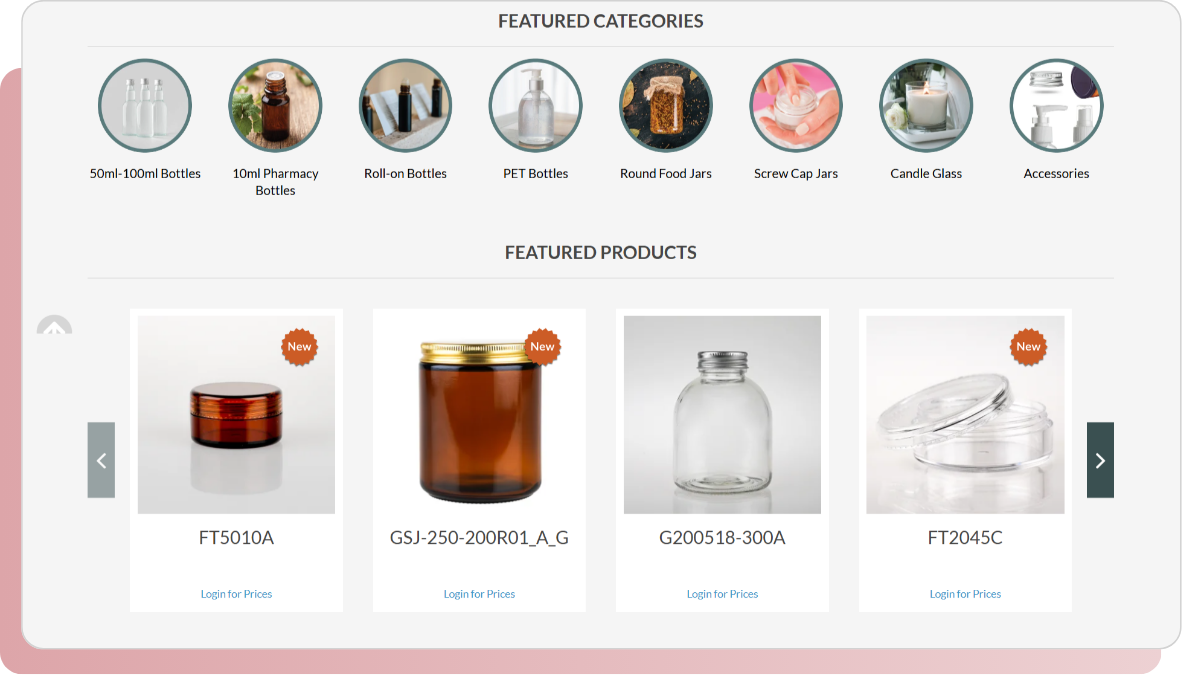 Their website supports multiple storefronts, personalized pricing, and an inventory management engine that keeps product data and availability up to date for over 35,000 customers. Large B2B accounts get tailored fulfillment options and self-service tools, while smaller businesses benefit from the same intuitive navigation and clean homepage.
SEO-optimized product catalogs and informative content make it easier for digital marketers to reach online buyers and showcase the full range of resources Gala offers. As a result, Gala saw a 30% increase in average order sizes and a major jump in conversion rate, all while serving a wider range of industries.
How to Take the First Step Toward a Better eCommerce Website
Revamping an existing eCommerce website or launching a new site is a real project, not a cosmetic fix. Getting it right takes more than updated website design or new homepage visuals. Start by choosing someone in your company – a project manager, someone from IT, or a leader who understands both your systems and your customer experience – to drive the work forward.
Bring in voices from marketing, sales, customer service, finance, and operations. These users know where your website falls short for prospective customers, where business processes break, and which features matter for your industry. If your company hasn’t done this before, it’s worth consulting web developers, digital agencies, or eCommerce specialists who have examples from distribution and manufacturing. Some companies also include web development services providers like Aalpha in the evaluation process, alongside platform vendors and implementation partners.
Once your team is in place, document what your users, suppliers, and customers need from your sit, like inventory management, self-service, integrations with your core systems, and the right product catalogs for each account. Use this to compare eCommerce solutions and narrow down your options. An organized RFP process will help you evaluate the website development partners and platforms best suited for your services and future plans.
A distributor eCommerce website that works is never “just a website.” It’s a tool for your whole company – one that, if done right, improves customer experience, marketing results, and operational efficiency in one move.
Gartner recognizes OroCommerce for the B2B Digital Commerce Use Case
Discover what makes OroCommerce the preferred option for distributors.
Frequently Asked Questions
How to design a perfect distributor website?
A perfect distributor website should include the following elements:
- A self-service portal to enable buyers to research products and order without contacting a salesperson
- Flexible on-site search across your whole catalog, e.g. search by synonyms, search boosting (controlling how search results are ranked), etc.
- A pricing engine that allows you to maintain custom prices based on different factors, like customer groups, seasonality, or demand.
- Accounts with permission levels that support hierarchical corporate structure.
What steps should I take to start a distributor website project?
Here is a checklist for a distributor website project:
- Identify which features are more urgent than others
- Develop your overall site infrastructure and look based on those features
- Start with the design of a homepage, followed by standard pages like the company/contact us page
- Craft product pages and decide how you want to organize them
- Structure the buyer checkout and shopping cart pages