
navigation

Selling across borders multiplies everything that can go wrong at checkout. Currencies shift, tax rules change, and buyer expectations vary by region.
A B2B ecommerce platform for global trade is software that lets manufacturers, distributors, and wholesalers manage multi-currency pricing, tax compliance, and cross-border fulfillment from one storefront. It gives international buyers a consistent experience no matter which country they order from.
This guide compares five platforms built for cross-border trade: OroCommerce, Shopify Plus, NetSuite SuiteCommerce, Salesforce B2B Commerce Cloud, and BigCommerce B2B Edition.
You’ll see how each platform handles multi-currency support, tax and compliance, ERP integration, and logistics support.
Key Takeaways
- OroCommerce: ERP-agnostic architecture that plugs into SAP, NetSuite, Microsoft Dynamics, or custom systems, with multi-org, multi-currency, and multi-language support from one instance. Best for multi-entity manufacturers and distributors that need deep ERP integration and complex approval chains.
- Shopify Plus: Fastest to launch a new regional storefront, with a unified backend for DTC and wholesale. Best for DTC-first brands adding a wholesale channel without standing up a second platform.
- NetSuite SuiteCommerce: Commerce runs natively on top of NetSuite’s ERP, so orders, inventory, and financials stay in one system. Best for companies already running NetSuite that want unified commerce and ERP.
- Salesforce B2B Commerce Cloud: Storefront pulls directly from Sales Cloud and Service Cloud records. Best for organizations already invested in the Salesforce ecosystem that want CRM and commerce data in one place.
- BigCommerce B2B Edition: SaaS simplicity with an open API architecture for connecting back-office systems. Best for mid-sized businesses that want room to grow into multi-storefront, international needs without heavy dev work.
For global trade specifically, ERP flexibility beats brand recognition. OroCommerce is the only platform in this list that doesn’t force manufacturers and distributors to abandon or replace the ERP they already run: it connects to SAP, NetSuite, Microsoft Dynamics, and custom systems as-is.
That matters most for multi-entity sellers managing separate legal entities, currencies, and languages across regions, since a single instance handles it all instead of stitching together a patchwork of regional sites.
On top of that, its B2B-native feature set (account hierarchies, RFQ/CPQ, approval workflows) is built in rather than bolted on, and pricing bundles CRM, PIM, and AI tools into one license instead of charging separately for each.
Book a demo with Oro’s team to see how it handles your own catalog and regions.
Research and Selection Steps for a B2B eCommerce Platform for Global Trade
According to the International Trade Administration, the global B2B eCommerce market will reach $36 trillion by 2026, growing at a 14.5% compound annual growth rate.
That growth is why so many corporate buyers now expect an online trade experience that matches what they get as consumers.
That’s also why picking the right international eCommerce platform deserves a structured process, not a quick vendor call.
Six steps to shortlist a platform
- Map your current problems, from manual currency conversion to single-language storefronts.
- Separate marketplaces from dedicated platforms before you shortlist a vendor.
- Loop in finance and logistics stakeholders early, not just sales and marketing.
- Gather localization, tax, and payment options for every region you plan to serve.
- Build a shortlist based on proven footprint, not generic logos.
- Run the numbers before committing the budget.
Marketplaces vs. dedicated platforms
A wholesale marketplace like Alibaba or TradeWheel works like a vast network of directories, connecting buyers and sellers through buying requests, verified buyers, and verified traders. It doesn’t give any single seller a branded storefront.
A dedicated B2B marketplace or platform works differently. You get direct access to your own digital platforms and tailored solutions, so you control the buying experience instead of competing against multiple vendors in the same listing.
When each model makes sense
Marketplaces are useful for lead generation and increased visibility when you’re chasing new business opportunities among buyers you haven’t reached yet. They also work for small businesses testing a category at trade shows. Amazon Business runs on a similar model, charging transaction fees or commission-based models instead of a flat subscription.
Once you have repeat corporate buyers ordering raw materials, industrial machinery, heavy machinery, office supplies, personal care goods, or products in different categories at wholesale prices, a dedicated platform wins. It delivers customer loyalty and quality assurance a marketplace can’t guarantee.
Small businesses across the industry often start on a marketplace. They move once multiple quotes give way to informed decisions about specific business needs, custom packaging, dedicated support, and long-term relationships with more customers over time.
Further Reading: What to Consider Before You Launch in a New Country
Evaluation Criteria Tailored to International Trade
Seven factors separate an eCommerce platform built for international trade from one with a bolted-on translated theme. Get these right and market trends in currency and compliance won’t catch you off guard.
- Multi-currency and localized pricing
- Multi-language and multi-site management
- Tax, duty, and customs compliance
- International payment methods and cross-border security
- Multi-warehouse and regional fulfillment
- ERP and freight integration depth
- Data residency and regional hosting
Buyers should see prices in their own currency, not a converted US dollar figure at checkout. Multi-language and multi-site management make your catalog readable to international buyers, no matter how many product categories you carry.
A built-in tax engine should handle VAT IDs, TIN validation, and landed cost calculation automatically. Card rails common in North America often fail in APAC and Latin America, so payment terms and local wallets matter as much as fraud protection.
Wholesale transactions moving through a distributor five time zones away need logistics support and shipping tools, not a single central warehouse. The platform should connect to systems you already run instead of forcing a rip-and-replace. Some jurisdictions require customer data to stay within their borders, ruling out platforms without regional hosting.
According to Forrester, more than half of B2B transactions worth $1 million or more will move through digital self-serve channels rather than a sales rep. A platform that can’t support self-service will hold back your global expansion.
B2B eCommerce Platforms for Global Trade at a Glance
The table below compares platform features and G2 ratings for five best options, with full details covered in each entry that follows.
| Tool | G2 Rating | Best For | Top Feature | Pricing Model |
| OroCommerce | 4.3 / 5 | Multi-entity manufacturers and distributors needing ERP flexibility | ERP-agnostic multi-org architecture | Custom, all-in-one |
| Shopify Plus | 4.4 / 5 | DTC brands expanding into wholesale | Unified B2B and DTC storefront | Tiered SaaS subscription |
| NetSuite SuiteCommerce | 4.1 / 5 | Companies already running NetSuite ERP | Native commerce-ERP unification | Custom quote |
| Salesforce B2B Commerce Cloud | 4.4 / 5 | Sales Cloud-native organizations | CRM-integrated account management | Custom quote |
| BigCommerce B2B Edition | 4.2 / 5 | Mid-sized businesses wanting SaaS simplicity | Open API architecture | Tiered SaaS, with custom Enterprise pricing for B2B Edition |
Recommended B2B eCommerce Platforms for Global Trade and International Buyers
The five platforms below come up most often when manufacturers, distributors, and wholesalers compare cross-border trade options. Each profile covers what it does well, who it fits best, and how pricing works.
OroCommerce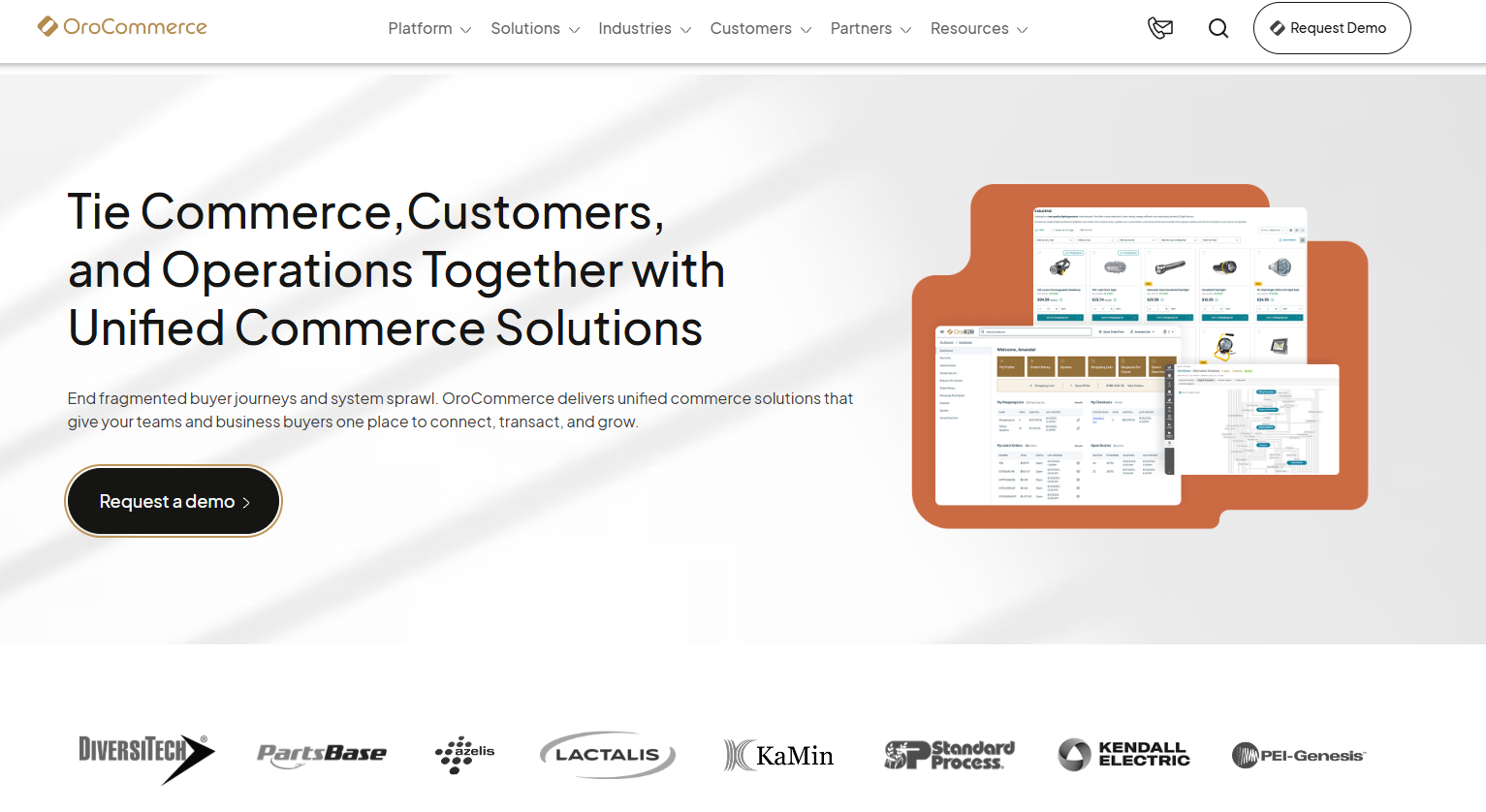
OroCommerce is an ERP-agnostic B2B eCommerce platform built for manufacturers, distributors, and wholesalers that need commerce to work alongside the ERP they already run.
It connects to SAP, NetSuite, Microsoft Dynamics, and custom systems rather than forcing a migration. A single instance can run multiple organizations, websites, currencies, and languages at once.
Global distributors like Azelis, a specialty chemicals distributor operating in more than 60 countries, use it to run 150+ cross-border catalogs from one back end. Manufacturers like Lactalis do the same instead of managing a patchwork of regional sites.
Best for
OroCommerce fits multi-entity manufacturers and distributors that need deep ERP integration and complex approval chains across regions.
Key features
- Account hierarchies: Corporate buyers with multiple locations get shared pricing and permissions under one parent account.
- RFQ and CPQ: Buyers request quotes directly from the catalog, cutting the selling process down from email chains to a structured workflow.
- Approval workflows: Purchasing teams route bulk purchases through internal approval chains without leaving the storefront.
- Open-source flexibility: Development teams can extend the platform for region-specific customization. See our list of essential B2B eCommerce features for more detail.
- Bundled CRM, PIM, and AI tools: Catalog and product management ship under one license instead of separate add-ons.
Pricing
Custom subscription pricing that includes unlimited sites, storefronts, and warehouses.
Book a demo to see what it costs for your catalog and regions.
Shopify Plus
Shopify Plus is Shopify’s enterprise tier, built to run direct-to-consumer and wholesale operations from one admin panel. It suits brands that know the core Shopify interface and want to layer B2B functionality on an existing storefront. For global trade, its biggest strength is how fast a new regional storefront can go live.
Learn more:
Best for
Shopify Plus works best for DTC-first brands adding a wholesale channel without maintaining a second platform.
Key features
- B2B on Shopify: Merchants run wholesale and direct-to-consumer storefronts from one back end with shared inventory.
- Localized global selling: Storefronts automatically adapt currency, language, and duties by region.
- Unlimited staff accounts: Growing teams add users without per-seat licensing fees.
- Headless commerce: Development teams can build a fully custom front end on top of Shopify’s APIs for regions that need a different experience.
- Add-on apps: Sellers who outgrow its native B2B depth often look at Shopify Plus alternatives, though the app store covers most common gaps.
Pricing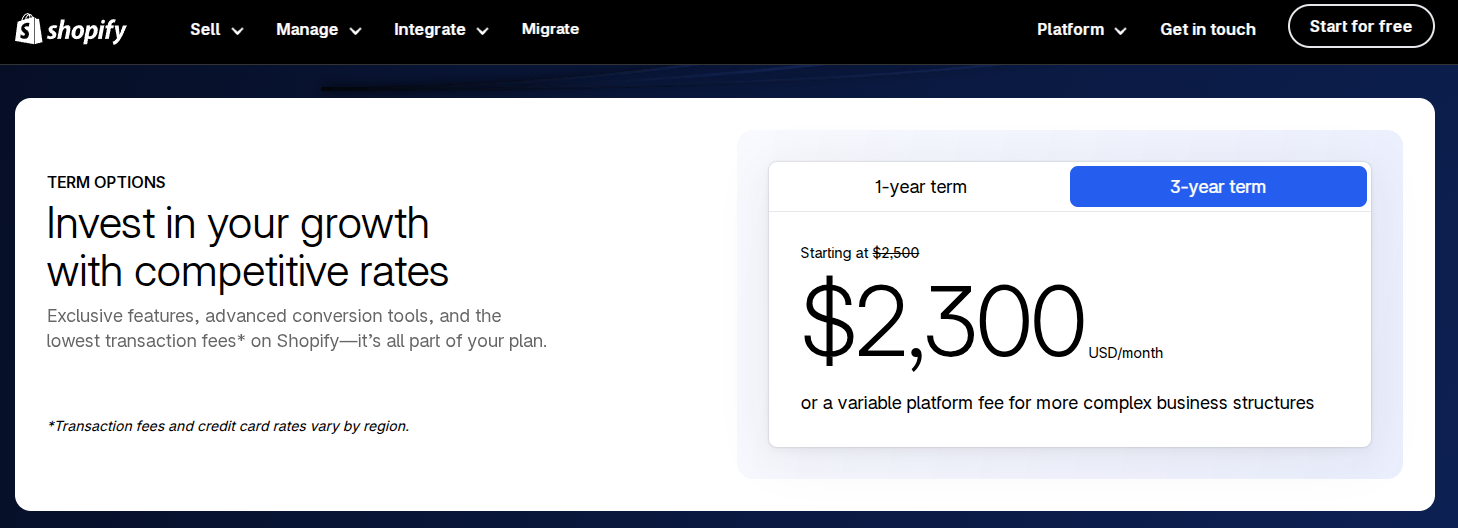
Starts around $2,300 per month on a three-year term.
NetSuite SuiteCommerce
NetSuite SuiteCommerce runs commerce directly on top of NetSuite’s ERP. Companies already using NetSuite for financials can add a storefront without a second system to maintain.
It’s built for organizations that want order management, inventory, and accounting to update from one source of truth instead of syncing between platforms.
Best for
NetSuite SuiteCommerce fits companies already running NetSuite ERP that want order processing and commerce unified in one system.
Key features
- Native ERP unification: Order processing, inventory, and billing update in real time without third-party connectors.
- Multi-subsidiary support: Global manufacturers manage separate legal entities and currencies from one instance.
- Built-in CRM: Sales teams track potential buyers and accounts alongside live order data through an intuitive interface.
- SuiteCommerce Advanced: Custom storefronts extend beyond the standard template. See how to choose the right ERP for distributors if you’re not already on NetSuite.
- Real-time financial reporting: Order activity reflects in the general ledger without a nightly sync.
Pricing
Its payment model is entirely custom-quoted, with no published tiers to compare upfront.
Salesforce B2B Commerce Cloud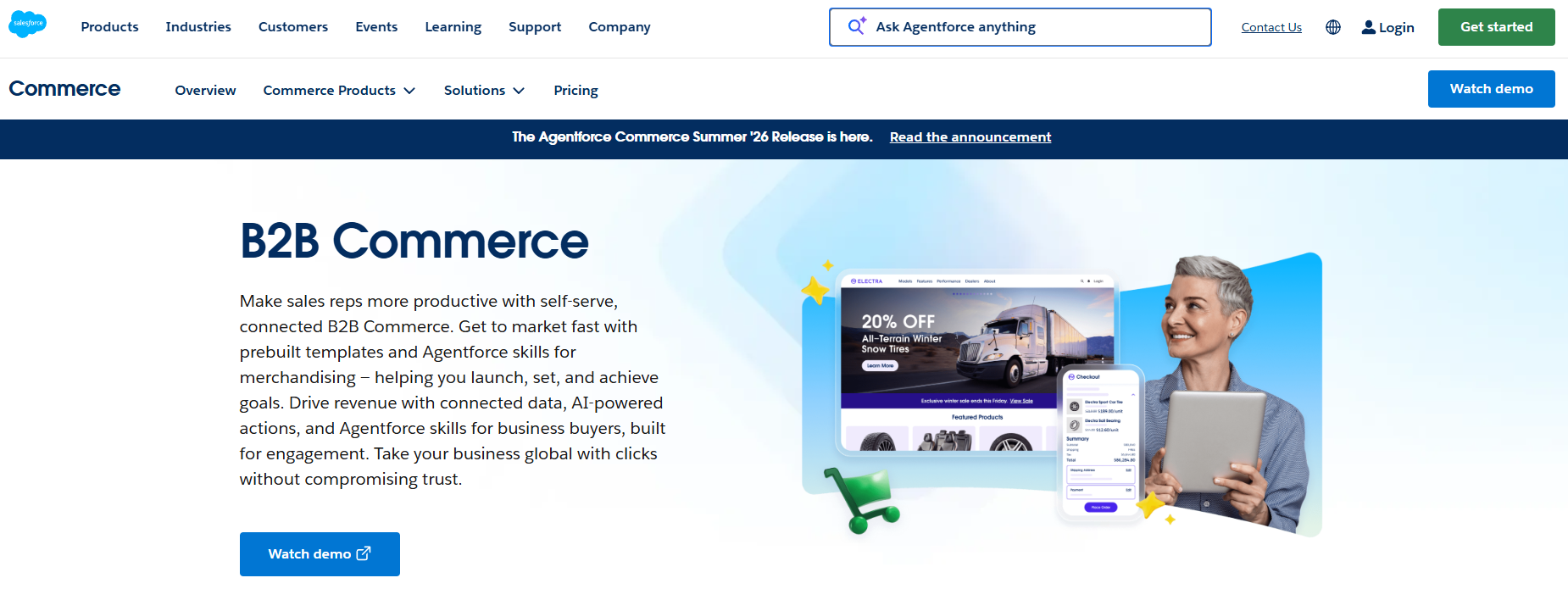
Salesforce B2B Commerce Cloud extends Salesforce’s broader product line into commerce, giving sales teams a storefront that pulls from the same records used for opportunities and service cases. That connection cuts down on double data entry between sales and order management.
Learn more:
- Salesforce Commerce Cloud alternatives
- Salesforce Commerce Cloud vs Shopify
- Adobe Magento vs Salesforce Commerce Cloud
- BigCommerce vs Salesforce Commerce Cloud
Best for
Salesforce B2B Commerce Cloud suits organizations already invested in Salesforce that want sales and commerce data unified in one place.
Key features
- CRM-native account management: Sales reps see order history and quotes inside the same records used for opportunities.
- Negotiated pricing and contracts: Custom pricing rules apply automatically based on account tier.
- Einstein-powered recommendations: Product listings adjust based on account purchase history.
- AppExchange integrations: Extends into marketing, service, and analytics tools already common on the platform.
- Complex catalog support: Structured attributes and pricing rules handle large, technical catalogs out of the box.
Pricing
Custom quote; Salesforce does not list public pricing for B2B Commerce Cloud.
BigCommerce B2B Edition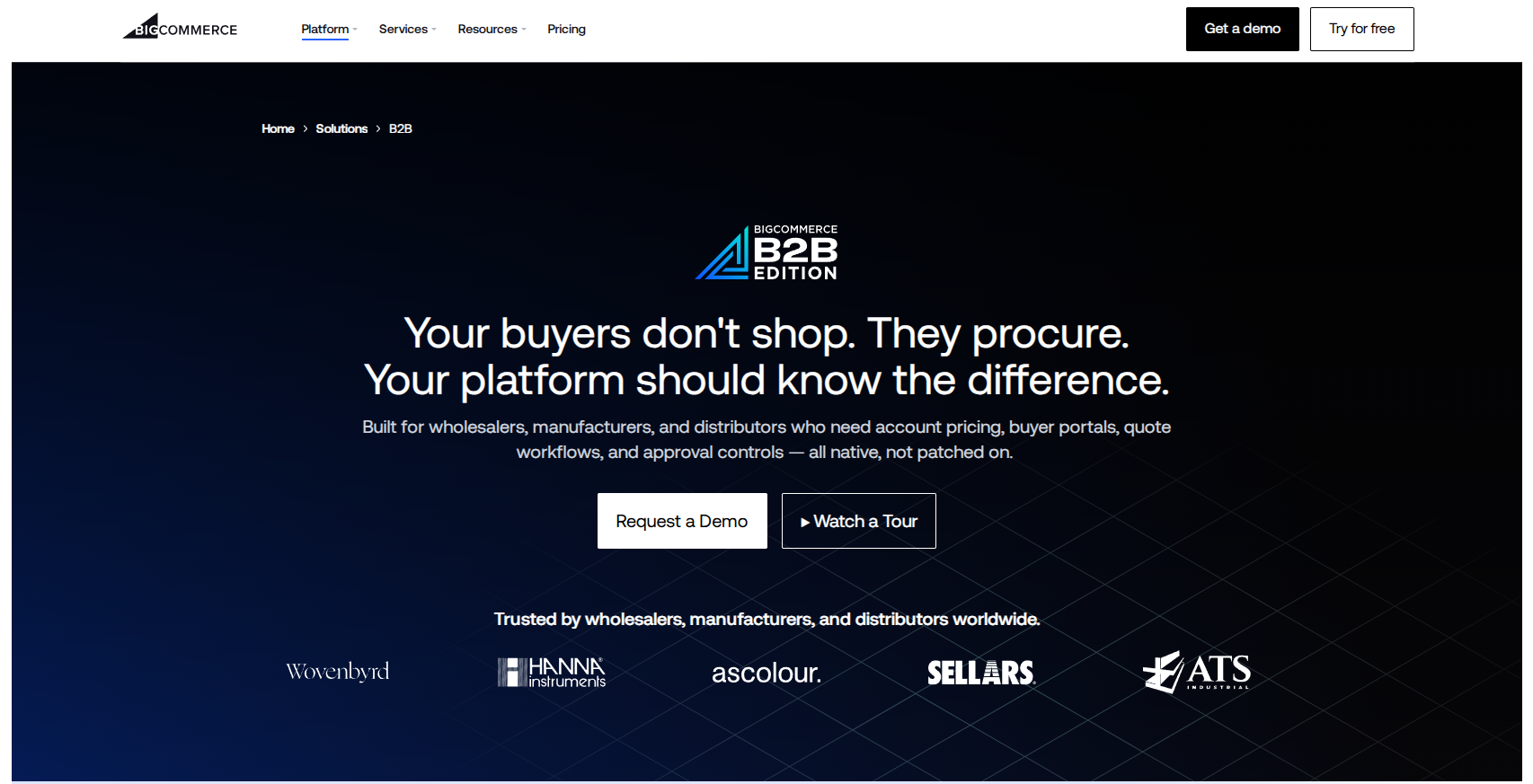
BigCommerce’s B2B Edition adds account pricing, buyer portals, quote workflows, and approval controls to the core BigCommerce platform, built for wholesalers, manufacturers, and distributors.
B2B and B2C storefronts run from the same back end, so sellers serve both without maintaining two separate systems. It also connects natively to ERP, OMS, and CRM tools, cutting down on custom integration work.
See BigCommerce competitors and alternatives for other options.
Best for
BigCommerce B2B Edition fits medium-sized businesses that want native quoting and approval workflows without a lengthy implementation, especially those running both B2C and B2B storefronts.
Key features
- Corporate account management: Buyers manage shared shopping lists and multiple users under one account.
- Headless-ready architecture: Front-end flexibility supports custom storefronts for different regions or brands.
- Built-in B2B theme: A user friendly interface ships ready to use without custom design work.
- Catalog rules: Volume discounts and custom price lists apply automatically by customer group.
- Multi-storefront management: Sellers run separate regional storefronts from one account as they expand.
Pricing
B2B Edition requires an Enterprise plan priced by order volume.
How to Choose the Right Platform for Your Business Needs
Before comparing features, match a platform to your team’s technical capacity. An in-house development team can extend an open architecture like OroCommerce’s, while a team without developers usually leans on an agency or a templated SaaS platform.
Work through this checklist before you decide:
- Weigh total cost against regional complexity, not just order volume.
- Confirm fulfillment and supply chain fit before signing.
- Run a proof of concept in one or two regions first.
- Score vendors against your requirements, not their sales deck.
- Get sign-off from finance and logistics before you sign.
Five new markets multiply integration and localization costs faster than five new product lines. A platform must support how orders actually move across borders, not how they move on a sales deck.
Decision Guide: Matching Global Trade Needs to the Right Platform
Global B2B sellers rarely need the same platform for every scenario, so match your situation to the list below before requesting a demo.
- If you want ERP-agnostic flexibility and B2B-native depth across regions, choose OroCommerce.
- If you’re DTC-first and expanding into international wholesale, choose Shopify Plus.
- If you’re already running NetSuite ERP and want native commerce-ERP unification, choose NetSuite SuiteCommerce.
- If you’re already invested in Salesforce and want CRM-to-commerce unification, choose Salesforce B2B Commerce Cloud.
- If you want SaaS simplicity with room to expand into multi-storefront needs, choose BigCommerce B2B Edition.
Before you commit, run through this short checklist:
- How many currencies do you need to support today?
- Does the platform include a built-in tax engine?
- Can it route orders through a regional fulfillment network?
- Does it offer regional data hosting where required?
- How many languages does your catalog need at launch?
None of these five platforms is wrong. With so many platforms built for different starting points, the fastest path forward is matching your regional complexity and existing tech stack to the one that already handles it, rather than choosing based on brand alone.
Why Choose OroCommerce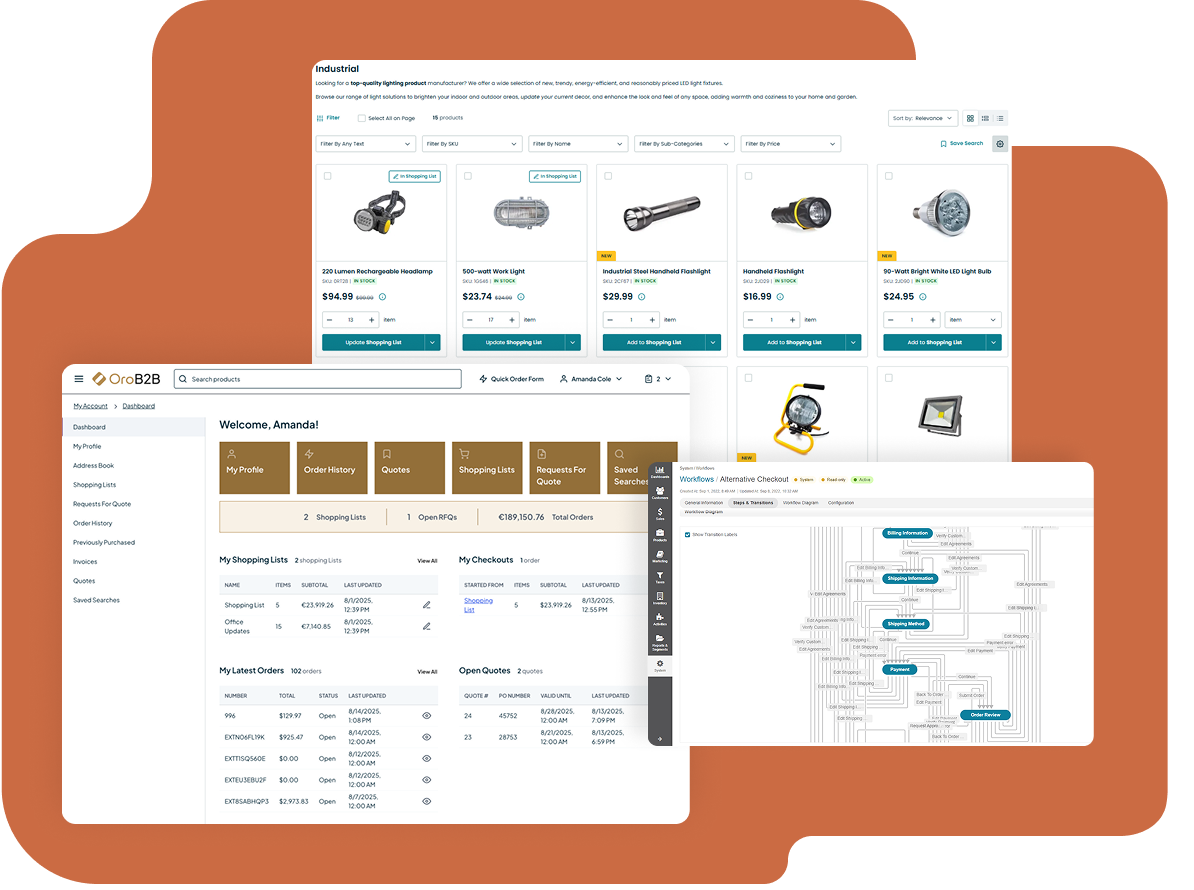
OroCommerce stands out for global trade because it doesn’t ask you to abandon the ERP you already trust. It connects to SAP, NetSuite, Microsoft Dynamics, and custom systems, and a single instance runs multiple organizations, websites, currencies, and languages at once.
The platform’s native B2B feature set goes beyond a translated storefront. Account hierarchies, negotiated pricing, RFQ and CPQ tools, and approval workflows are built in rather than bolted on through third-party apps. That matters for high-SKU catalogs with layered approval chains.
Pricing is structured differently, too. OroCommerce bundles CRM, PIM, and AI tools as value-added services within a single license instead of charging separately for added services, and unlimited sites, locations, and warehouses come standard.
For sellers scaling into a fully global footprint, our guide to enterprise B2B eCommerce platforms covers what changes at that scale.
Launch your next market on an architecture built for global scale
Final Words About B2B Ecommerce Platform for Global Trade
ERP flexibility, multi-currency and multi-language support, and compliance readiness matter more for global trade than brand recognition alone. Get those three right, and the rest of the storefront experience tends to follow.
Shopify Plus suits DTC brands testing wholesale, and NetSuite SuiteCommerce suits existing NetSuite customers. Salesforce B2B Commerce Cloud suits Salesforce-native sales teams, while BigCommerce B2B Edition suits sellers who want SaaS simplicity with room to grow.
For most manufacturers and distributors selling across regions, OroCommerce remains the strongest starting point because it adapts to the ERP you already run.
Ready to see how OroCommerce handles your own catalog and regions? Bring us your toughest use case.
FAQs About B2B Ecommerce Platform for Global Trade
What are some popular global B2B platforms?
Popular platforms for global trade include OroCommerce, Shopify Plus, NetSuite SuiteCommerce, Salesforce B2B Commerce Cloud, and BigCommerce B2B Edition, all built for dedicated storefronts rather than open directories. Sourcing marketplaces like Alibaba and Amazon Business connect buyers and sellers through listings instead of a branded storefront you control.
What is the best B2B eCommerce platform?
There’s no single best platform for every seller, but OroCommerce is the strongest fit for manufacturers and distributors selling across multiple regions and ERPs. It holds a 4.3 out of 5 rating on G2 and connects to SAP, NetSuite, and Microsoft Dynamics without requiring a rebuild.
What is the B2B trade platform?
A B2B trade platform is software or a marketplace that handles transactions between businesses rather than between a business and an individual consumer. It can be a dedicated storefront like OroCommerce, or a directory-style marketplace like Alibaba that connects international buyers with suppliers across various industries.
What is a B2B eCommerce platform?
A B2B ecommerce platform is software that lets one business sell to another business online, typically with negotiated pricing, bulk ordering, and account-based permissions. Unlike B2C platforms, it’s built around purchasing committees and credit terms rather than single-item checkout.
How do I choose a B2B ecommerce platform for global trade?
List every currency, language, and tax jurisdiction you need to support in the next two years. Match that list against each platform’s ERP integration depth, fulfillment network, and data residency options, then run a pilot in one or two regions before a full rollout.
Is Shopify Plus good for international B2B sales?
Shopify Plus works well for DTC brands adding a wholesale channel, thanks to its localized global selling tools and unified back end. It’s a lighter fit than OroCommerce for multi-entity manufacturers that need deep ERP integration or complex approval workflows across many legal entities.